The Tet Offensive during the Vietnam War, the Civil Rights Movement, the May events in France, the assassinations of Martin Luther King and Robert F. Kennedy, the Prague Spring, the Chicago riots, the Mexico Summer Olympics, the presidential election of Richard Nixon, the Apollo 8 space mission, the hippies and the Yippies, Bullitt and the living dead. Once upon a time the year 1968.

Starting in 1881 this film shows the personal battle between Lenin's Ulyanov family and the royal Romanovs that eventually led to the Russian revolution.

The night of November 8, 1923, is arguably the most significant and transformative in the history of the twentieth century. A localised uprising in the Bavarian capital of Munich, led by a small man with a toothbrush moustache and a poisonous yet compelling grandiloquence, would have repercussions that would lead to the political shackling of an entire nation, the most abhorrent crimes of the century and a world war. You might say, Adolf Hitler came of age amid the smell of sweat and sawdust of a Munich beer hall. In the political chaos of 1923, he was a local irritant, gaining popularity among workers and soldiers, the ethos of his Nazi Party spreading like a virus. His first attempt at attaining true power came with an attempted putsch on the already separatist government of Bavaria, which left him imprisoned.

It has been said that no two sisters were ever less alike. One reserved and proper. The other lively and controversial. One the anchor of a commonwealth of nations. The other searching for purpose in life.

A documentary of the life leading up to the election of John F. Kennedy as president and the controversial life prior that created the legend.

For this informative new one-off, film writer Ian Nathan focuses on the first 60 years of British film, from the invention of cinema and the transition from stage to screen, to the emergence of the studios and the first popular idols. Nathan takes us through the work of leading British film-makers — a talent pool that, like Hollywood’s, benefited from the influx of refugees fleeing Europe — including Alfred Hitchcock, Powell and Pressburger, and many more besides.


Ian Nathan, Neil Norman and Stephen Armstrong run through their top 25 sci-films of the last century, including The Matrix and Planet of the Apes.

We know how the story ends. But how did it all begin? Who was Diana before the palace, before the paparazzi? Behind the modern legend that is ‘Diana, Princess of Wales’ lie many other stories – in her childhood and in her family’s past. For, long before she was a Royal, she was a Spencer.

A celebration of extraordinary choreographed moments in a countdown of TOP 25 of the most memorable dances in cinema history.

Documentary providing a career overview of the great Greta Garbo.

Filmed in Netherlands and London this special commemorates 70 years since Anne Frank's death. With unique interviews with Anne's step sister, Eva Schloss and Gillian Walnes, a survivor from Auschwitz who now runs the Anne Frank Trust in the UK and Ronald Leopold, the Director of the Anne Frank House in Amsterdam. In 1933, the Nazis rose to power. Five years later, in 1938, Eva Schloss remembers the Nazis marching on Austria and then she and her family fleeing and settling in Amsterdam the same year. They found they were in the same residential square as the Franks with their young daughter, Anne. Anne and Eva found a bond from the shared experience of being displaced by the Nazis.

Born Reginald Dwight on 25 March 1947, he was something of a child prodigy and would go on to become a prolific songwriter and one of Britain's most accomplished and acclaimed musicians, selling out tours the world over. His humanitarianism has been suitably honored, and he has continued to contribute extensively to the music industry. Writing songs for the1994 animated film The Lion King, he later he adapted The Lion King for Broadway and in 2005 he composed music for a West End stage production of Billy Elliot. This documentary takes a look at his long and successful career, exploring his greatest hits with the help of leading industry figures.

London Live: Lady Gaga Special presented by Sara Cox.

A guide to human history through its most audacious power grabs. From Julius Caesar to Napoleon; from Mussolini to the strongmen of the present day - we see how the world we know has been shaped by those who dream big.

Between April, 1975 and January, 1979, Pol Pot and the Khmer Rouge were responsible for the deaths of 1.7 million people in Cambodia. A quarter of the population were wiped out in one of the most brutal and virulent genocides of the twentieth century. This new film explores the life of Pol Pot, the ever-smiling, obsessively secretive leader of the Khmer Rouge. What drove him to inflict such a radical experiment on his own people? How did the Khmer Rouge turn from a band of nationalist revolutionaries into a ruthless killing machine? And why did the West stand by and let it happen? As an international tribunal in Cambodia finally brings the surviving leaders of the Khmer Rouge to justice, it's time to re-examine the gruesome legacy of Pol Pot.

Luis Bunuel, the father of cinematic Surrealism, made his film debut with 'Un Chien Andalou' in 1929 working closely with Salvador Dali. Considered one of the finest and controversial filmmakers with, 'L’Age d’Or' (1930), attacking the church and the middle classes. He won many awards including Best Director at Cannes for 'Los Olvidados' (1950), and the coveted Palme d’Or for 'Viridiana' (1961), which had been banned in his native Spain. His career moved to France with 'The Diary of a Chambermaid' with major stars such as Jeanne Moreau and Catherine Deneuve.
In the 1960s, archaeologists working in China made an extraordinary discovery. They unsealed the twelve-hundred-year-old tomb of a princess. Its walls were covered in magnificent murals - an unprecedented glimpse into life during the Tang dynasty. This documentary tells the fascinating story of the great Empire that made those murals, of the Silk Road that connected it to the world, and of the rebellions and disasters that brought the dynasty crashing down.

Commemorates 100 years since the release of the German classic, Nosferatu, by FW Murnau, and explores the general fascination of Count Dracula, a figure who resonates with audiences across the literary, art, mythological and historical worlds.

While anticipating the arrival of a famous Hollywood star, five employees at a mediocre restaurant in London's Soho must deal with rats, arguments and kitchen-based power struggles.

This drama-documentary series takes us back in time to the most shocking and surprising murder cases in London, England's history. Nicholas Day guides us into the world of the killer as we see how police ingenuity and early forensics helped bring them to justice.

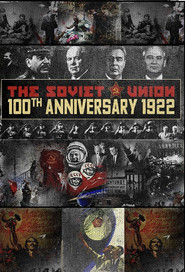
The Soviet Union was officially formed in 1922, a country, a political experiment, an ideal, a great scar across history. Officially known as the Union of Soviet Socialist Republics, the USSR was a one-party state, governed, controlled, and tormented by a single party rule. That of the Communist Party. Complicated, contradictory figureheads would come and go, men who held this impossible country it seemed by sheer will. Stalin the despot-hero whose cruelty knew few bounds who united a nation to defeat Hitler. Khrushchev the crafty libertarian, who preached reform yet allowed an arms race to escalate. Brezhnev, that unreadable member to the old guard, sending history backwards. And of course Gorbachev, who brought vast change, modernisation, and détente, yet saw the Soviet Union collapse under his rule – the untenable nation. The 20th century was shaped by its convulsions, its purges, its wars, and its leaders.

This series looks at the 20th century’s iconic film directors; the real innovators whose breakthrough direction made film into the movies. Their early lives, often escaping war or poverty found expression in theatre, then film, forming the fundamental art that is cinema. Each episode brought to life by Derek Malcolm, Neil Norman, Stephen Armstrong, Dr. Bonnie Greer OBE and Ian Nathan along with classic moments from each film career.

Ian Nathan explores the many layers of the world of filmmaking, discussing each episode with filmmakers, cultural commentators, historians, authors and critics; what defines these stories, how they came to be, and who were the creative forces behind them.

Barry Cryer pays tribute to the heroes of comedy he has worked with over his many years in the business. Each episode celebrates one artist and include highlights from their comedy careers. Stars include Tommy Cooper, Ronnie Barker, Joan Rivers, Bob Hope, Frankie Howerd and Morecambe & Wise and Barry recalls some of his funniest moments working with each of them.

Movie critic Ian Nathan goes in search of the cinematically sublime and explores the ingredients that went into making a classic. With each episode devoted to a single film, their story will be told with detail, affection, looking for the truth behind the myth, and all the trials and triumphs that went into forging the classic.
Music journalists take a closer look at the work of some of the biggest recording artists in the world, past and present.

Four kings from the House of Stuart sat on the English throne from 1603 to 1688. It was a time of great religious struggle and political instability. The Gunpowder Plot nearly wiped out King James I. The Thirty Years War broke out on the continent. A civil war erupted which led to the public beheading of King Charles I and the birth of a commonwealth headed by Oliver Cromwell. London was ravaged by the plague and the Great Fire of London. Throughout this series we look at the reign of the Stuarts through the powerful Wynn family at Gwydir Castle in North Wales, one of the best time capsules from that era. The story of the Wynn family reflects the turbulent history of this Stuart era. They had close connections with this new royal house and their status would rise and fall with the successes and failures of Stuart rule.

Investigating the most notorious murders ever to take place on the British railways. The cases start from 1864 with the the first murder on a British railway.

Docuseries that presents the story of June 6th, 1944 in an original and revelatory way.

As April 2015 marks the 70th anniversary of the death of Adolf Hitler, this documentary investigates the before, during and final days of the most terrifying dictator of the western world.

Hosted by Ian Nathan, this series features the cinematic stories of the Cold War era: propaganda, nuclear fear, a change in the US society; the spy games; and the rise and fall of the USSR and East Germany (and everything in between). Film critics and historians examine the industry both as it was happening in real time, and how films from this period have become seminal classics.

Thematically, film noir frequently centered on portrayals of women of questionable virtue—this had become rare in Hollywood post the pre-Code era. Double Indemnity, directed by Billy Wilder; setting the mould was Barbara Stanwyck’s unforgettable femme fatale, Phyllis Dietrichson. This series will explore the work & influences of directors & writers, including Nicholas Ray, Jules Dassin, Robert Siodmak, Fritz Lang, Edward Dmytryk, Orson Welles, Raoul Walsh, Jacques Tourneur and many more.

Looks at the epic final months of World War II and charts the Wehrmacht's last-ditch battles on the Western and Eastern fronts.

The story of film music from its earliest days, right up to date with such masters of the medium as John Williams and Hans Zimmer.
