At the height of the October Revolution during the 1919 allied intervention in Arkhangelsk, the exploits of one-legged Canadian soldier Lt. John Boles are told, after he is taken in from the cold by a dysfunctional Russian family and mistakes a local woman for his presumed dead lover.

The mountain-village passions of a German widow and her sons unfold in the style of a 1920s expressionist movie.

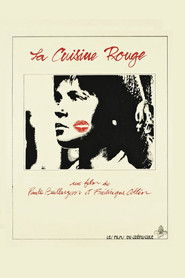
On a wedding day, women are confined to the kitchen to prepare the meal while the men wait to be served. While men talk politics and sports, women talk about their condition. A teenager observes the gap between the sexes. Co-directed by two actresses, Paule Baillargeon and Frederique Collin, The Red Kitchen is the birth of the Quebec women's cinema. The birth of the film was difficult, and funding has been largely achieved through donations from friends and a benefit concert. This war of the sexes takes place in a demanding formal research, based on the improvisation of the actors, whose preparation took place over long sessions in the workshop. The end result mixes black humour, horror and a very expressive fantasy that gave rise to heated debates.

Scatterbrained Polly gets a job as a secretary in Gabrielle's art gallery. Polly aspires to be a professional photographer, and idolizes Gabrielle for her artistic ability. When Gabrielle rekindles an old romantic relationship with the younger painter Mary, Polly becomes jealous, and discovers Gabrielle isn’t exactly who she claims to be.

Four young office workers have a bet going to see who can last the longest without going outside. In the maze that is the downtown core of a large city, glass skywalks connect apartment buildings, office towers and shopping malls. Its day 28 of the bet and over the lunch hour, as the office prepares for the company founder's retirement party, things start to seriously unravel.

Sofia yearns to sing with the heartbreak voice of the ranchera singers she admires. One day, she receives an unexpected invitation to visit the mysterious "Paloma Negra" bar. There, she is shocked to see her favourite singer, Pieta, who had all but disappeared at the height of her career, singing to the sad souls in the bar. Sofia gathers her courage to sing for Pieta, only to be told that her voice is devoid of the suffering and heartbreak necessary to sing the songs. Determined to fill her voice with the necessary pain, she learns a hard, but valuable lesson about the reality of heartbreak.

A story about an aging crime family patriarch.

A minor traffic citation spirals into an all-consuming obsession for a neurotic young woman.

An open and honest autobiographical account of male sexuality centered on Frank, an unemployed photographer, and his circle of mainly gay friends. He and his best friend, Bozo, attempt to have sex, although they consider themselves straight. But things begin to fall apart when Frank meets and falls in love with Johnny, a 13-year-old boy.

A recent graduate is urged by an impossibly perfect woman to start digging a hole in a nearby park, setting in motion a chain of events that threaten her emotional balance and carefully maintained routines.

A surreal and comic exploration of an office space and its inhabitants and the decorations of a living room.

Fleeing to Tokyo with the hopes that she can fulfil her dream of becoming a dancer, Yume is met with the harsh reality that success isn’t something that comes quickly or easily. Whilst juggling her job as a hostess in Tokyo’s red-light district, Yume throws herself headfirst into studying the artform and integrating herself into the underground dance community.

Ratgirl, a diffident 19 year-old woman, as she and her older roommate Alice discover their apartment is infested with rats — a claim which is adamantly ignored by their miserly landlord. Over the course of a hellish fourty-eight hours, Ratgirl unconfidently navigates sexual harassment, housing instability, ex-friendships, and suppressed mental illness.


An international team of art restorers and archaeologists begin work on the restoration of medieval frescoes inside a network of ancient caves. Faced with local bureaucratic challenges and systemic neglect of archaeological sites, the team encounters a community of shepherds and migrants that have used the caves for centuries and discover a living culture worth preserving most of all.

Inspired by the early trash films of John Waters, the film stars Estdelacropolis as Demira, a gay porn actor struggling with both his emotionally complicated relationship with his mother Esther and his desire to break out of porn and into mainstream movies. He connects with a Freudian psychiatrist who is convinced that his homosexuality stems from an unresolved Oedipus complex which he has repressed by denying his natural attractions to women, to which the psychiatrist's proposed solution is to hypnotize Esther into believing that she is a man so that men will become the gender that sexually repulses Demira; in his career, he is ambivalent when the first "mainstream" role he is able to land is a gore film in which he will play the victim of a cannibal family for which Esther has also been cast as the mother.

Beauty’s Pride is an evocative short film to accompany Born Ruffians’ new album by the same name.

An emotionally constrained view of the displacement of human feelings in our video saturated society. Van regularly visits his grandmother in a run-down nursing home. His father depends on phone sex for guidance meanwhile erasing family homevideos of happier times with homemade pornography. Will Van rescue his grandmother and memories of his mother in time?

Twice Upon a Time is a fairy tale for all generations about a king with split personality, split time and a split screen. It is a story about dual nature of kings and things and how playing cards came to be. One half of the King represents a barbaric King, a crude but fearless warrior. The other half of his is a King-poet, a man of graceful poise and manners. They share their conscience, but have opposing wishes and desperately want to get rid of each other.

This short film is an ode to the women who settled the Prairies, from the days of early immigration to 1916 - when Manitobans became the first women in Canada to receive the provincial vote - and beyond. Recollections of women are complemented by a series of quotations drawn from letters, diaries, and newspapers of the day, which are spoken over re-enacted scenes and archival photographs.