The documentary celebrates the poetic legacy of Lupicínio Rodrigues, investigating the musical contribution and historical context of this composer born in Rio Grande do Sul and author of hits that surpass generations.

Police reporter Luarlindo Ernesto is the only eyewitness to the creation of the death squad, the first Brazilian extermination group. 60 years later, young journalist Yasmin Santos researches the origins of the militia in Rio de Janeiro and, upon discovering that Luarlindo is alive, decides to track him down to try and convince him to tell her everything he saw.


Audiovisual recording of the 2017 album Tribalistas.

Zeca Baleiro guides us on this musical journey to his home state. With testimonies and performances by local artists from different musical genres, we discover a pulsating and little explored sound panel.


‘How are women doing in Brazil?’. It is this intriguing question, posed by an Italian journalist, that Helena Solberg tries to answer through elements of her films, from the 1960s to the present day. Along the way, encounters with figures such as Heloisa Teixeira, Rita von Hunty and Helena Vieira illuminate some of the cracks in this broad debate.

The documentary follows the trajectory of Ailton Krenak, indigenous leader from Minas Gerais, a descendant of the Krenak ethnic group, formerly called Botocudos. After studying in São Paulo, Ailton was active in the defense of indigenous peoples. While traveling through Brazil and the world, he became a kind of ambassador for the original Brazilian cultures. The film features images and testimonies of Ailton at different times in his life, as well as other characters that are part of his universe.

Bethânia returns to her land, where the family’s old sugar mill was built, the Wanderley Mill. Between photographs, fantastic creatures, bills to pay and workers claiming their rights to the land, Bethânia faces herself in a present where both the past and the future look menacing.

It explores the last two years of Brazilian singer Cazuza's life, from his AIDS diagnosis until his death. Nilo Romero, Cazuza's music producer and the film's director, created a collection of rarely seen and controversial images.

The work and life of the important Brazilian filmmaker Geraldo Sarno are intimately revealed during the filming of the series "Sertão de Dentro" and the feature film "Sertânia".


Participants recall a series of festivals held on a farm in Brazil during the '70s and '80s that evolved into liberating celebrations of music.


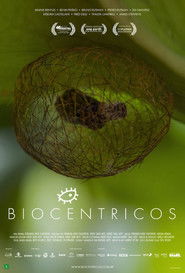
Through the eyes and voice of biologist Janine Benyus, the non-fiction feature “Biocentrics” takes the viewer through different corners of the planet to reveal the birth and the principles that guide biomimicry, a methodology of innovation inspired by nature. As a hub connecting ancestral knowledge, diverse cultures, natural technologies and initiatives that choose the continuity of life as their premise, the charismatic activist proposes a common agenda, a new posture and a tool, which is the vanguard of contemporary science, to face the global challenges that lie ahead and putting life back at the center of decision-making.

A reflection on the construction of the Brazilian political class, from Getúlio Vargas until the beginning of the 21st century. To the historical facts is added a cunning and ambitious Brizola, but above all passionate about the Brazilian people.

A historical overview of what Semana de 22 was and its understanding over time, the event took place over three nights at the Theatro Municipal de São Paulo (February 13, 15 and 17, 1922).

