The greatest secret of the Second World War has remained a mystery for the last 80 years: a Jewish Communist, Sandor Rado, led a spy network that proved essential to the victory of Allied Forces. Rado received details of strictly confidential strategies from the highest echelons of the Nazi State through Rudolf Roessler, a dedicated anti-Nazi he'd only known as code name "Lucy." Aided by key German industry leaders, Roessler transmitted timely information from high-ranking collaborators within the German army headquarters. Despite their achievement, Rado, Roessler and their sources remained unacknowledged heroes until today. Thanks to the recent declassification of secret archives, we are now able to step behind the scenes of this incredible story.


Switzerland is presently the only country in the world where suicide assistance is legal. Exit: The Right to Die profiles that nation's EXIT organization, which for over twenty years has provided volunteers who counsel and accompany the terminally-ill and severely handicapped towards a death of their choice.

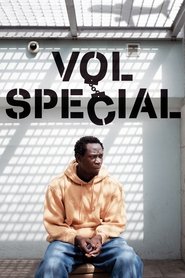
Switzerland still carries out special flights, where passengers, dressed in diapers and helmets, are chained to their seats for 40 hours at worst. They are accompanied by police officers and immigration officials. The passengers are flown to their native countries, where they haven't set foot in in up to twenty years, and where their lives might be in danger. Children, wives and work are left behind in Switzerland. Near Geneva, in Frambois prison, live 25 illegal immigrants waiting for deportation. They are offered an opportunity to say goodbye to their families and return to their native countries on a regular flight, escorted by plain-clothes police officers. If they refuse this offer, the special flight is arranged fast and unexpectedly. The stories behind the locked cells are truly heartbreaking.

The personal stories of the people from all around the world waiting for a decision in an asylum-seekers centre in one of most restrictive countries in the world, Switzerland.

It is winter at an emergency shelter for the homeless in Lausanne. Every night at the door of this little-known basement facility the same entry ritual takes place, resulting in confrontations which can sometimes turn violent. Those on duty at the shelter have the difficult task of “triaging the poor”: the women and children first, then the men. Although the total capacity at the shelter is 100, only 50 “chosen ones” will be admitted inside and granted a warm meal and a bed. The others know it will be a long night.
Christine is head of the financial department at the Kintambo maternity ward. Her job is to ensure that all patients have paid the hospital fees. Rémy is CEO of one of the largest mining companies in the country. His penchant for women will tarnish his relationship with his family, particularly his 12-year-old son. Muknya, a night taxi driver, dreams of reaching the Schengen area but circumstances do not make his task easy. Viya, who has just lost her father unexpectedly, will cross paths with each other.

Switzerland was one of the last countries in the world to grant women the right to vote. This film guides us through a century of Swiss history, tracing the imprint left by the women who fought for the right to leave hearth and home – and by the men who did everything they could to send them back – until they gained legal equality, whose implementation seems to be in question still today.


In 1877 a Swiss aristocrat, Alfred von Rodt, became the governor of the remote Chilean island that gave birth to the legend of Robinson Crusoe. Exiled from his country and family, Von Rodt strived to build a utopian “little kingdom” until his death, but failed and lost his entire fortune. The film tells the story of this outcast through the lives of his descendants, who today seek political autonomy and a preservation of their indigenous identity.

The road from the kitchen to parliament was long and rocky for Swiss women - four generations had to fight for the male electorate to grant women the right to political participation. Stéphane Goël's documentary traces this path with sensitivity and humor.


The film recounts the fates of five of the protagonists of the film “Special Flight” following their expulsion from Switzerland. Having been wrenched away from the country in which they had lived and from their children because they had no papers, they are found again in Senegal or Kosovo, in Gambia or Cameroun, destitute and cut off from their families, sometimes even having been tortured upon arrival. This film broaches the private lives of these broken men and testifies to the brutality of a migration policy that is common in Switzerland and in Europe.