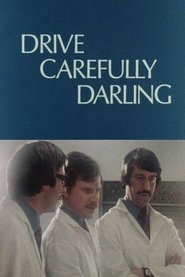
A short film to warn children of sexual predators.
One of a series of newsreels made about mining

An account of the state visit to Britain by the President of India, Dr. Sarvepalli Radhakrishnan, in June 1963. In London he accompanied the Queen on a State drive, visited the Commonwealth Institute, attended a Guildhall luncheon and visited the country.
First Line of Defence is a short cartoon recruitment film for the RAF created in 1949 by animation duo Halas and Batchelor. The story follows a trainee pilot dreaming about the history of flight.

Reported cases of sexually transmitted disease took a sharp rise during and after World War II, but as this film testifies, sexual license amongst soldiers on the frontline wasn't the sole cause. Back on the home front, for many women, like Joan from No. 19, loneliness or newfound independence acted as an incentive to extramarital promiscuity.

A 1973 documentary film from the Central Office of Information about the Liverpool and Bootle Constabulary.

2-6 March 1961 saw the Queen and Prince Philip make their first and only state visit to Iran. Their host was Mohammed Reza Pahlavi (1919-80), the Shah of Iran, who had already made an official visit to Britain in 1959.

National insurance made amusing by the eccentric Richard Massingham.

An extended humorous public information film (lasting around fifteen minutes) narrated by Richard Wattis.

Teenagers Sandy and Alan are keen motorcyclists, but while Sandy insists on getting proper training, Alan refuses, even though this makes him twenty times more likely to have an accident.

Impressions of contemporary British arts and fashion. Summary of art through the ages taking in every thing from Mary Quant to the Marat/Sade production. Made for the Montreal "Expo '67" exhibition.

A mysterious stranger foreshadows Death, but is good enough to give a handy driving safety tip along the way.

A film made for the Central Office of Information concerning Britain's coastline, with music by Michael Nyman.

Never Go With Strangers was intended for children aged between seven and ten and its purpose was ‘to warn them of the dangers of accepting lifts or presents from strangers’. Due to potential distress government officials instructed that the film only be shown under ‘responsible adult supervision’, thus denying it a TV airing for many years.

The President had been due to visit twice before, but on both occasions the trip had to be cancelled. The first time was in 1963, the same year as the Commonwealth visit by the President of India. The second cancellation occurred in 1965 when a longstanding dispute between India and Pakistan over the sovereignty of Kashmir boiled over into full-scale war in September of that year. However, as one might expect from a film made for international diplomacy purposes no reference is made to ongoing political problems either at home or abroad. Like the Indian presidential visit of 1963, the film was for screening to domestic audiences (both in the UK and in Pakistan) whose main interest would be in the pomp and ceremony of the visit, and the reception and status afforded to the President by the Queen and royal family.

Highlights of Prince Philip's visit to Antarctica, Falkland Island Dependencies, the Falkland Islands themselves, Gough Island, Tristan da Cunha, St. Helena and Ascension Island.

Featuring footage spanning from 1901 to 1985, this little-seen footage has been found from all across the UK. This programme allows an exploration into stories of migration, community and also the struggle against inequality, while also providing the opportunity to celebrate black British culture and life on screen. Films in the programme include: Miners Leaving Pendlebury Colliery (1901), Hull Fair (1902), For the Wounded (1915), From Trinidad to Serve the Empire (1916), Hello! West Indies (1943), Mining Review 2nd Year No. 11 (1949), To the Four Corners (1957), Black Special Constable (1964), Black Police Officers (1966), Cold Railway Workers (1964), Nigerian Wedding in Cornwall (1964), Coloured School Leavers (1965), London Line No. 373 (1971), African Student Families (1975), Liverpool 8 (1972), Blood Ah Go Run (1982), The Jah People (1981) and Grove Carnival (1981)

Ernie tells Eric to ‘be wise’ and not drive home after their Christmas party.

Queen Elizabeth's younger and only sibling, Princess Margaret, went on a 5-week tour of Mauritius and East Africa in September-October 1956.

Part of BFI collection "Design for Today."

Interesting fifteen episode miniseries broadcast weekly by BBC in 1954-1955. It covers different aspects of the air war during World War II. It also briefly contextualises the development of aircraft immediately before and after the war.