The film follows a scrappy taxi driver's fortunes as he tries to break out from the clutches of poverty, devising plans and investing all his money in a dubious schemes which eventually blow out on him, coming under the eye of unscrupulous politician and local goons, yet he still perseveres for his dreams.

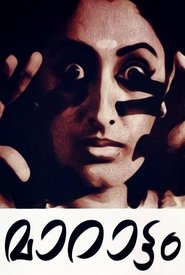
Panicker's one-act play deals with the relation of identification between an actor and his or her role. The action takes place on the eve of the last act of the Kathakali piece Keechakavadham (The Killing of Keechaka). The events surrounding the performance uncannily echo events in the play. One character even claims to have killed the lead actor of the play because he detested the character the man portrayed. However, the three different accounts that are presented of the same plot are never resolved or reconciled with each other. Each version is accompanied by a different style of folk music: the tune and rhythm of southern Kerala’s thampuran pattu, the pulluvan pattu and the ayappan pattu. The performers were drawn from the theatre and from Kathakali. In southern India, with its plethora of politicians using their film images to acquire inordinate wealth and power, Aravindan’s TV film bears on an eminently sensitive political as well as aesthetic issue.

Mammo is an account of a certain period in the life of Riyaz, a teenager who lives with his grandmother Fayyazi as they get a visit from his grandma’s sister Mehmooda Begum Anwar Ali, commonly known as ‘Mammo’.

The film set in the 1940s, in a fictitious village in the Shekhavati region in Rajasthan, where no girl child survives beyond the age of seven. It deals with larger issues of communalism and caste system through four inter-related stories.

After destroying his older brother's motorbike in retaliation for his constant bullying, 11-year-old Krishna is sent to a traveling circus to earn money to pay for the bike's repairs, but soon winds up in the streets of Bombay's poorest slums. There, he befriends the drug dealer Chillum and young prostitute Sola Saal, while trying to make enough money at a neighborhood tea stall to repay his debt to his family.

Mumbai, 1992. Naseem, a 15 year-old schoolgirl, lives with her grandfather and grows up with stories of pre-independence communal harmony. Later, she helplessly watches the communal situation regression with the demolition of Babri Masjid.

Set in the Bengali Renaissance of the 1930s and 1940s. A group of young intellectuals get embroiled in the struggle for Indian independence, sometimes at the expense of their personal lives.

When a poor and out-caste village tanner goes to village priest to get the date of his daughter's marriage fixed, the priest in turn asks for labor without pay in exchange.

Beena, a villager married to a man in the city, is shocked to find that her husband has left the house. She begins to provide for the family, but faces issues when she falls in love with a co-worker.

The Film investigates the state of news in India. Journalism is up for sale and selling of editorial space has become both blatant and institutionalised.
Nallamuthu and Vadivu face several hardships due to the rising poverty and are forced to send their three children to work as child laborers.

A detective Kakababu investigates a case where a very old bible of great value gets stolen by a criminal.

Located in a seaside village in Maharashtra during the 60s, the film unfolds over two decades. It is a tragic tale of how the best of friendships can rupture over a trivial quarrel. Once a rupture takes place, there are always people who know how to turn a quarrel to their own advantage, even if the main adversaries are completely destroyed in the process.

"Golokdham Rahasya" is a mystery drama film about a Bengali biochemist named Nihar Ranjan Dutta and his involvement in a series of events, including a burglary and a murder.

A film about home and belonging, tracing the filmmaker's personal journey to understand what it means to be a Muslim in India today.

Women of rural Punjab have long forgotten to sing the songs of harvest in the midst of escalating farm suicides. The Film witnesses the march of widows of the 'Green Revolution' in Punjab as they re-negotiate the rules of engagement and the politics of domination, in their bid to survive. For the first time, Candles in the Wind tells the story from inside this area, known as the green reserve of India, a place which is relentlessly transforming itself into a social desert, where women are obliged to take over dramatic situations without any form of protection or assistance. Their struggle gives us a window into the social-economic flux in rural India - a nuanced understanding of the silent under-currents of a gender-specific struggle in the larger narrative of surviving as a farmer in these times.

A poor lady get ditched by a rich woman, who literally snatches away her son from her by giving the false hopes and promises to her. The destiny turns back, and two brothers separated by misfortune get united.

As a call from the periphery of sanity, the film is a series of dream narratives, and accounts of spiritual possession as experienced by women 'petitioners' at the shrine of a Sufi Saint in North India.

Chokkalingam, an old man, moves out of town after his wife's death and goes to live with Vasu, his nephew in Chennai. However, Vasu struggles to bear the cost of an additional member in his family.

Bharat Ek Khoj is a 53-episode Indian historical drama based on the book The Discovery of India by Jawaharlal Nehru, that dramatically unfolds the 5000 year history of India from its beginnings to the coming of independence in 1947. The drama was directed, written and produced by Shyam Benegal with cinematographer V. K. Murthy in 1988 for state-owned Doordarshan. Benegal's regular script collaborator Shama Zaidi also co-wrote the script.

A highly popular TV Series about the admission a batch of trainees in a commando school, their training and eventual induction as soldiers.

The story of the mysterious disappearance of Keval, a village boy who relocates to a city for work. Ran from 1989-1990.