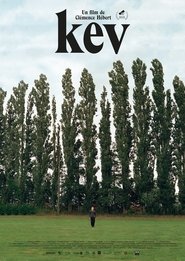
One night, nine children from the same Tunisian village attempt the deadly crossing. Like a poem or a prayer, this film welcomes the words of bereaved mothers and gives dignity to their grief.

Brussels, La Monnaie Opera House. Three people near the end of their lives meet with choreographers, actors and musicians. They take part in a unique experience which involves music, dance and silence. Their journey becomes a tribute to the fragility of the human condition, between reality and representation, tragedy of the body and freedom of the spirit. Together they question their own relationship with death.

In January 2017, a video showing a young Gambian man named Pateh Sabally drowning in the waters of Venice’s Grand Canal went viral on social networks. From the shore, passers-by could be heard insulting him, rather than attempting to help. 4,000 kilometres away, the voices and faces of his family tell the story that preceded this tragedy, the story behind the images.

Since November 2022, the Brussels prisons of Saint-Gilles, Forest and Berkendael have been moving to the brand-new "prison village" of Haren, on the outskirts of Brussels. An ultra-modern, ultra-secure, semi-private prison. But why build new prisons in the first place?

Over many years, the director’s father filmed his family life almost obsessively. His daughter’s birth, his son’s first steps, and always Valérie, the young mother. An impressive fund of material which their now grown-up daughter Faustine appropriates to tell quite a different story: that of a woman who sees her role as a mother and its demands take away her freedom step by step.

Fabiana, Carlo, Claudio and Vincenzo… I met them in 1982 in Mercatale, their village in Tuscany, near Florence. They were aged between 25 and 45 and were cheerful militants in the Italian Communist Party, that strange party which has made its mark on history and which was both a school and a family for them. I have filmed in Mercatale every two or three years for over 20 years (1982/2004). The fi lm takes the “long view” of their political and personal development against the backdrop of village life. Stories with both human and political interest spanning over a quarter of a century with relevance for present day issues: what has become of the plans to change the world in Berlusconi’s Italy? From a more global perspective: what else can politics do? When the time comes to take stock the paths of their rich and varied personal lives cross once more with all their doubts and allegiances.

Documentary on the atrocities the germans committed at the start of WW I in Dinant.

In Italy, in the mid-seventies, Adriana, Barbara, Nadia and Susanna were 20 years old when they decided to join the armed struggle and leave behind their social life and their families in order to make the revolution the center and the aim of their existence. Today they have returned after many years in prison, and they try, each one of them, to recount their own experiences. They speak about the political reasons which initially sustained them, the conflicts, the doubts, and the moments of being torn apart which market out their lives as women caught up in the vortex of war. A course of events which ended in the condemnation of the armed struggle and the pain of the lives that were destroyed – their victims’ lives and their own.

What happens when a world that relies on traffic and the logistics that allow it comes to a standstill? What happens when sickness and even death are taken from us?

The Amazon flows lazily through the goldmine-gashed landscape of northern Peru. Using real eyewitness accounts, directors Bénédicte Liénard and Mary Jiménez tell the story of a young woman who winds up in the clutches of forced prostitution when her initially hopeful attempt to escape the constrictions of her village goes wrong. Step by step, she is robbed of her moral and physical integrity. The film reconstitutes a space of dignity and returns voice and identity to a fate formally made nameless. With its powerful imagery, the girl’s traumatic odyssey embodies the destruction of life in a capitalist world in connection with horrific natural devastation.

As a letter to her son, the filmmaker testifies her experience as a photographer aboard the Aquarius, a ship that rescued 29,523 people in the Mediterranean between 2016 and 2018.

This film is an African “Boyhood” that gives an insight to the political and historical situation of Burundi throughout the last 24 years through the eyes of six street children that now have become adults.

She was born in a cave, more than 60 years ago. Now she lives in a village, with many children and grandchildren to look after. Sometimes, she dreams of her dead mother calling her home – to the cave.

Today, as a skipper for bulgarian tourists, Nikolay recalls the dream he accomplished in 1985 : going around the world by himself. In crossing the iron curtain, he has shown the way to freedom to an entire generation of young Bulgarians.

Documentary about a man remembering his struggles while floating on a boat down a river.

Laosan, a young family man, spends all his time smoking opium. For his community, lost in the heart of the Laotian jungle, opium farming is the only way to survive. But opium is also the poison that puts men to sleep and kills their desires.

Through a powerful visual metaphor, Camille Vigny gives a first-person account of the domestic violence she suffered. The images and text interact with remarkable precision to convey the devastating impact of the cataclysm. It's a political gesture, brimming with courage, an icy cry that takes your breath away.

Galician writer Xavier Queipo is getting ready to move back to his homeland after more than 30 years of living in Brussels. He empties his house and puts his memories in boxes the removal company loads onto their truck to take them to Spain. Another Galician man, the filmmaker Hugo Amoedo, who is based in Brussels, too, wonders whether and when he’ll be back in his homeland. In the meantime, he teaches his son to ride a bike, wonders, dreams, struggles to unravel ideas for films, and argues with the clerks of the Brussels post.


It was summer on the shores of Lake Geneva. Alice was on vacation at the campsite with her mother, she was bored. One day by chance, she met Zack in the middle of the sunflower fields. Today the summer is over. Before dying, the faded sunflowers tell us the story of this invisible love.