On October 24, 1940, Philippe Pétain met Adolf Hitler in Montoire and led the French into collaboration with the Nazis. A black page in the history of France, written by a man whom many then considered a hero: the winner of Verdun.

At the end of WWI, the treaty of Versailles established the conditions for peace in Europe. The aim for the victorious powers was to make Germany pay reparations, and to guarantee a future without war. Yet a decade later, the denunciation of 'Versailles' became a powerful lever for the nazis to obtain power as these reparations would mark the beginning of the humiliation of the German people, and nurture a feeling of having been bestowed a hopeless future. In the 20 years that follow the end of WWI, the issue of reparations and responsibility will effectively poison international relationship. The treaty negative impact goes well beyond WWII as the new European borders it implemented led to many conflicts during the twentieth century. This documentary shines a light on the causality between the decisions taken with the treaty of Versailles, and the ensuing events of the century.

The international success of the film Das Boot by Wolfgang Petersen made U-96 one of the most famous submarines in cinematic history. But the true story of one of Hitler's most fearsome U-boats and its crew goes far beyond fiction. For the first time, this documentary sheds light on the reality behind the fiction through exclusive interviews with the makers and actors of Das Boot, as well as the last survivors of the time. In doing so, this documentary explores how Hitler's propaganda images may have influenced the visual and narrative force of Das Boot.

In August, 1944, during the landing of Provence, a french soldier, too young to wage war, meets a Senegalese Tirailleur in combat.

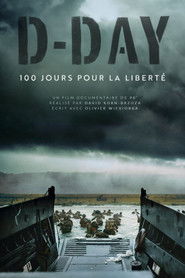
Using restored, colorized archives and testimonies from all the players in this conflict, this documentary covers the hundred days of apocalyptic fighting that wrote History. June 1944, the Allies landed in Normandy. This odyssey was meticulously prepared for months. The construction of two artificial ports, the transport of Anglo-American troops, their training cost colossal efforts, and caused many cold sweats: the secret of D-Day almost came to light several times. The documentary reveals the inner workings of Operation Overlord, it also deciphers the military operations, and evokes the choices of the high command. Placed at human level, it retraces the fate of Norman civilians subjected to deadly bombings, the attitude of the Allied soldiers and their German adversaries, as well as the aspirations of the French population, torn between fear and hope.

September 3rd, 1939. Britain and France declare war on Nazi Germany, only two days after the Wehrmacht invades Poland. This day, the sad date when the fate of the world changed forever, the Phoney War began: eight months of uncertainty, preparations, evacuations and skirmishes.

A century ago, from February to December 1916, the French and Germans provided a superhuman effort to control a few hills in eastern France, located in front of Verdun . A frontal confrontation, conducted without the help of their allies, army against army, nation against nation. Today, this battle seems absurd to us. Because it has caused almost as many casualties in each camp and its strategic utility has never really been demonstrated. But in 1916, soldiers on both sides did not consider it absurd: they agreed to fight. Why ? By reliving the rare Herculean confrontation of our ancestors, using reconstructions made in the 1920s, using a large number of animated computer-generated images that recreate the topography of the battlefield, this documentary returns, with the help of the historical adviser Paul Jankowski , on the last great victory won alone by France against Germany.


The war memorials of 1914-1918 have become so familiar that we no longer see them. They've become an invisible museum, blending into the landscape of France. Then, one fine day, a sculpture catches our eye. Another History appears, perhaps the most gigantic artistic project since the cathedrals...

In August 1944, in a Maquis of the south of France, a group of resistance fighters has the mission to prepare and to make easier the landing of the Allies in Provence. In this difficult context, a father tries to protect the innocence of his son, devastated by tragic events that he just lived through and to make him glimpse that there is a life after war.

A young woman comes to Roissy airport to pick up a military canteen that has been returned to her. It is the effects and pictures of Jean Péraud, a reporter photographer who disappeared at Dien Bien Phu on May 8, 1954. Soon, the discussion begins between the young woman and the former press companions of Péraud who are present. Through the memories and stories she provokes, the ever-present questions about what makes the war image resurface: is the reporter a witness or a combatant? Does he protect himself from the effects of war by filming it, or does he take more risks in order to bear witness? Can we speak of art in front of this image made in the face of death?


Built on archive footage – much of it previously unseen – this film reveals one of the most unexpected legacies of the First World War -- popular participation in sports, once the realm of the elite. For four years, sport represented a welcome respite from the killing fields of Europe.

A six-part French documentary about the Second World War composed exclusively of actual footage of the war as filmed by war correspondents, soldiers, resistance fighters and private citizens. The series is shown in color, with the black and white footage being fully colorized, save for some original color footage. The only exception to the treatment are most Holocaust scenes, which are presented in the original black and white.


