A fairy tale story about how the enchanted mill was freed from ghosts and how the shepherd Franta knew fear when he had to confess his love to Verunka...

There are still water spirits among us. One group lives in Prague, led by Mr. Wassermann, who is using his wife's family as a servants. All they need is their old house near the river. But the house is to be demolished. They have to stop it. And the only way is to drown Dr. Mrácek, who is responsible for the demolition. But he falls in love with Wassermann's niece Jana. He changes to fish, is mistaken for water spirit from Germany, is drowned and revived again. The other problem is the flour with ears... and so on...

Detective Lieutenant Boruvka (Lubomír Lipský) is called to the State Scientific Library to investigate the loss of a precious manuscript, the Infernal Psalter of the Occult Sciences by Master Peregrinus from the eleventh century, written in a secret script which has only recently been deciphered by senior lecturer Zajíc (Josef Chvalina). Chaos is reigning in the labyrinth of passages and halls of the former monastery where the library is housed. In order to save space the director of the library has introduced a peculiar system. The books are arranged in the bookcases according to height and six girls dressed in black, the library assistants, are quite happy to cut volumes down to size in case of need. Boruvka refuses the case, since he is specialist in murders. He has to return to the investigation, however, when senior lecturer Zajíc disappears.
The story of an unhappy, childless princess, her loving husband and the poor villagers threatened by a terrible disease, who finally received help from above.

To Moscow have arrived the participants of the international conference of the zoophilologists and also the international jury which is to elect for the world festival the best performance of the program of Moscow circus. Mrs Whistler (Iva Janzurová), British associate professor, makes her understood with the animals in their language but the Czech professor Ruzicka (Jirí Sovák), though he is capable of using the animals language, prefers teaching the animals the human language. Ruzicka's friend, the poodle Archibald, speaks "in Human" very well. The scientific dispute ends with a bet - if Ruzicka teaches the circus elephant to sing, Mrs Whistler will eat up her hat.

Popelka, a resourceful and independent young girl, is a servant in her stepmother's house and confides in her closest friend the owl. When she comes across three magical acorns, she's granted a single wish for each one of them.

The urn supposedly containing the remains of Alice's grandfather falls out of the window and breaks. To Alice's great surprise, the urn is empty and the girl learns that the grandfather didn't die but disappeared under mysterious circumstances on the 2nd September 1946 in the town of Telc. Her grandmother claims that a mysterious young man with dark glasses was implicated in her husband disappearance. Alice is determined to solve the mystery. Grandmother's story leads Alice to a shoemaker who hands her Professor Jeník's - her grandfather's - invention, called the Force-fields Accelerator. Alice tells her boyfriend Petr about the device and the young man creates a time machine following the professor's instructions. The young couple then travel back to 1946 and there they indeed meet Alice's grandfather, and his daughter Blanka, who will later be Alice's mother.

Láda Pitras (Ludek Sobota) and Oto Vacák (Petr Nározný) founded in the company Pragokov a Research department of recruitment of labor. For recruitment of workers in professions sought after both recruiters worked out an effective, often almost illegal methods. They followed secretly for instance the welder Niederle and managed to record his lovesick courting to his colleague Anicka. The fear of his jealous wife made him to join Pragokov.

In the Czech film comedy from 1988, you can see for yourself that the war was not easy, but otherwise it was great fun. Sergeant Kouba serving with the paratroopers has a soft spot for women. His superior does not like him. However, during a military exercise on the way to the barracks, Kouba shows his true character when he saves the life of a little boy, convicts a thief and finds a lifelong partner in the commander's sister.

The Ronov castle has been changed into a hotel, offering stylish facilities to its guests: weddings in the torture chamber, a Black Lancer kidnapping brides, a night's lodging in a family tomb etc. The reformed petty swindler Felix Pacínek (Bohumil Smída) runs the hotel. The business is far from thriving; the place is half-empty, and the jazz band Skeleton, together with their singer Zuzanka (Jaroslava Obermaierová), decide to leave. Nobody in the hotel has any idea that the band is in fact a gang of thieves who have just robbed the Prague State Bank, taking two million crowns from its vaults.

The hero, rushing from one misfortune to another, is former accountant Řehoř Maršíček, who after a heart attack, out of fear of death, decides to live a calm, moderate life and follow the principles of a healthy lifestyle. Not to smoke, not to drink, to exercise and eat healthily. He takes up the position of an auditor of patients and hopes that he will have peace in his new job. Instead, he experiences one nervous breakdown after another. He gradually makes one good resolution after another. Řehoř falls into unhealthy food, alcohol and women. In addition, he gradually loses most of his life's certainties, including a roof over his head. The result is a second heart attack, after which the hero promises himself again that he will fix everything and live a healthy life.

The nine-year-old Prague boy Pepiček flies to Moscow as an involuntary stowaway on an airplane. Together with the Soviet pioneer Mischa, he pursues an alleged agent in the hustle and bustle of the World Festival and is flown back to Prague in the evening.

The exemplary accountant Antonín Safránek lives his orderly life as a citizen of a small town. His wife Eliska brings up their three children and desperately tries to get by on her husband's low salary every month. At the same time, she sadly watches the luxurious life of their neighbor and other people like him who have no qualms about improving their standard of living by cheating. One day, the infallible Safránek makes a mistake in the cash clearance and there are nine one-hundred Crown bills left in the safe. An unexpected company control carried out the next day passes without problems and the account is closed. The temptation is too strong. The insufficient control enables Safránek to gradually steal one million Crowns.

The musical version of the successful play of Oldřich Daněk was transferred to the screen by director Jiří Sequens in 1986. It takes place in the 14th century in Bohemia during the reign of King Wenceslas IV. Heroes of the story are three mercenaries who always fight on the wrong side and are always beaten, but they are moral winners of all conflicts and skirmishes.

A story about a young medical school student and his adventures.

A young Czech couple are terrorized by their funny family.

The three Potůčks live in a house in Ouplavice: a widower grandfather, a son whose wife has run away, and a still unmarried grandson. The father works as chairman of the agricultural cooperative, the son leads the local youth and the pensioner grandfather supplies the two of them with lots of witty advice through the trumpet of his inseparable pipe. They've got a lot on their minds right now. Their village is in competition with neighbouring Piscory, and their opponents are using dishonest weapons to fight...

Tram driver Marie has far too much to do after her shift is over. But she likes to do it all since she loves her husband Václav sincerely. One day she spots him on the Lesser Town Square in Prague, kissing an attractive blonde good-bye. It seems to Marie that her small comfortable world has collapsed and she walks out of the tram in tears. But her sadness does not last long. She wipes off the tears and begins to act. She withdraws all the money from their savings books and buys off all the latest models from the Fashion Works. The visit to the beauty salon then completes her transformation into a lady.

Arabela was a children's television series produced in Czechoslovakia which aired from 1979 to 1981. The series has 13 episodes and is in the Czech language.

Thirty Cases of Major Zeman is a Czechoslovak action-drama television show intended as a political propaganda to support the official attitude of the communist party. The series were filmed in the 1970s. Each episode encompasses one year, and investigations are stylized to that year. Most are inspired by real cases. The series follows the life of police investigator Jan Zeman during his career from 1945 to 1975.

Pan Tau always had a gentle expression and a friendly smile, he was elegantly dressed in a stroller, with an umbrella and a white carnation in the lapel. Foremost, he was famous for his magic bowler hat. By tapping on his hat, Pan Tau was able to change his appearance into a puppet, to conjure up miscellaneous objects or to do other magic. His most characteristically behavior is that he would help children who were experiencing some sort of difficulties in-between their dreams and reality, like finding a place for skiing, settling family problems on Christmas, and even give a boy a good time at a fair when he is supposed to have piano lessons. To adults, he usually remained invisible.


The Battle of Moscow is a 1985 Soviet multi-part war narrative, presenting a dramatized account of the 1941 Battle of Moscow and the events preceding it. The battle was the first major defeat of German Wehrmacht in the Second World War.

It's the year 2484 and the Earth is threatened by a rogue comet which could fatally change its orbit. The solution is surprising - Adam Bernau, the greatest genius of 20th century developed 500 years ago an ingenious formula for easy transporting of continents and even worlds. Unfortunately, he made this discovery at the age of 11 and the exercise book containing it was destroyed in the fire. But this is not a challenge to Academic Filip who decides to send an expedition back in time to retrieve the precious exercise book from the fire. But everything is not so simple as it seems...


The action of the epic film takes place in the second half of World War II. The plot focuses on the liberation of European countries from German occupation and the anti-fascist activities of the communist parties of these countries. After the victory at Stalingrad, a decisive turn occurred during the war. The main aim is the rallying of all patriotic forces, the creation of a national anti-fascist front in the struggling countries. The swift offensive of the Soviet troops, problems with the opening of a second front, major operations and the offensive of the Soviet army lead to the liberation of Europe. Rebellions are rising in different countries - such as the heroic uprising in Warsaw, in Slovenia, Bucharest and other cities. Brave heroes who performed immortal feats in the name of the happiness of mankind and freedom.


Sanitka was a Czech television, drama series, first broadcast in 1984 and eleven episodes were made. It starred Jaromír Hanzlík, Tomáš Juricka and Zlata Adamovská among others.

Stories from a daily life of children attending a regular school.

Chalupáři is a Czechoslovak comedy TV series filmed in 1974 and 1975 by František Filip.


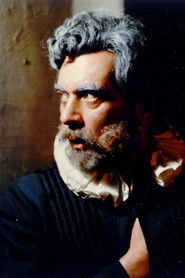
Series about the life of Renaissance anatomist, scholar and politic Johannes Jessenius. Already legendary series today, was produced by Czechoslovak Television Bratislava, directed by Slovak director Miroslav Luther in the first half of 80's in Barrandov Studios in Prague. The story and screenplay of the series wrote Czech writer Vladimír Körner. Five-episodes epic historical narration is a biographical story of distinguished Renaissance scholar, anatomist and politic of Slovak origin, Johannes Jessenius (Ján Jesenský, 1566–1621). It displays his life from the first studies and successes. In 1594 he became professor of surgery and anatomy on Wittenberg University, which he had attended years before. From that moment, his life went through social and personal wins and losses, to the sad end on the Prague Old Town Square gallows, among 27 noblemen, knights and burgenses, after lose Bohemian Revolt in 1621. His destiny was coupled with key events of Czech history in the break of 16th and 17th century, when Renaissance and European humanism slowly fade out.