This film explores various aspects of litterateur and painter Ram Kumar's personality by structuring the film around his stories and paintings, traveling between fragments of his past, present, fiction and imagery. It strives of etch out the synthesis of word and image in Ram Kumar's creations, presenting it as a portrait of the artist himself. The text used in the film is from various short stories by Ram Kumar.

This documentary highlights the achievements of India in the political, economic, and international fields since she attained Independence. The framing of her Constitution, the integration of the States and the general elections, the rehabilitation of displaced persons, the river valley projects, and the setting up of a chain of National Laboratories are some of the achievements shown here.

A reflection on the life and death of India's second Prime Minister, Lal Bhahadur Shashtri.

The precautions to be taken during and after an air-raid by the people, are shown in this film.

The film talks about the opening of opportunities for artists through national exhibitions, state exhibitions and cultural exchanges.

"Discover Dr Anil Prakash Joshi's Himalayan journey in 'A Son Of Himalaya". From rural roots to ecological visionary, witness his symphony of sustainability, GEP innovation, and the transformative power of nature's whispers.

Divided into three parts — The Awakening, The Struggle, and Freedom — this is a biographical film on Pandit Jawaharlal Nehru, the first Prime Minister of independent India. Relying on Nehru's writings and speeches, the film traces the evolution of Nehru from his birth through his life. It also deals with the effect of history on Nehru and in turn his impact on the world.

A documentary on the life of the youth in post-Independence India.

Mahatma: Life of Gandhi, 1869–1948 is a 1968 documentary biography film, detailing the life of Mahatma Gandhi. The film was made to seek to tell the life story Gandhi, and his incessant search for Truth. The film contains animation, live photography and old prints to provide an integrated image of his life. The story itself is narrated using mostly Gandhi's own words. There are several versions of the film. There is the 5 hour version in English, a shorter version which runs for 2 hours and 16 minutes, and an even shorter version which runs for an hour. A Hindi version exists, running for 2 hours and 20 minutes, and a German version at 1 hour and 44 minutes.

Centred around a film festival of Indian films in China, the Film reflects on the dominant as well as alternative impressions of cultures – people, histories and landscapes – brought to us by cinema, playfully examining the idea of the cinematic image as an integral part of cultural propagation.

Documentary on director Satyajit Ray, featuring an extensive interview and clips from his films, and location shooting of his film "The Home and the World."

An impressionistic biographical look at Siddheshwari Devi (1908–1977), the classical Indian singer whose voice was appreciated by the maharajas and public alike.
Short film presented by Films Division of India

Unpaid... overworked... a woman at home.... mother ! How muchdoes her labour cost ? Raising such a questions, this film fathomshistory - of matriarchy and patriarchy, of morality, of oppressiveanti-woman modes.

A lyrical Indian documentary tracing the life and teachings of Gautama Buddha. Directed by Rajbans Khanna and produced by Bimal Roy, the film blends narration with evocative imagery of India’s landscapes, art, and archaeological sites to reflect the Buddha’s search for wisdom and peace. Premiering in Paris, it went on to earn a Special Mention at the 1957 Cannes Film Festival, where its spiritual depth and visual poetry were widely praised.

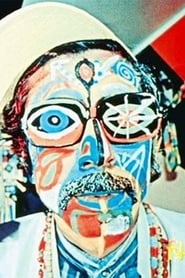
“Unlike a cartoon film, which is a rapidly moving series of photographed drawings, in pixilation, a moving object is shot frame by frame, and then through clever editing made to appear in motion. By its nature, this movement is agile, energetic and unpredictable just like the pop art movement.” [Pramod Pati]

Documentary about Indian filmmaker Satyajit Ray

Made by M. F. Hussain who belongs to the progressive group of painters, this experimental film presents the painter's images of Rajasthan, through cinema.

The film aims to help Indian children to learn the correct way to sing India's National Anthem.
This is a film about the communal disturbances which stormed the streets of Nalanda District of Bihar in May 1981.From the personal point of view the film goes into the discovery of the humanitarian causes and repercussions involved in such acts of savagery. How can people engage themselves in such acts of killing? Covering common people's opinions, this film offers a diagnosis.