A portrait of Pope Pius XII (1876-1958), head of the Catholic Church from 1939 until his death, who, during World War II, and while European Jews were being exterminated by the Nazis, was accused of keeping a disconcerting and shameful silence.

Nowadays we associate Johannes Kepler with his famous laws of planetary motion. But the history of his discoveries is a drama of Shakespearian proportions - full of intrigue, passion, depravity and corruption.

On operated by Prussian prime minister Otto von Bismarck the German Empire is finally founded in 1871 on the floors of Versailles castle, ancestral seat of the French monarchy.

Hygienic habits are as old as the various human civilizations; but each era establishes its own customs: whether private or public, everywhere and at all times, methods of personal cleanliness have depended on cultural conventions, religious morals, political ideologies and economic interests; because the control of basic hygiene has also been and is one more tool in the infinite exercise of power over the masses.

On the 200th anniversary of Karl Marx's birth, the docu-drama paints a multifaceted portrait of the most influential German thinker of modern times. The world-famous actor Mario Adorf embodies the equally contradictory and contradictory world spirit, in the dichotomy of prophetic confidence and fear of failure. An exciting cinematic journey through his life and work.


Everyone lies, even several times a day. Although this is considered immoral, it seems to be an ancient natural habit. Animals also tell lies for their own benefit. And not every lie is to be condemned. Some are considered a lubricant for daily coexistence. Scientists are trying to track down liars with lie detectors and thermal imaging cameras.

With the intention of selling opium to the Chinese, and in the name of free trade, the British declared war on the Chinese Empire in 1839. Since then, disagreements between nations can be understood as economic disputes. A history of trade wars.

September 1st, 1939. Nazi Germany invades Poland. The campaign is fast, cruel and ruthless. In these circumstances, how is it that ordinary German soldiers suddenly became vicious killers, terrorizing the local population? Did everyone turn into something worse than wild animals? The true story of the first World War II offensive that marks in the history of infamy the beginning of a carnage and a historical tragedy.

He described his love of art as his greatest inclination from his youth: Johann Joachim Winckelmann as a representative and rediscoverer of Greek and Roman antiquity. He was the father of European art history and was the victim of a robbery-murder in 1768. The documentary tells of his life, his work and his early death.

Germans colonized the land of Namibia, in southern Africa, during a brief period of time, from 1840 to the end of the World War I. The story of the so-called German South West Africa (1884-1915) is hideous; a hidden and silenced account of looting and genocide.

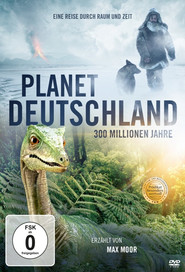
Documentary tells the story of Germany's origins from the Carboniferous period to the present day. It leads from the highest Alpine peaks to the rugged North Sea coasts - from the craters of the Eifel to the river labyrinth of the Spreewald. Back then - around 300 million years ago - giant dragonflies, for example, buzzed through dozens of meter-high fern forests. In the course of the Earth's history, however, we also encounter dying dinosaurs, meet rhinos and elephants on the Rhine and come across what is probably the first human in Heidelberg. Later, the Neanderthals appear and suddenly disappear again - for reasons that are still unknown. And finally, modern humans gradually spread and began to shape their environment.


The painful story of Ireland and the Irish people, who struggled for centuries to free themselves from the tyrannical clutches of the British Empire; an epic tale of poverty, hunger, despair, violence and unyielding courage.

In 1938 an airfield was built at the northeastern-most end of America, the descent went slowly but incessantly through the Cold War. This is the story of how its inhabitants gradually moved away from the great world stage and had to reinvent themselves as well as their home town.

They say it's over 2000 years old, and more than 4,000 miles long. But even today nobody really knows for sure. The Great Wall of China is one of the world's famous buildings but it is still the least known. British writer and historian William Lindesay has lived in China for twenty years. Exploring the Great Wall has become his lifetime obsession.

Coffee is the second most important commodity in the world after oil. The drink has a long history and what's more, its effect seems to be stimulating in two senses.

The Vietnam War was the longest conflict of the 20th century. It was the first time that the media brought a war into our living rooms. This had consequences: Its images are deeply engraved in our memories: the widespread dropping of napalm bombs, the naked girl fleeing screaming from a cloud of fire. This war came to an end on May 1, 1975.

Around 5000 years ago, one of the largest and most powerful empires in history emerged on the Nile – Ancient Egypt. This mysterious era continues to fascinate us. In eight episodes, this series shows the unique achievements of the ancient Egyptians in government, culture, and society. International scientists and researchers decode the facets of this advanced civilisation. The first territorial state in history was founded more than 3000 years ago – making it older than any nation in existence today. Crises keep dividing the region and causing chaos, and it is these phases that the people on the Nile fear the most. They know that only order and stability can lead to prosperity. Egyptians are given a sense of identity and unity by their diverse cultures.


A scientific and historical mini-series looking at the relationship between human beings and the moon.

Three-part documentary series in which anthropologist professor Alice Roberts and archaeologist Neil Oliver go in search of the Celts - one of the world's most mysterious ancient civilisations.


Germany loves biathlon – and you’ve never been this close to the stars. The documentary series accompanies them through a dramatic year and shows tears, pressure, and emotional moments from the inner workings of the team. It tells of fierce competition and the struggle to return to the top of the world in 2024/25. The camera is there when there are arguments, laughter, and celebrations behind the scenes – as in the case of Franziska Preuß’s spectacular overall World Cup title.

The Ascent Of Civilsations’, questions the myths and unravels age-old clichés about some ancient cultures. It examines their strange and sometimes amusing idiosyncrasies, gives fresh insights into who they really were, and provides a novel take on their societies, peppered with surprising new revelations. This is a new look at the Ancients that will change our perception of them.


This series deals with the mass migration of Germanic tribes at the very beginning of European history, when Rome raced toward collapse.

“300 Million Years” relates the dramatic history of how the continent of Europe came to be and the first humans to call it home.