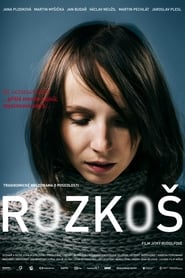
The film's protagonists get an opportunity to make a wish. Consequently, their lives take the path they themselves ordained. Several "coincidences" bring them everything they wanted and they have the chance to experience their wishes. We are not only responsible in our lives for everything that we do, but also for everything we say, we think and desire.

Slovak musicologist Agata Schindlerová, now settled in Dresden, has spent years mapping out the forgotten destinies of Jewish musicians whose lives were irrevocably marked by the advance of nazism. Scenes from the lives of several of them are portrayed in the film In Silence (ballet dancer Alice Flachová, pianist and conductor Karol Ebert, composer, conductor and director of the Dresden Theatre Arthur Chitz, pianist Edith Kraus, and the vocal ensemble Comedian Harmonists), which draws a sharp contrast between the protagonists’ carefree existence working and making music during the pre-war era and the subsequent severe upheaval in their lives brought on by the proliferation of nazism.

When the mother of two adoptees is tipped off about the possible affair her husband may be having with one of their children, her sense of duty takes a macabre turn.

Currently Mongolia’s capital has 1.5 million inhabitants - half the population of the country. 50-year Tumurbaatar is only one of many coming to the city to fulfil their dreams of a better life.

Spitz is the German-Jewish coach of the football team Macedonia during World War II. Under his leadership, the team fights to become the champion of Bulgaria's National Football League

Rouzbeh arrives in Prague, far from his troubled family life in Tehran, to research his father’s past. Visiting the flat where his father, a communist expatriate, lived 50 years ago, in the times of Czechoslovakia, he is stopped by a policewoman investigating a recent accident. The current resident of the flat, Vladimir, who turns out to be Rouzbeh’s half-brother, has fallen out the window. Discovering hidden corners of Vladimir’s life and getting closer to his soul, Rouzbeh learns a shocking truth about his father, totally contradicting the image of a hero he had about him. This puts him on the path which led to Vladimir's fall from the window.

The story of this political thriller takes place in the 90s and follows one night of the life of the Deputy Minister Nikola and his wife Ana.

It's nighttime in Prague, 21 August 1968. Soviet troops and tanks are occupying the city - random attacks, soldiers shooting, bodies lying dead on the sidewalk. With an impromptu crew, the director (Karel Roden) captures some unique evidence - material which is, however, worthless in occupied Prague; it has to be shown to the rest of the world. So, while the Soviets are concocting false reports of heartfelt receptions without military resistance for propaganda purposes, the director sets off on a risky trip across the closed Czech-Austrian border to Vienna.

After her husband's death, Hana lives on alone in the family villa. Her two sons visit her with their families, but these visits frequently end in quarrels. When Hana meets Brona, a hardy fellow, inured to winter swimming, a new world opens before her. Brona's team-mates absorb her into their team and Hana gradually learns to overcome her fear of icy water. Her relation with Brona grows into love.

After her father's wedding, Tereza travels to her grandmother's house with her boyfriend and sister. Their mother takes care of their grandmother and the house. Tereza feels that everything in the house has been left to its own devices, just like her grandmother, who is losing touch with reality due to a lack of attention. Unfortunately for everyone involved and the whole family, Tereza decides to stay in the house and take care of the repairs. But not everything needs a breath of fresh air and repair, and without realizing it, she cleans up much more than just dusty cobwebs in the family.

A perfect couple rents a holiday home on a sunny Italian island. The reality does not live up to their expectations when they find out that the pool in the house is broken. Ignorant of the fact that the island faces water shortage, they ask for someone to fix it. The constant presence of a stranger invades the couple's idea of safety and starts a chain of events, which makes them act instinctively and irrationally, heading to the darkest place in their relationship.

Mr. Safari, an 80-year-old pensioner, lives alone and without direction. When his son, living abroad, tries to arrange for his elderly father to visit him, Mr. Safari becomes dangerously obsessed with a local female travel agent who is hired to help. Co-written by acclaimed filmmaker Jafar Panahi (Crimson Gold, Taxi), this provocative story delivers a quietly powerful statement about loneliness and those who get left behind in contemporary Tehran.

Film crew on the road: Director (Jaroslav Plesl), his Producer (Simona Babcáková), and their Director of Photography (Jirí Vyorálek) and Sound Arist (Johana Svarcova). Starving artists who already have a number of films to their names, Czech Lion award-winning films, excellent reviews and have been screened at numerous festivals, but they don't have audiences. Their next collaborative effort - the Director's lifetime dream - is quickly becoming oblivion because he failed to win a grant, which means it won't be made. And so the frustrated Director and his colleagues await their chance among record-holders of curious disciplines such as crawling with a squash racket or collecting four-leaf clovers. How will the collision of these two worlds end? What will the Director's next film be about?

It's spring 1939. The bishop in Banska Bystrica finds out that in the village of Piargy, that was buried by an avalanche a few days ago, the Antichrist was born. The bishop calls on priest Balaz and asks him to investigate the statements of Johanka, the only survivor of the catastrophe. Balaz wants to know what exactly happened in Piargy.

Thirteen-year-old Marek shoots videos on social themes, making him an outsider among his classmates. At home, his peaceful relationship with his mother is disrupted by his mother's new acquaintance. In the most sensitive phase of his life, Tereza enters his path.

In the 1980s, Anna, a Czech sprinter, starts training for the Olympics. After she collapses during training, she learns she is being given steroids and decides to stop using them until her mother helps the coaches give them to her.

“Try to describe what it's like to see,” one of the blind actors in Jana Ševčíková's documentary urges the film crew. The same challenge for him is to express how reality is perceived and experienced by a visually impaired person. Ševčíková therefore does not explain the blindness. Using everyday situations as examples, she empathetically and without pathos presents the stories of six people who never stop dreaming, yearning, and searching for ways to be as free in life as the sighted majority. They find sources of energy in work, sports, dance, and relationships. We are also transported into their world by the dimly lit black and white camera and the layered soundtrack.

Somewhere in the middle of nowhere in the Czech provinces, a handful of people come together: a paranoid prison guard, his hypochondriac neighbour and the latter’s silent, despairing wife, a lovesick nightclub manager and a stripper who is a single mum.

In 1939, a group of Jewish teenagers has to leave for Denmark in order to escape from the fate of their parents, relatives and friends. They spend 4 years together in a unique oasis, which enables them to start their new lives.

One day, teenager Magda offers her expensive necklace to a sick child in the hospital she volunteers for- her father is certain she is lying again. When she proves her innocence, he is ashamed and guilty but also incapable of admitting he was wrong. Relationships are now broken and in chaos, and past decisions have an irreversible outcome.