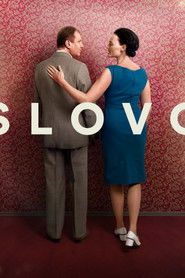
The film is based on real events – in 2005 Viktor Kalivoda murdered 3 random strollers he chanced upon in the forests in Czechia. The case received much attention for its lack of motive. After his arrest, Kalivoda confessed, but did not reveal his motive. The film will closely observe one year in his life leading up to the murders and his arrest.

“I'm waiting for mom and dad. The calendar ends today. Many of us will die, but not like Grandpa did two years ago, only worse.” This is the morning report of ten-year-old Daga. The girl is prepared for any threat. Unlike her parents…

Poland, 1982, the politically heated days of communist martial law. Two coal miner brothers react differently to the oppressive police state. While Tadek prefers to retreat into neutrality, Janek chooses active engagement in the democratic underground. When Janek asks Tadek to store some anti-government leaflets on the second anniversary of Solidarity's 1980 strikes, he triggers a spiral of events that will have everyone's allegiances and characters severely tested.
A follow up to the 2009 sketch comedy referencing urban legends from the Ceausescu regime, the film is expected to expand to accommodate stories from different ex-communist Eastern European countries, including Poland.

Through the window, Dawid watches a new neighbour move into a house next door. The girl is more or less his age. She's wearing a strange skirt. Later on, Dawid finds out it's a Hawaiian hula skirt and the girl's name is Monika. Most probably, he also learns why Monika's grandma has gone away to Hawaii.

The story of what daily life was like in Poland under communism: private conversations, cruel interrogations, recruitment attempts, recorded and filmed with hidden devices; of how the secret services spied on every activity of ordinary citizens: nothing escaped the brutal system of control developed by the Soviets in the name of freedom.

Empty shelves, trading cards and chickens sold in a shoe store. This is Polish everyday life from over four decades ago. Although the starting point is the moment of introduction of martial law, thanks to selected recordings we go back in time by 16 months and 12 days in order to better understand the mood at that time and the complexity of the processes that led to the decision of December 13, 1981.

Documentary about preparations of Krystian Lupa's play based on Kafka's “The Trial”.

Poland, 1970. When popular protests erupt in the streets due to rising prices, the communist government organizes a crisis team. Soon after, the police use their truncheons and then their firearms. The story of a rebellion from the point of view of the oppressors.

Beata Parkanová, the filmmaker behind Moments, returns to Karlovy Vary with an exceptionally vivid portrait of the family of notary Václav Vojíř, a small-town moral authority, and his selfless wife Věra. This masterfully told and highly original intimate drama, whose protagonists undergo a difficult ordeal in the summer of 1968, is reinforced by finely wrought, exquisite performances from Martin Finger and Gabriela Mikulková.

A seemingly normal afternoon in the city gets disrupted as passers-by are temporarily unhinged from their daily business. A man lying on the pavement becomes a problem not only for the local tenants but also medical services and the police.

A group of actors centered around one charismatic director are getting ready to compete for work on a new film. They all want to get closer to him and wil do anything to make it work.

Leopold Trepper, a former Red Army officer and hero of the anti-Nazi resistance, faces a Kafkaesque struggle in 1970s Poland as the demons of anti-Semitism resurface. Stripped of his job and under constant surveillance, Trepper leaves with no hope of return.

Three separate stories – a mother, her teenage daughter, and a police officer – converge thanks to one event: the titular incident, wherein a dog is injured.

Bombed-out streets, destroyed Russian tanks, evening meals in an Underground repurposed into a shelter. Image by image, the directors push beyond easily reproducible images of war to enter the reality the country has experienced since February 24, 2022.

Tadeusz Rolke, an aged master of Polish photography, has more than just a typical teacher-student relationship with 15-year-old Michał. Together, they travel across Poland to take portrait photographs of the residents of small towns and villages while the dark room placed in their camper enables them to develop pictures on the spot and give them to the models whom they accidentally met. For the boy, this is an excellent opportunity to find out about the arcana of traditional photography. For both – an opportunity to experience a beautiful friendship.