Russian President Vladimir Putin was one of the first politicians to congratulate Donald Trump on his election as president of the United States in 2016, but over time the relationship between the two heads of state has had its ups and downs. Are they friends or enemies? Has their mutual admiration turned into mutual distrust?

The war is raging in Ukraine that is changing the world order. One man is standing up to Russia and wants to restore peace and security in his own country: President Volodymyr Zelensky.

On February 26, 1920, Robert Wiene's world-famous film The Cabinet of Dr. Caligari premiered at the Marmorhaus in Berlin. To this day, it is considered a manifesto of German expressionism; a legend of cinema and a key work to understand the nature of the Weimar Republic and the constant political turmoil in which a divided society lived after the end of the First World War.

A double portrait of two dictators who were thousands of miles apart but were constantly fixated on each other.

Driven by extensive archive material and interviews with those who know her, this is the astonishing story of how a triple outsider – a woman, a scientist, and an East German – became the de facto leader of the “Free World”, told for the first time for an international audience.

The complex relationship between royal brothers Edward VIII and George VI, who were both at the heart of the infamous abdication crisis of 1936, is the subject of this excellent documentary. From British Pathé TV's Royalty Collection.

A woman lives in a small village in Russia. One day she receives the parcel she sent to her husband, serving a sentence in prison. Confused and angered, she sets out to find why her package was returned to sender.

Is it morally acceptable to use the civilian population as yet another tool for waging war? Is it possible to justify death and destruction for the sake of supposedly lofty ideals? The question remains as pertinent today as it was at the beginning of World War II, and it is becoming increasingly urgent to answer, as countless tragedies have been caused by unethical political decisions.

Film journalist and critic Rüdiger Suchsland examines German cinema from 1919, when the Republic of Weimar is born, to 1933, when the Nazis come into power. (Followed by Hitler's Hollywood, 2017.)

A critical and objective look back at Ukraine's tumultuous and tragic history, from its mythical founding in the 10th century to the Russian invasion in 2022.


Gdańsk, Poland, September 1980. Lech Wałęsa and other Lenin shipyard workers found Solidarność (Solidarity), the first independent trade union behind the Iron Curtain. The long and hard battle to bring down communist dictatorship has begun.

No monarch has reigned longer in British history than Elizabeth II, who has been an authority for 70 years. A ruler without power, yet a factor of power. And even today, she is an icon at the center of the world's public. On the occasion of the celebrations for the 70th jubilee of the throne at the beginning of June 2022, the documentary "The Queen - The Fateful Years of a Queen" highlights six decisive phases in the Queen's life and recounts the moving moments and trying trials of the royal family and the United Kingdom over the decades.

Hannah Arendt was one of the most fearless writers of the 20th century, and her report of the Adolf Eichmann trial coined the phrase, “the banality of evil.” The German American scholar transformed her time as a political prisoner and refugee during World War II into insights about the human condition, the refugee crisis and totalitarianism.
This film undertakes a journey into the amazing parallel universe of East Berlin’s fashion designers and experts in the art of survival. For, in the midst of the constraints of life in the GDR, there existed a fantasy world where it was possible to dance to another tune, be individual and even provocative. The most important characteristic of this bohemian scene was one’s per- sonal style. But this certainly wasn’t something that could be bought off the peg in the GDR. In this parallel universe it was up to you to create your own individual image – with your own hands. This film tells the story of the desires, the passion and the dreams that were tried and tested, lived and performed in the shadow of the Berlin Wall.

The Vatican opened once-secret records on Pope Pius XII on March 2020. This gave researchers a brand new insight into the Catholic Church during the Nazi era. What did the Pope know about the Holocaust?

Documentary accompanies the great DEFA film director and painter Jürgen Böttcher, alias Strawalde, detail through his biographical and artistic life: from his childhood as a Nazi boy, his career and his struggles in the GDR under the SED regime, to the opening of the Wall and his international successes. He tells us very personally why he never wanted to leave the GDR and why he never wanted to break with it despite all the reprisals.

In 1937, amidst Stalin's Great Terror, a newly appointed prosecutor for the USSR is made aware of alleged corruption in the Secret Police, and takes it upon himself to investigate.

Who was this Vladimir Ilyich Ulyanov, who became so famous and infamous under the name Lenin? Dreamer, theorist, founder of the state, predecessor of Stalin. His name is inextricably linked with the Russian October Revolution of 1917. He created Soviet power. When he died in 1924, he bequeathed the 20th century a new kind of despotism: the dictatorship of his cadre party. Vladimir Ilyich Ulyanov, who became famous and infamous under the name Lenin, wanted to overthrow the monarchy, modernize Russia and spread socialism across the globe. Under Lenin's leadership, the Russian Social Democratic Workers' Party seized power in the Russian October Revolution of 1917. He wanted to liberate the peoples and yet he only fell for the age-old idol of uncontrollable power - and he unapologetically sacrificed millions of lives to this power.

18th century Vienna. Maria Theresia von Paradis, a gifted piano player and close friend of Mozart's, lost her eye-sight as a child. Desperate to cure their talented daughter, the Paradis entrust Maria to Dr. Mesmer, a forward-thinking-physician who gives her the care and attention that she requires. With the doctor's innovative techniques of magnetism, Maria slowly recovers her sight. But this miracle comes at a price as the woman progressively starts to lose her gift for music.

When World War II breaks out in 1939, several people from different countries and social backgrounds must decide which cause they want to defend.

From the armistice of 1918, which marked the end of the First World War, to the declaration of war in September 1939, the beginning of the Second World War: an era during which there was an aspiration to create a new world, prosperous and at peace, but which provoked a new tragedy, seen through the destinies of thirteen people who were both actors and witnesses of the upheavals of the so-called inter-war period.

Recounts the tumultuous history of Cuba, a nation of foreign conquest, freedom fighters and Cold War political machinations.

A look back at a cruel conflict, the Franco-Prussian War (1870-71), which changed the political geography of Europe and sowed the seeds of a deep antagonism between France and Germany that culminated in two world wars. Excerpts from the diaries of the witnesses, photographs and painted panoramas tell the truth about a forgotten war.

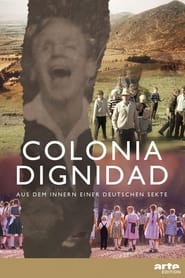
The self-proclaimed preacher Paul Schäfer gathered people around him in post-war Germany. The sect founded a youth home near Cologne. But in 1961 Schäfer had to flee. Many followers followed him to Chile. 350 kilometers south of Santiago, far away from civilization, they begin building the Colonia Dignidad. A supposed model village with workshops, agriculture, livestock breeding was being created. But paradise became hell because slave labor, violence and sexual abuse soon became a part of everyday life. After the military coup in 1973, Schäfer served the new rulers: secret police chief Manuel Contreras and dictator Augusto Pinochet now came and went in the colony, while the opponents of the terrorist regime are tortured and killed in the cellars. Using unpublished archive material and contemporary witness statements, this 4-part documentary miniseries traces the complex, 50-year history of perpetrators, victims, supporters and opponents of this place that became the epitome of evil.

Recounts the largest migration movement in history in which 55 million Europeans left their home countries and set off to America.

This outstanding and sensitive drama series tells a young and family audience the stories of children who lived through a most difficult era in recent history - and who grew with its challenges.

When war broke out in Europe in 1914, most people thought the conflict would be over by Christmas; they could not imagine how wrong they were. An attack in Sarajevo ended up becoming a snowball that swept the world: a new kind of warfare had begun, waged with techniques and means never seen before. By November 1918, ten million people had died and the political map of the planet had been redrawn.

Seventy years after the liberation of Auschwitz, we have not finished accounting for the destruction of Europe's Jewish population. One question remains today: not why, but how was the Shoah possible?

The People’s Republic of China now plays a central role in global politics, economics and diplomacy – more than it ever has before. Its president, Xi Jinping openly espouses the model forged by former Chairman, Mao Zedong, known as the Great Helmsman. But what do we really know about Mao? And how does his legacy relate to Xi’s ‘China Dream’? This 3-part documentary series explores Mao Zedong, his beliefs and his methods. It shows how these have shaped Xi’s philosophy and the reality of today’s China. Mao had set China on the road to true sovereignty, freeing it from the humiliation of foreign domination. Xi is now completing that journey towards the strong Middle Kingdom and cultural predominance that Mao aimed for – while sweeping under the carpet the unthinkable victims and costs of Mao’s rule. The story arc of Mao’s astonishing biography provides varied and profound insights into the ideals, strategies and ambitions of today’s People’s Republic and its position in the next decade.

The history of military tanks unfolds in a documentary series that traces their role in history and geopolitics from World War I to the 21st century.


Angela Merkel, Germany's first female chancellor, ended the "Merkel era" in 2021 after 16 years and with it a remarkable rise from "Kohl's girl" to "the most powerful woman in the world". Today their legacy is overshadowed by the climate crisis, Russia and the refugee issue. Two and a half years after her departure, the documentary series sheds light on the key years of her career and chancellorship, including Samira El Ouassil, LeFloid, Marina Weisband and Annegret Kramp-Karrenbauer. The series focuses on the view of the “Merkel Generation” on the chancellorship of the first woman at the head of Germany.


Afghanistan is at a crossroads between traditions and a contemporary lifestyle.


In 1970, near the Ukrainian village of Chernobyl, a utopia was born: the world's largest nuclear power plant. Its inhabitants, chosen for their talent and faith in the future, lived a dream that was shattered on April 26, 1986, when the technologically obsolete plant exploded, causing thousands of victims.