The main character of the documentary is a 16-year-old Kurdish girl who, after the tragic death of her mother on the Polish-Belarusian border, has to become a mother to her 4 younger brothers.

Vika, who is 84, is one of the eldest DJs in the world. Because of her attitude, she is far from any stereotypes about senior citizens. Bittersweet documentary musical about consistence in following your own path and fighting for your dreams.

An extraordinary journey through the material that makes up our habitat: concrete and its ancestor, stone. Victor Kossakovsky raises a fundamental question: how do we inhabit the world of tomorrow?

Croatia, 7th of January 1992: In the middle of the war, a young journalist's body is discovered dressed in the uniform of an international mercenary group. Twenty years later, his cousin Anja Kofmel investigates his story.

A prismatic meditation on pollution in the capital of the World’s biggest free-market democracy and the most polluted and populated city, Delhi – a film about the pollution inside of the human mind.

Kos (13) is going through the most bizarre period in his life. His mother died a few years ago and his dad is having a heart attack. While Kos’ father is in the hospital, it looks like the hotel he is running will be a big mess. But Kos and his three sisters do not intend to let that happen. After the siblings find out that father is deep in financial problems, the hotel is threatened with closure. The children however come up with a solution: someone has to win the local beauty pageant, with a hefty cash prize attached.
The Icelandic people was born of Norwegian immigrants who would not submit to the tyranny of the king of Norway and established a republican country in the Middle Ages, where social classes were virtually diluted and developed a subsistence economy. After centuries of freedom was first submitted by Norway and then by Denmark until World War II. Iceland has always had a libertarian spirit that is born of its history and of being a place with few inhabitants and always with a rebellious and disobedient spirit.

The untold story about wild rabbits which lived between the Berlin Walls. For 28 years Death Zone was their safest home. Full of grass, no predators, guards protecting them from human disturbance. They were closed but happy. When their population grew up to thousands, guards started to remove them. But rabbits survived and stayed there. Unfortunately one day the wall fell down. Rabbits had to abandon comfortable system. They moved to West Berlin and have been living there in a few colonies since then. They are still learning how to live in the free world, same as we - the citizens of Eastern Europe.

A luxury hotel in a conflict zone. Development aid worker Dorothea begins an affair with a young drifter, Alec, but what starts as sweet distraction brings her dangerously close to losing control.

1 village, 1.000 tractors, 100.000 tons of cabbages & potatoes each year - which are hardly sold and eventually destroyed. Is there any way out?

Winter. A bus stop in a small village. People are waiting for a bus. They talk. Listening to their conversations, the viewer can imagine the world they live in. United by the movement of the camera, the place and the people blend together.

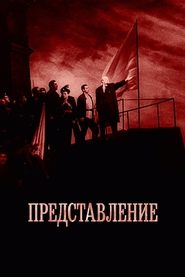
As he did with his critically-acclaimed "Blockade," a documentary re-creation of the WWII siege of Leningrad, which received its NY theatrical premiere in March 2007, filmmaker Sergei Loznitsa has once again scoured the Russian film archives for "Revue," selecting excerpts from newsreels, propaganda films, TV shows and feature films that present an evocative portrait of Soviet life during the 1950s and 1960s. With scenes taken from the length and breadth of the “Soviet Motherland,” "Revue" illustrates industry and agriculture, political life, popular culture, and technology. The film’s fascinating flow of disparate scenes representing typical Soviet life of the period is, seen from today’s perspective, alternately poignant, funny, and tragic

Making film wears down director Lars von Trier, but he is not able to live without them. In the documentary film this Danish auteur’s all-consuming love affection for film is portrayed. Now he is standing at a cross-road. While film as we know it is dying.

25 years ago, Louis Sarno, an American, heard a song on the radio and followed its melody into the Central Africa Jungle and stayed. He than recorded over 1000 hours of original BaAka music. Now he is part of the BaAka community and raises his pygmy son, Samedi. Fulfilling an old promise, Louis takes Samedi to America. On this journey Louis realizes he is not part of this globalized world anymore but globalization has also arrived in the rainforest. The BaAka depend on Louis for their survival. Father and son return to the melodies of the jungle but the question remains: How much longer will the songs of the forest be heard?

This is about sex. About sex in Germany and who, on which side of the Iron Curtain, was better at it. At the end of the Second World War, Germans shared the same culture, lifestyle, morals. But four decades later, everything had changed. Forty years of division left their mark in many places—including the beds of the German people.

Farmland - the new green gold. Hoping for export revenues, Ethiopia's government leases millions of hectares of farmland to foreign investors. But the dream of prosperity has a dark side where the World Bank plays a very questionable role... Dead Donkeys Fear No Hyenas investigates land grabbing and its impact on people's lives. Pursuing the truth, we meet investors, development bureaucrats, persecuted journalists, struggling environmentalists and evicted farmers deprived of their land.

Nardos, an Azmari singer from Addis Ababa, dreams of telling stories about the lives of ordinary people through her music. In her search for the stories behind her songs, she meets Gennet, a poet who lives on the streets with her children. Nardos puts the lives, visions and power of Ethiopian women at the center of her creation as we slowly immerse ourselves in a rapidly changing country.

Amany Al-Ali stands out as one of Syria's few female cartoonists, residing in her father's home in Idlib, the last city unconquered by Assad's forces. Like her remaining neighbours she's submitted to relentless Russian airstrikes and caught between advancing troops and extremist groups. Despite acclaim for her art, she faces threats, condemnation, and degradation, causing her to contemplate leaving. Ironically, her artwork has graced galleries in France and Italy but never received exposure within Syria's borders. The film captures her endeavor to organize her inaugural exhibition in Idlib. This experience compels her to confront the harsh realities of a city defined by bombings and male interference. While organizing drawing lessons for women and girls, comforting her young niece, and sharing her story with the documentary crew, Amany's outlook on the future gradually erodes.
Thomas Heise, noted documentary filmmaker from the former GDR, takes a trip to France to visit his brother Andreas. His brother lives there in a rather unusual situation.

Art, politics and motorcycles - on the occasion of his 90th birthday John Berger or the Art of Looking is an intimate portrait of the writer and art critic whose ground-breaking work on seeing has shaped our understanding of the concept for over five decades. The film explores how paintings become narratives and stories turn into images, and rarely does anybody demonstrate this as poignantly as Berger.

Going to the local market when we visit a foreign city is something we all love to do. More people visit them in one day than all the city's art museums put together. Markets attract us for their colours, smells, people, sounds and taste.