A salaryman living alone in a small apartment is visited by complete strangers, a large family with grown-up sons and a daughter, who take over his apartment and his life. They use his money and he has to wait on them as their servant. They even steal his girlfriend. Although they behave very dictatorially, everything is decided "democratically" by the majority.

Tarō Okamoto became world-famous by designing the “Tower of the Sun” at Expo ’70 in Osaka. The ideas and problems that came with its creation, however, are intertwined with the evolution of Japanese culture – from the Paleolithic up until modern times. In his documentary debut, director Kōsai Sekine takes us on a philosophical journey that transcends the visual limits of documentaries.
Siblings Aru, age 3, and Kino, age 1, have 3 parents: father Fumino, who is transgender; mother Honoyo, Fumino's partner who gave birth to the children; and father Gon, a close gay friend who donated his sperm. The 3 are now raising their children together, struggling repeatedly to find their own way of being a family. This program covers their first 3 years of parenting. And it asks an important question: What does it take to be a family?

Okinawa, Japan. Momoko loved the piano and attended a school that had one. Then the war arrived and she was drafted to work in an army hospital. Could she survive the war through the power of music?

Host Peter Barakan delves into various aspects of Japanese culture; exploring practices, history, and modern innovations in such areas as ramen, rice, sushi, geisha, bonsai, and so much more. Local experts discuss their passions at fascinating length, and American Japanophile Matt Alt experiences the food, practices, and cultures in each episode in depth. Viewers will finish each half hour episode with a new understanding of an area of Japanese life through demonstrative videos and explanations, all delivered respectfully and true to the Japanese way of life.


A new educational variety "Waruiko Atsumare" that both children and adults can enjoy suddenly started on NHK Educational TV from 8:25 on September 13 (Monday). While it was difficult to go out freely, E-Tele cooperated with Goro Inagaki, Tsuyoshi Kusanagi, and Shingo Katori if they could learn about society while having fun and laughing for both children and adults. In this program, everyone who is curious and tries to come into contact with various values is called "Waruiko". And, we will deliver in omnibus format various planning corners that will lead to "learning". A way of looking at things unique to this era. People who are professionally active in a certain field. It is a program that fosters a soft sensibility to face the world with free ideas.

In conversation with... Japan expert Robert Campbell sits down with individuals from all walks of life whose drive and perspectives are changing Japan.


Learn how to make the most of your Japanese skills. Watch our drama that features useful communication strategies, our snappy videos about onomatopoeia, and our documentaries on workers from abroad in various parts of Japan.

Our new TV program helps you learn about Japan and the Japanese language through simple and easy Japanese news. You will learn not only Japanese expressions but also the latest situation of Japan.

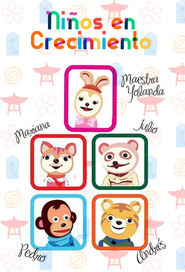
Ōkiku naru Ko (大きくなる子 Children growing up) was an educational Japanese show, produced by Studio Nova, that aired on NHK through April 7th, 1959, to March 18th, 1988. It was created for 1st and 2nd-year primary school students in Japan, teaching them lessons like morals and how to act at school. The show is more notable for the Monkey Puppet meme portrayed by the main protagonist Pedro.[1] In the 1980s and 1990s, the series was also aired in Latin America under the name "Niños en crecimiento". This was the penultimate season of the show, airing from April 13th, 1984, to April 4th, 1986, in Japan.[2]

Japan has a long history of natural disasters. BOSAI explores how to overcome them and save lives with the power of science.

In the future, Earth itself is no longer inhabitable by living creatures. Humans begin their interstellar migration with space colonies. Vince and Hana work as researchers in the Cambrian Project. Together with the creature Pikaia, they seek the Lost Code, the key to restoring Earth, and aim to return to Cambrian-era Earth.

A show about the process of design, as well as how things are designed and made in Japan.


In this new entertainment-type documentary, challengers from Asian countries come all the way to Japan and go through difficult experiences for just 3 days. By seeing the challenger's struggles, you will come to understand the enthusiasm of the Japanese and what they value. Through the eyes of the daredevil, you'll discover another side of Japan you've never seen before.

Centuries ago, Tokyo was known as Edo. More than a million people enjoyed life in this small but abundant city. They live on in ukiyo-e woodblock prints. Each episode is a deep dive into a single print, and an exploration of the soul of Old Tokyo. We examine works by artists like Hokusai and Hiroshige not just for their aesthetic and historical value, but for the stories they tell of everyday life. That is how the people of Edo themselves enjoyed this mass-produced medium.

Accelerate your Japanese language skills! Learn practical, effective workplace expressions, understand business culture and improve your kanji.

An up-to-date information on the recent matches of the Go competitions along with easy to understand explanation on the various moves and techniques.

The magician Kyary lives in a magical house with her companions Saffy and Zuby. Her friends Rito, Shun, and Tsugumi, as well as the takoyaki-loving Aoyan and the fashionable PEACHY bird duo, come to play in the magic house and have a blast every day. They play games, fight, and have all kinds of unexpected happenings. Come and play with them in the magical house, where the world of excitement and thrill spreads!