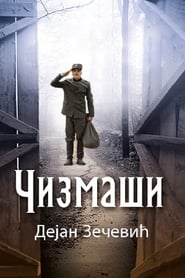
The exploits of a depressed architect in Belgrade as he wanders about searching for the future in a land where the future no longer exists. Handsome Nikola is in his mid-thirties. He earned the nickname Champ because he used to race speedboats. He makes a decent living as a free-lance architect and his apartment is spacious and comfortable. Ana is attracted by the Champ's good looks and apparent prosperity. He is always pensive though; even when he is out drinking at the local clubs with his companions he cannot help but brood about the state of Belgrade. Though the city appears fairly normal on the outside, the presence of the war is signalled when a reluctant conscript in the army is dragged away.

An orphan finds a family, old couple that has no children, day before Christmas. The twists and turns of this melodramatic comedy is inspired by timeless words of Branislav Nušić.

The film is picturing the faith of the old Serbian warrior Milisav Janjic, who fought against the German occupation in the Second World War as a member of the "Ravnogorski pokret". The storyline narrates his memories of the past and the war events in the spring of 1941 interwoven with the contemporary moments, the author features the attack of fascist Germany, the April war and the fall of the Kingdom of Yugoslavia, the misfortune placed upon the Serbian people, loss of freedom, birth of the freedom movement in Serbia and one Serbian soldier, who after 70 years of expatriation in America returns to his homeland.

By the end of 1915, during the second half of World War I, which had started by the Austro-Hungarian Empire's attack on a small Kingdom of Serbia, Serbian people, its army, and the state found themselves in the greatest tribulation in its long history. Serbia is attacked by the combined militaries of Austro-Hungarian Empire, Germany, and Bulgaria. Defending every road, every hill, every creek, during the time when every village, every plato, every crossing was becoming a historical landmark, Serbia, relying on the Allies, moved its people, its government, and its remaining troops to Kosovo--the only unoccupied part of the Serbian territory, but soon had to cross Albania in the hopes of reaching the Allies' ships in the Mediteranian.
What happened to guys and girls of Military academy since we last saw them? The first generation of cadets continue their adventures with the addition of some new blood. What one generation knows, and another is about to find out is that Military academy is not just a school, but way of life.

In the opening stages of the Bosnian War, a small group of Serbian soldiers are trapped in a tunnel by a Muslim force.

A man dies in a foreign land. On his deathbed he asks his son to bury his bones in his fatherland, a country of brave and honest people, a country of tragic but heroic past. His son wonders the world unsuccessfully looking for his father's home. He eventually finds the country in which people speak in his father's language, but everything else is absurd and unbelievable and does not fit his father's stories.

On a train, various group of people interact with each other during one night.

The film narrates a tormented love story between one of the most famous poets of Serbian literature, Laza Kostic, renowned for his sublime poetic puns and word coining and an enchanting young girl by the name of Lenka Dundjerski, an educated and refined daughter of a landowner Lazar Dundjerski. Standing in the way of their love is the insurmountable age gap between the two, as Kostic is 29 years older than his beloved one. The affair inspired one of the most sophisticated and tender love poems of the time, an utmost expression of yearning, in which the poet's unflinching devotion is linked to his admiration for a Venice basilisk by the name of Santa Maria della Salute.

The story is set on the day of bombing of RTS (Serbian national TV) in 1999, which follows five characters whose paths intertwine on the fateful night.

A love story of a couple coming from different social backgrounds set in the context of Yugoslavian reality, its social and state decline. Their quest for the meaning of life proves to be nothing but failure.

Dragi, young intern with his experienced colleague went to the province on a business trip. Older colleagues has the task to introduce a younger colleague into the business. They are sellers of books. But time is socialism. How to sell a book?

The plot of this television movie is located in Belgrade, the hometown of screenwriter Velimir Lukic, in the 1960s. It was the time of the party discipline, in which the free thinking and free behavior of individuals meant heresy. This is a drama about political showdown, about the metamorphosis of high-level intellectuals ready to do anything to defy the authorities and retain their privileges. At the same time - this is also a love story that, under the political circumstances that accompany it, is misused precisely because of those well-known higher goals.

A writer with a writer's block is tormented by his lack of inspiration. His girlfriend shows up and talks to him about his writing and her father. After she leaves, her father, an ex officer of the military and ex communist party member, rings the doorbell. After a tense introduction, the father starts to retell his life in order to try to explain why he did things that his daughter hates him for. It is not clear if writer's girlfriend and her father are part of writer's fiction, memories or reality.

Brief history of Serbian history from the World War I

The film follows the celebrated writer and Nobel prize winner Ivo Andrić during WWII, when diplomats and diplomatic staff from Yugoslav missions from countries occupied by the Third Reich, including Andrić, who was ambassador of the Yugoslav diplomatic mission in Berlin, were deported to a hotel on Lake Constance.

Dagi is a famous actor, but a heavy drinker. At one point his condition becomes critical and he ends up in the hospital where he is diagnosed with delirium tremens. Having lost sensation in his limbs, incapable of grasping what is happening around him, imagination plays tricks on him, and as he falls into delirium he finds himself in surreal situations. Once he comes round, he realizes that his life has been ruined and attempts suicide. Saved at the last moment, Dagi remains in the hospital overcome with apathy. However, things change when Lisa, a therapist from England, appears with a revolutionary new method of therapy for severely affected patients known as - psychodrama.

Love triangle story between the village gendarme Đorđe, his wife Katarina and the young disabled war veteran Gavrilo during the time between First Balkan War and World War I.

Vera has young woman as the main heroine, who is in the jaws of the war spy network in WW2 and also of the patriarchal society in the Balkans with full of powerful, arrogant men with whom she deals bravely and arrogantly.

Once employed at BBC, Timothy John Byford moved to Yugoslavia in 1971 to direct children’s TV programme. Cult family TV shows remained in pleasant memories of the many, and Timothy married and settled in Belgrade forever. We find out more about the hero of our childhood.

The comedy "Radio Mileva", directed by Elmir Jukić, is based on the idea of Nebojsa Garić. Mileva is the head of the house, she knows everything, she knows everything and she understands everything. A pensioner who spent her working life as a secretary to the President of the Municipality. Confident, energetic, anointed, a woman who has all the information, a woman for all time, resourceful and shrewd.

A young member of a gang in Belgrade puts his family in danger when he angers a mafia boss.


The story is about funny experiences of a politician named Srećko Šojić, played by Milan Gutović.

Rip-off of “Everybody Loves Raymond” with a very annoying over-the-top comedian and star of the gambling commercials in the role of Raymond (Rale).

Belgrade, 2003. When Serbian Prime Minister Zoran Djindjic is assassinated, the country plunges into chaos, and the authorities' response is to introduce a state of emergency. A turning point in recent Serbian history through the perspective of a journalist, a police officer, and a criminal.

Lack of money, inability to find a permanent job, living with parents or roommates, unsettled love relationships — this is how the life of most young people in Serbia could be described. Through the four friends' struggle with the life challenges, the series also tries to evoke the spirit of Belgrade today: it talks about those who live in it, those who leave it, but also those who return to it.

Selo gori, a baba se češlja is a television series in Serbia. First aired in 2007, the show quickly gained national fame with episodes in its third season averaging approximately 2.9 million viewers. The show was aired on RTS1.

Follow heroes who are on the threshold of middle age, focusing on that moment of their lives when their "youth" and all the illusions they clung to finally give way to decisions and obligations that require maturity.

A young journalist Bosko, along with his girlfriend Jelena and best friend Milenko, gets caught up in a conspiracy to obtain a notebook which records unexplained paranormal events.

Story about the most influential Serbian dynasty of the Middle Ages.

Ravna Gora tells story of events after April War 1941. Serbia with accent on the Chetnic-Partisan conflict, at the beginning of World War II

A powerful lyrical story about the sergeant of the former Yugoslav Army Zika Kurjak, from childhood in miners' home, through military days, to severe depression, imprisonment and the metropolitan madness. Kurjak, the personification of human kindness, who is impaired and disturbed, as an old and ornate in the hospital, speaks in detail about his life. Through this searing story of sergeant Zika Kurjak and his life, some of the crucial historical circumstances of the 20th century are being blunted, as well as the fate of the heroic Serbian army, which becomes part of the new system after unification, and which the system is gently destroying leaving individuals individually fighting for it and prevent inevitable decay.

The intertwined lives of numerous characters set in 1990s Belgrade who all try to live happily during rather unhappy times.

Ranjeni orao was a Serbian television show produced in 2008 and aired on RTS1 during late 2008 and early 2009. The 17 episode series is based on the 1936 novel "Ranjeni orao" by Serbian author Mir Jam. The show had unprecedented success with the last episode averaging over 3 million viewers, making it the most watched Serbian television series ever made.

Series is about a wealthy family chased by things of the past.

The story of fictional Katić family. Vukašin returns home from the studies in France to tell his father Aćim and brother Đorđe that he plans to marry the daughter of his father's political opponent and enemy. Aćim threatens to wipe him out from the will and intricate family relations come to light. Đorđe and his wife have problems, because after 15 years of marriage they still have no children.

An updated version of a legendary Yugoslavian 1970s sitcom “Theater at Home”.

Set in the 1930s, the series is about the impossible love between a poor young man from the province, an unemployed law graduate and a talented singer, and the rich and sensitive heiress of a bank manager and owner.

The story of two people who, at first glance, are connected only by their name - Kosta. The first, a refugee from Krajina, is trying to survive, while other is peacefully building a career.