A Flemish family comes together in their maternal home. Oscar, the grotesque patriarch, his bedridden wife Magda, his feeble son Johnny and his daughter Julia, who's married to a Moroccan soccer player. There's something wrong with Magda, who's not only plagued by her physical decay, but also by visions of her dead sister Marleen.

In the TV film Polonaise, traffic jams have grown into a phenomenon in which traffic jam call girls, hairdressers and photographers enliven the endless delays. The film follows a number of people in a jam on the A5. The central character is a Pole in an expensive Saab Convertible, who is wanted by the police. A red Panda carries the heavily pregnant Hilde and her cynical sister. Hilde is worried because she has not seen her friend anymore after a quarrel. In an old Saab, a young couple is bickering. She is a `yuppie cunt' who stakes her marriage for a parking licence and is tired of her husband smoking dope. Charlie the music promoter is driving his son's car. He likes traffic jams, because they allow him to settle his deals undisturbed and meet his secret love, the traffic jam call girl Nena. While the characters are confronted with each other and themselves more and more, tension rises to a peak. A radio pirate connects the story lines with his chatter.

In 2024, the iconic Rietveld Schröder House in Utrecht will celebrate its 100th anniversary. Gerrit Rietveld designed and built the house in close collaboration with his secret lover and creative partner Truus Schröder. Rietveld himself did not build his houses for eternity; he thought a life cycle of 50 years was sufficient. But the current owners of houses designed by Rietveld think differently about this. They pull out all the stops to renovate and preserve their Rietveld houses.

In a drought-struck region in India, suffering from climate change and a high suicide rate amongst farmers, a group of resilient women farmers, who recently lost their husbands, is coming together with a local psychologist to learn counselling and help others in grief.

In The State of the Grass, the battle that people are waging with their lawn is portrayed. We see that battle through the eyes of a hedgehog and a magpie. The magpie will mainly observe the people from above or from a distance and the hedgehog, on the other hand, sits close to it, scurrying through the plants. The people who will be observed are everyday people who want to have a perfect lawn. They constantly have to overcome new obstacles in their search for the perfect grass. Through the eyes of the magpie and the hedgehog we experience their frustrations. But also the passion that people feel or the satisfaction when they have solved a problem.
A man is travelling on a long haul express train journey from Amsterdam to Paris. He shares his sleeper compartment with another man who he engages in conversation. He learns that the man is a cannibal who intends to kill and eat him. The man is unsure of where his life is going and begins to be swayed by the cannibal's assertions that being eaten would give his life meaning and purpose. However, how long can the man stall for, with questions on the finer points of eating someone?
Fien de la Mar (1898-1965) was a Dutch actress with exceptional allure and extraordinary talent. With this she celebrated many triumphs, but her life ultimately ended in tragedy.
How do you deal with the fact that someone close to heart has suddenly disappeared without a trace? Can you go on living whilst waiting for his return?

Tragicomedy about two brothers who married two sisters, walking the streets of Deventer at night lamenting the fact that each should have married the other one's wife.

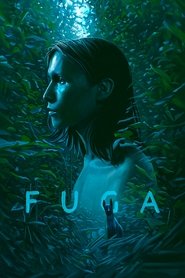
In the heart of the Peruvian Amazon, Saor, a young androgynous Indian, carries a coffin. He is taking Valentina, his lover, back to her native village to bury her. When Valentina left this village years ago, before becoming a transgender singer in a faraway city, people here knew her as Pol. Valentina's past and death remain an enigma. Yet bit by bit, through his encounters with the people of the village, Saor begins to perceive what connected them to Pol. Sensitive to the world around him, Saor, like a Shaman, enters their memories. Saor starts to understand that, like all homosexuals persecuted by Shining Path terrorists, Pol lived in terror. In the village cemetery, between rage and bitterness, Saor attends the burial of Valentina's body. A ceremony that is both a burial and an exhumation.

The story about Jan visiting his grandfather for the last time during the summer in a little village in Drenthe. Thanks to Jan, his grandfather decides to do what he never dared during his entire life. Jan, as an outsider, is some sort of spectator of the life in the village, although he is also involved in that life.

In 1990s Amsterdam, Loe and Bob are in a relationship, but wanting different things. Loe is a singer who likes to party and who is also engaged in migrant support. Bob is a lawyer focused on his career. As the film progresses, the tensions in the relationship become exposed.

Incredible optical illusions in a story in a story in a story helps the surprised viewer finally to find out that he has been watching himself all along.
A chimney sweep’s daredevil antics are meant to keep a young woman from jumping off the roof. But does she really want to jump? Or does he maybe? A street sweeper is watching and passes the hat round for our hero. Or is he part of the act too?

Homer and Joé trace the rivers of Croatia aboard a small boat. In spite of being fifty years old each one, none of them knew of the existence of the other until the recent death of the father of both. Now, however, they are half brothers. During the voyage, they meet Sean, an enigmatic Irish adventurer who will join them on the journey.

From the filmmaker's perspective, we follow the process of a possible feature film about a photographer (Lea) tasked with capturing the energy transition in Amsterdam's harbor area. This brings up a flood of memories and associations. What do you do with what hasn't gone well in your life? How well can you know someone dear to you? Filmmaker and character turn out to coincide more and more during the process.

A young couple employed by a pet crematorium finds fulfilment in respectfully removing cadavers. Their love blossoms in an environment where the boundaries between human and animal are fading. When they hit a stray dog, their relationship starts to derail.

Over the years, filmmaker Jan Bosdriesz collected curious souvenirs from various countries that he cherishes. He wonders about their history. Among his favourite items are the Russian LPs by Pyotr Leschenko from the 1930s that he once inherited from his father. While Bosdriesz travels to Russia to learn more about the life of the singer whose music was forbidden in Soviet Russia, the turbulent history of the filmmaker's family is also addressed. During his trip, Bosdriesz talks to people who knew Leschenko.

One night in the trenches during the Spanish Civil War, Joan Brossa heard a voice call his name. He didn't see anyone and walked towards where he thought the sound came from. A moment later, a shell hit the ground where he had just been standing. From that moment on, Brossa wanted to be a poet.
In the nineties, it was decided to convert Tiengemeten, an island in the Haringvliet estuary, from an agricultural area to a nature reserve with three zones, which were labelled 'wealth', 'melancholy' and 'wilderness'. After part one, focussing on the period 1996 to 2001, in part two of her documentary Sinke talks to the Vos brothers, the last two farmers on the island with whom the authorities are still negotiating about the conditions of their departure, and to representatives of the Society for the Preservation of Nature, the Department of Waterways and Public Works, the local authorities and Brussels, who mainly discuss the finances. Between times, she films the island.