Leni Riefenstahl's flamboyant Nazi aesthetics shaped the public image of the 1936 Olympics. Never before had sports and politics been mixed. Through archive photos and reconstructions, we get a closer look into the historical propaganda show.

Thoughts of a diversity of public and private citizens on the virtues of democracy, its faults, its decadence, its fall and the rise of populism.


A history of Nazi television programming and technology, from 1935 to 1944.

The war in the Ukraine has changed the way many European countries view Russian politics. Suddenly it became clear how dependent countries had become on Russian gas imports for decades and what Vladimir Putin was up to. However, no country needs more gas than Germany. It was only after Russia's invasion of the Ukraine that the German government realized that Russia had long used gas as a weapon to impose its will on states. The instrument created for this purpose is the natural gas production company GAZPROM. So how did Germany become so dependent on Russian gas? The documentary shows how, over several decades and several changes of government, a broad alliance of politicians and business representatives did everything possible to secure Germany's energy supply with cheap Russian gas, while the Kremlin's foreign policy became increasingly aggressive and the warnings of experts went unheeded.

Why is a person evil? Is evil in the genes? These questions have always preoccupied people. The approaches to explaining evil are as varied as evil itself. The latest science assumes that there are three factors that shape human behavior: genes, the environment and the individual situation. All three factors interact and influence each other. The film presents the latest research and addresses one of the most exciting questions in behavioral research.

With his blue eyes, blond hair and boyish laugh, he conquered German cinema audiences in the 1950s and 60s: Berlin-born Hardy Krüger made it all the way to Hollywood as an actor. But he was just as passionate a writer, pilot and globetrotter.

Born into a Bavarian bourgeois family, Heinrich Himmler became the driving force behind the indescribable crimes that made the Nazi regime so unique in modern history.

Adolf Hitler spent the last ten days of his life in a bunker underneath the Chancellery of the Reich. Unwilling to face the consequences of defeat, the dictator ended his own life on April 30, 1945 in this fortified underground complex. Featuring exclusive interviews with the last survivor’s of Hitler’s inner circle and extensive archival footage, Death in the Bunker is an illuminating look at the Führer’s final decisions in preparation for his suicide.

If, at first, human being used stars to find its bearings, mankind can nowadays count on science to measure the Earth at a millimetric scale. Because land surveying of our planet is still in full swing. Satellites, cameras or drones : technology progress allows the scientists to explore it all. They can measure oceans, volcanoes, or even the atmosphere. But scientists are walking a tightrope, torned between their desire to gather more and more informations, and a population concerned about personal data's protection. This documentary shows a glimpse of actual scientifical research, and interrogate numerous scientists about the interest of land surveying in their specific field of research.

At the beginning of the year 2020, a relentless plague sweeps the planet and, as a consequence, a global lockdown is gradually decreed: how did people from very different latitudes, living necessarily very different situations, experience this shared solitude? How did people adapt to the restriction by decree of their personal freedoms and the transformation of many bustling metropolises into ghost cities?

The spectacular moon landing in 1969 was also a success of more than 100 technicians and engineers from Germany, some of whom had already revolutionized weapons technology and built rockets in Hitler's service during World War II. The documentary analyzes the entanglements of German NASA employees with the Third Reich.

Crises, the struggle for raw materials, climate change and digitalisation – the world is changing rapidly, and with it the globalised economy. Who wins, who loses? What is in store for us? A search for clues in seven regions of the world.


The fact that Neil Armstrong was the first man to set foot on the moon on July 19, 1969, was also the success of Wernher von Braun and a team of more than 100 NASA technicians and engineers from Germany. But the success story is shrouded in dark shadows: Many of the Germans had a Nazi past and were part of the development of the infamous V2 rocket. Some 20,000 forced laborers lost their lives during the production under the inhumane working conditions at several Nazi underground weapons factories. In a secret operation to secure German rocket technology, the Americans brought the scientists to the USA in 1945. Only decades later were classified documents released, detailing the involvement of German NASA employees with the Third Reich.

When the Allies realized the full extent of the crimes of the Third Reich at the end of the Second World War, it was clear that they would not be satisfied with a simple capitulation. Those responsible should not get away with it. The result of these deliberations was the International Military Tribunal, whose proceedings have gone down in history as the "Nuremberg Trial" after the venue.

The documentary focuses on the German Wehrmacht’s invasion of Poland and the Soviet Union during World War II and its consequences for the German military. On June 22, 1941, “Operation Barbarossa” marked the start of a war of annihilation that claimed millions of lives. Hitler and his generals planned the destruction of the Soviet Union and its population. The Wehrmacht supported SS Einsatzgruppen in mass shootings and committed numerous war crimes. The anticipated quick victory failed to materialize due to a lack of reserves and alternative strategies, leading to the operation’s failure. Spiegel-TV author Nina Adler presents these events using previously unseen amateur footage from German soldiers and rare archival material from Russia. Expert interviews, including with military historian Rolf-Dieter Müller and authors Sönke Neitzel and Harald Welzer, round out the documentary and shed light on a war that forever changed the image of the Germans.

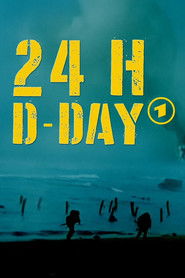
D-Day marks the starting point for the liberation of Western Europe from the grip of the Nazi yoke. On June 6th, 1944, Allied soldiers attack German positions at no less than five sectors of the beach in Normandy. The assault takes place from the sea and is considered the largest amphibious landing operation in history. This event now sees its 80th anniversary. But so close, so authentic, this battle has never been shown before. American and British cameramen are at the scene in landing boats, under fire at the beaches, and during the rescue of wounded soldiers. Their original footage, shot in black-and-white, was extensively restored and colourized for this documentary. The historically unique footage appears in motion picture quality. The war gets colour. And thereby a different impact. We look directly in the faces of those, Americans, Canadians, Britons, and Germans, who are often not older than 20. In “24h D-Day”, they tell about their D-Day, the day they never can forget.

The Second World War began on September 1, 1939, with the invasion of Poland and ended on May 8, 1945, as a global catastrophe with over 50 million deaths and devastated cities. Hitler’s expansion plans and Japan’s imperial ambitions led to bloody battles such as Stalingrad and Iwo Jima, the bombing of German cities, and the atomic bombings of Hiroshima and Nagasaki. SPIEGEL-TV author Michael Kloft recounts the war’s chronology and presents rare, partly unpublished footage from both the front lines and the home front, beyond propaganda. He is supported by experts Antony Beevor, Jörg Friedrich, and Rolf-Dieter Müller, who provide insights into military strategies and personal stories. Together, they create a comprehensive portrait of the Second World War.

In 1989, the German polar explorer Arved Fuchs and the South Tyrolean mountaineer Reinhold Messner set out together to reach the South Pole on skis without sled dogs or motor technology and then cross the entire Antarctic. There are problems right from the start because the onward transport to the starting point by plane cannot be carried out on time. Finally, the adventurers set off from Patriot Hills Base Camp on the Filchner-Ronne Ice Shelf to the Pole. The completely different character traits of the two men quickly emerge. Messner is impetuous and pushes for speed. The calm Fuchs divides his strength and consistently follows his pace during all planned breaks. On New Year's Eve 1989, the two men are warmly welcomed by the crew of the US Amundsen-Scott South Pole Station. But the much larger and more dangerous part of their adventurous continental crossing still lies ahead of them. The 3-part documentary shows one of the last great adventures of modern times in impressive pictures.

From the 1950s to the present day, from Los Angeles to San Francisco via Berkeley University or Silicon Valley, this three-part documentary series unfolds the recent history of California, which is revolutionizing the world by its way of life and its incredible capacity for innovation.

Secret societies play a far larger role in our everyday lives than we are aware of. Historian Dr Marian Füssel searches for clues surrounding history’s most famous secret societies and conspiracy theories.


Shortly after the end of the Second World War: In 1945 and 1946, the men of the British "War Crimes Investigation Unit" drove through northern Germany on the hunt for Nazi criminals. One of them is Captain Anton Walter Freud, the grandson of Sigmund Freud, the founder of psychoanalysis. Anton Walter Freud fled to London with his family from the Nazis in 1938. Now an intelligence officer, he's back to track down killers on Allied wanted lists: hitmen in pinstripes, brutal SS henchmen, and ruthless doctors who conducted medical experiments even on children. The soldiers who witnessed the liberation of the Bergen-Belsen concentration camp months earlier are not squeamish about it. 24-year-old Freud is a free spirit known for his unorthodox methods. He knows how to make war criminals talk. So he comes across a crime that has hardly been known before, the murder of 20 children in Hamburg in the last days of the war.
This documentary focuses on the development of right-wing extremism, especially in Germany, since the time around the founding of the NPD in 1964. The film reports with known examples of right-wing extremist activities are contrasted with the reactions from official state policy, the judiciary and the majority society, and these reactions are critically questioned in their partially unintentional favoring of the right-wing scene.


At this gas station, it's never boring. Pimped-out cars, weird products and a lot of alcohol. Hamburg's most famous gas station - this is where night owls met soccer fans and musical visitors met easy girls. In 2014, the gas station was teared down.

About Adolf Hitler's time in Germany. On January 30, 1933, Adolf Hitler was appointed Chancellor of Germany and his tenure in power lasted for more than twelve years. It began with a standing ovation and ended after a world war in which 50 million people were killed.


