With warmth, wit and honesty, Derry Girls' Jamie-Lee O'Donnell reflects on her childhood experiences and discovers what life's like for young people growing up in Derry today.

Two bureaucrats discuss the potential suicide of a man standing perfectly still in front of a door that opens into the night sky and a fatal drop.

Two tramps wait for a man named Godot, but instead meet a pompous man and his stooped-over slave.

The extraordinary story of the Irish War of Independence (1919-22): from the failed insurrection of 1916, the detailed account of how pro-independence Ireland rebuilt a movement whose efforts would eventually lead to the creation of a new nation. (Documentary film based on the miniseries of the same title.)

The first transatlantic communications cable, traversing the ocean floor from Valentia Island, County Kerry, to Newfoundland, Canada, 165 years ago was an 8 year endeavor that helped lay the foundation of the modern technology industry and explains the fragility of undersea cables today.

An old blind beggar and an old cripple in a wheelchair meet on a desolate street corner. The latter proposes that the two form an alliance, but the men are not destined to get along together.

This wonderfully entertaining dance documentary tells the extraordinary story of how Irish dance developed over centuries from a traditional peasant dance to a form that has taken the world by storm and is enjoyed by tens of millions. The film shows how Irish dance has both been influenced by and influenced the dance of many cultures and how it developed as an expression of resistance.

Ireland, 1845. When a deadly fungus destroys potato crops throughout northern Europe, the most impoverished Irish population, whose main source of food is precisely the potato, suffers a cruel famine that will cause more than a million deaths and, in the following ten years, the mass exodus of more than two million people.

An adaptation of Samuel Beckett's absurdist drama. An ordinary woman lives her humdrum life half-buried in a pile of dirt; her husband is partially visible behind her. She goes through her daily routines, ever hopeful that this is going to be a happy day.
As the rain patters outside, an old man talks to himself about birth, death, funerals, lamps, missing pictures and "loved ones" - a term he perpetually avoids using.

The camera swoops down on a circular area, seemingly suspended in space. It is filled with medical waste and other trash. A labored exhalation is heard. Then it stops. Then it starts again, culminating in a windy, dying sigh.

A reader tells a sad story to a listener, who only knocks in response.

An autocratic Director (Harold Pinter) and his Assistant (Rebecca Pidgeon) put the final touches to the last scene of some kind of dramatic presentation, which consists entirely of a man (John Gielgud) standing still onstage.

The land is filled with people in urns chattering at top speed, but only to themselves, not to one another. The focus goes to three people: a man, his mistress and his wife.

In Krapp's Last Tape, which was written in English in 1958, an old man reviews his life and assesses his predicament. We learn about him not from the 69-year-old man on stage, but from his 39-year-old self on the tape he chooses to listen to. On the 'awful occasion' of his birthday, Krapp was then and is now in the habit of reviewing the past year and 'separating the grain from the husks'. He isolates memories of value, fertility and nourishment to set against creeping death 'when all my dust has settled'.

An old woman in a rocking chair listens to a disembodied voice (her own) that recounts her life and that of her mother's. When the voice stops, she calls for more.
A young woman sits down in a chair. Only her mouth is visible as she begins to speak at a rapid clip, describing events that she insists did not really happen to her.

Irish comedian Joanne McNally doesn’t think she wants kids but whenever she shares her position either onstage or online, she’s told that she’ll live to regret her decision. Sick of being labelled a ‘Baby Hater’, in this documentary she sets out to challenge the concept of whether having a baby as a woman really defines you and why women who don’t want to have children are judged so harshly by society.

A powerful and stirring reinvention of the show, celebrated the world over for its Grammy Award-winning music and the thrilling energy and passion of its Irish and international dance.
A hot, thirsty man in the desert is tormented when the things he needs drop from the sky only to disappear again or hover out of his reach.

Celebrating life in the UK in all its diversity – as seen through the eyes of remarkable people doing extraordinary things.

Quirke is the chief pathologist in the Dublin city morgue – a charismatic loner whose job takes him into fascinating places as he investigates sudden deaths in 1950s Dublin. His pleasures in life are raw and deep, a drink, a smoke, good food, a woman: With one woman in particular – his adoptive brother's wife Sarah and the forbidden love that has shaped and dominated Quirke's life.

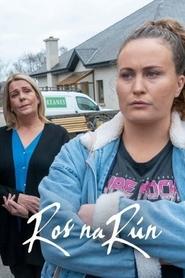
Ros na Rún is a long-running Irish soap opera produced for the Irish language television channel, TG4. It was originally broadcast on RTÉ One in the early 1990s before the existence of TG4. It now broadcasts for 35 weeks of the year, airing 2 episodes each week from September to May. The programme is set in a fictional village called Ros Na Rún, located outside Galway, and near Spiddal, and centres around the domestic and professional lives of its residents. It is modelled on an average village in the West of Ireland but with its own distinct personality – diverse population that share secrets, romances, friendships etc. While the core community has remained the same, the look and feel of Ros Na Rún has changed and evolved over the years to incorporate the changing face of rural Ireland. It has established a place not only in the hearts and minds of the Irish speaking public, but also the wider Irish audience.

The remarkable story of the Irish War of Independence (1919-1922) which resulted in the formation of the Irish Free State and became the model for other British colonies to gain their independence.

The 3-part documentary series The Irish Civil War tells the epic and often challenging story of the origins, conflict and legacy of the civil war that took place in Ireland in 1922 and 1923. Narrated by Brendan Gleeson, produced in partnership with University College Cork by RTÉ Cork as part of the Decade of Centenary commemorations and based on UCC’s “mammoth and magnificent” Atlas of the Irish Revolution, this documentary series features extensive archive film footage, photographs and materials, interviews with leading academics, archive interviews with contemporary participants and witnesses, firsthand witness accounts read by actors, detailed and dynamic graphic maps based on those featured in the Atlas of the Irish Revolution, and stunning cinematography of the very locations where events took place.

Manchán Magan embraces the ethos of slow travel, taking the time to get to know people and places, and experiencing local customs and traditions.

On the 50th anniversary of RTÉ TV and Radharc, the first independent production company to make programmes for Irish television, this 2-part series reveals the remarkable story and legacy of this maverick group of filmmaker priests who, between 1962 and 1996, produced over 400 documentaries in 75 countries on a range of social, political, and religious issues.