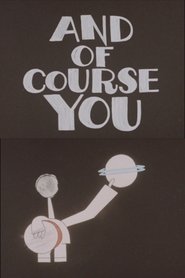
"This film explores how freedom of speech — including dissent — is afforded to all Americans, and shows freedom of expression in art, music, dance, architecture, and science. The film also emphasizes the importance of the individual’s contribution to the whole of society and demonstrates how a productive and creative society is formed by the open and respectful exchange of ideas. The film was written, produced, and directed by William Greaves" (National Archives).

"This Oscar-nominated short subject documentary film discusses the issue of how to feed a growing world population. The film, which was shot in locations around the globe, including Brazil, Uganda, India, and Taiwan, was directed by James Blue" (US National Archives).

The Numbers Start with the River is a 1971 American short documentary film about small-town life in Iowa. Produced by Donald Wrye for the United States Information Agency, it was nominated for an Academy Award for Best Documentary Short.

During the fertile early years of Drew Associates following the breakthrough of Primary, came this seldom-seen portrait of David Allen, a jazz trumpeter struggling in the Santa Monica drug rehabilitation center Synanon House. Pennebaker’s love of music drew him to David and the film prefigures later portraits such as Dont Look Back. He teamed with Life photographer William Ray and producer Gregory Shuker.

The March, also known as The March to Washington, is a 1964 documentary film by James Blue about the 1963 civil rights March on Washington. It was made for the Motion Picture Service unit of the United States Information Agency for use outside the United States – the 1948 Smith-Mundt Act prevented USIA films from being shown domestically without a special act of Congress. In 1990 Congress authorized these films to be shown in the U.S. twelve years after their initial release. In 2008, the film was selected for preservation in the United States National Film Registry by the Library of Congress as being "culturally, historically, or aesthetically significant". (Wikipedia)

"This film traces the history of mankind's aspirations to reach the moon, giving credit to the many levels of scientific genius that made the Apollo 11 flight and moonwalks possible. The program documents the Apollo 11 mission, as well as earlier flights, post-flight appearances by astronauts in various countries, and the reactions of people throughout the world as they watched or read about the historic achievement" (US National Archives). The version that the National Archives currently holds is a shortened 60-minute cut, with the original being 92 minutes.

The Spirit of America is a 1963 American short documentary film produced by Algernon G. Walker about the Spirit of America, the trademarked name used by Craig Breedlove for his land speed record-setting vehicles.. It was nominated for an Academy Award for Best Documentary Short.

"This film features the people of Puerto Rico and the revival of the ancient culture of that island. The story is told through the eyes and work of Dr. Ricardo Alegria — head of Puerto Rico's Office of Cultural Affairs and the first executive director of the Institute of Puerto Rican Culture. The film was produced by Paul R. Gurian, executive produced by David Boyer, and directed by Jack Sholder" (US National Archives).

"This film depicts how people around the world benefit from innovations developed by the U.S. space program. Without narration, the film uses motion pictures, still photography, and animation to show advances in food production, education, communications, navigation, meteorology, resource exploration, mapping, and other activities. The film was produced by Murakami Wolf Films, Inc. (Hollywood, CA), directed by Jimmy Murakami, executive produced by Fred Wolf, and features the voices of Olan Soule and Lennie Weinrib, with music composed by Chico Hamilton" (US National Archives).

An anthology of five short films ("The Hands of a Stranger", "The Other War", "A Distant Province", "The Eighth District", and "PHILCAG"), made jointly by Vietnamese and American filmmakers. Collectively, the films "explore the faces of the Vietnam war that lie behind the fighting--those that must fight a war against fear, hunger, and despair. [They are] told through the stories of five "faces": a Filipino doctor and a Vietnamese child; a Vietnamese soldier and a Vietnamese villager; an American technical expert; a Saigon youth; and a Philippine Civic Action Group (PHILCAG) contingent" (US National Archives). The film is hosted by an unnamed man speaking to a Filipino audience (in English); so the anthology likely was screened in and/or partly produced with the Philippines.

"This documentary film covers a 24-day arts festival in Dakar, Senegal that highlighted Black contributions to the cultural heritage of mankind and was attended by an extraordinary cast of over 2,000 luminaries - including Duke Ellington, Langston Hughes, Alvin Ailey, Aime Cesaire, and Leopold Senghor - from dozens of countries. The film depicts performances by African and American entertainers and shows various works of art while also providing unparalleled insight from the perspective of the African American delegation. The film was written and directed by William Greaves" (US National Archives).

A beautifully photographed record of the yearly cycle of planting and growth which culminates in bountiful harvests across the farmlands of the United States. Panoramic in its treatment, the film shows something of the diversity of farming and harvesting techniques, rapid transport to the distant consumer, university research to increase crop yields and industrial ingenuity in devising improved machinery to lighten the farmer's task and increase the productivity of the land.
Armando Lios recruits Chente to steal Manolín and Burrito's sheep under the premise of liberation

Journalist Burrito and scientist Manolin visit the “Red Planet” and are given special glasses with which to view the planet’s flourishing society. Burrito removes his glasses to reveal the “Red Planet” for what it really is, and Burrito and Manolin flee back to their home planet.

A psychedelic animated short celebrating America's bicentennial. The film " provides a short, impressionistic history of the U.S. through famous American symbols, including the Statue of Liberty; the Woodstock logo; the Liberty Bell; and Mt. Rushmore. The symbols are layered on top of each other, as can be seen from a bald eagle hatching from a red, white, and blue egg and flying past the American Gothic farmers, the U.S. Capitol building, the Golden Gate Bridge, Abraham Lincoln’s cabin, and an American bison. The film was directed by Vince Collins" (US National Archives).

"This film depicts modern American products and U.S. economic development through the U.S. national exhibit at the 1966 trade fair in Addis Ababa, Ehtiopia, which was attended by 360,000 Africans (including children from the Haile Selassie I Day School, who toured the exhibition as part of a classroom assignment)" (US National Archives). Directed by renowned cinematographer, Stevan Larner.