
French author Sylvain Tesson pays tribute to the heroes of the Russian Revolution as he crosses the Pamir mountain range in Tajikistan, which boasts a multitude of peaks at more than 7,000m. They will have the occasion to look back on some of the major figures and events of the Revolution. Lenin Peak, Revolution Peak, Karl Marx Peak, and also the October Glacier and the Soviet Officer range – all names which evoke the Revolution in these remarkable yet little-known locations. He is accompanied by two friends, author and lover of all things Russian, Cédric Gras, and the former Soviet mountaineering instructor, Nicolay Taran. Along the way, the author and his traveling companions observe the traces left by the former USSR on daily life here, and they listen to the memories of the populations who live in the Pamirs, whether Kyrgyz nomads on the high plateaus or Ismailis in the valleys. For Sylvain Tesson, the journey will serve as a source of inspiration for his future writing.


Every year in Tanzania, the dry season hits the Ruaha reserve hard. To survive, animal populations come down from the high plateaus to reach the Ruaha river, where a troupe of lionesses waits patiently, poised for combat

In the heart of southern France there is a fog-prone area where, according to legend, a bloodthirsty creature wreaked havoc 250 years ago. A rumor is spreading again in this legendary place, as eyewitnesses report an animal with large paws and a long tail that crosses roads in a single leap - powerful enough to tear down a horse and leave it mutilated in the pasture. Is the Beast of Gévaudan back? The animal photographer Bruno Loisel has a supposedly more rational explanation. The animal that fits the descriptions could be a cougar, but this species of big cat is only native to America. In order to learn the proper techniques for tracking down the puma, he travels to Canada, where he accompanies a team of researchers dedicated to studying the shy, almost invisible predator. Will Bruno be able to use his findings to solve the mystery of the new beast of Gévaudan?


This investigation by Marie-Monique Robin makes the link between the proliferation of new viruses and the destruction of biodiversity and probes the scientists gathered around the issue of global health. To counter the multiplication of health crises, these specialists advocate the preservation of biodiversity as an antidote.

It was long believed that animals only played to learn, only mated to reproduce and only took drugs by accident. But sometimes, they just do it for fun! Research has revealed that animals seek for pleasure just like humans do, and that there are many ways in which they enjoy themselves. Did you know that rats loved to play hide-and-seek? That primates played erotic games to ease tensions within their groups? Or that reindeers were quite fond of hallucinogenic mushrooms? Scientists show that this quest for pleasure – as wild as it can get – might even be a key of evolution and biodiversity! Combining the testimonies of international ethologists, scientific archives and sequences showing the animals in their natural habitats, this unusual documentary reveals the complexity of animal pleasure.

In October 2010, two of France's top mountaineers, Christophe Dumarest and Yann Borgnet, fulfilled a mountaineer's dream: a six-day alpine-style ascent of Walter Bonatti's great routes through the Mont Blanc massif. Dumarest and Borgnet first climbed the north face of the Grandes Jorasses; they then climbed the Grand Capucin and the Pilier Rouge du Brouillard, completing their feat with the ascent of Mont Blanc. Their paragliding descent in Chamonix completes their feat with a touch of fun. The climbers and the director made the ethical choice not to use helicopters to shoot the film.

In the Darhat valley in northern Mongolia, the horses of nomadic tribes are stolen by bandits who then sell them to Russian slaughterhouses. Shukhert, a brave horseman, relentlessly pursues them through the Mongolian taiga, bordering Siberia.


Rather than learning France's history through its people, we explore its natural history. A two billion-year journey back in time to look at the country's geological heritage: a mountain chain becomes Brittany, lagoons where Paris now stands, ice from the Aiguille du Midi maps the routes of rivers flowing seawards.

Man has always sought to seek further afield. After the seafaring explorers of the 16th century, 21st century cosmologists today navigate more celestial oceans, with each mission providing an ever-broader and more impressive cartography of our surroundings. At the avant garde of modern technology, these strange travellers are actually immobile, and their vessels are powerful and spectacular telescopes, on the Earth or in space, constantly widening the limits of our knowledge and giving form to our dreams of infinity. From Hawaii to Australia, via South Africa and China, we set out on an incredible scientific and human adventure to visit the planet's greatest cosmic exploration centres to discover the new challenges involved in understanding the universe. A journey on Earth and in the heavens that will take your breath away!

The "gravity" nightmare is becoming a reality: tons of rocket and satellite parts have been scattered into space over the past 60 years. The fragments collide with other objects, producing more and more scrap - a proliferation that has long since gotten out of control and poses an acute danger to rocket launches and space stations.


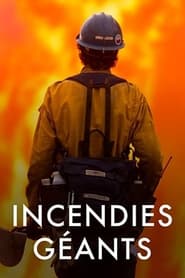
For more than a decade, wildfires of unprecedented force have been devouring our lives, homes and forests at a steady pace. Each year, 350 million hectares of forest go up in smoke, the equivalent of six times the size of France. In the US, the fire season now lasts up to two months longer than a generation ago, and the surface burnt annually has multiplied by three. This film sets out on a gripping journey of investigation from Europe to the US, Canada, Brazil and Indonesia to follow the work of a global team of dedicated firefighters, scientists and fire experts as they investigate why our forests are going up in flames, and act on an unexpected discovery: if we want to save our forests, homes, health and our climate, we need to radically change our attitude towards fire and the way we fight wildfires.


The Amazon is the river of superlatives: the longest - 7,025 km, the most powerful, the most indomitable - no dam possible over hundreds of kilometres. Its waters cross the largest tropical forest in the world: the Amazon, “the lungs of the earth”. Going against the current of this gigantism, this documentary is betting on approaching this extraordinary natural space through one of its tiniest productions: the cocoa bean. Scientists, chocolate makers, producers and farmers, many are those who, faced with the deforestation of this unique ecosystem, use this chocolate seed to recreate, on a small scale, human exploitations in harmony with nature. This film tells us about the fight of those who decided to make cocoa the spearhead of environmental defense in Brazil.


