Dolom, a teacher and YouTuber, dies after a one-night stand results in a pregnancy. In the afterlife, he must confront his past mistakes or be trapped in limbo forever.

In a small Indian village, Lila is learning to dance from her mother, Devadasi, a Bharatanatyam dancer. She falls in love with low class Shyam, who dreams of becoming a sculptor. Shyam asks Lila to model for him as he sculpts a goddess, and the two become very close. However, their relationship is discovered by the village chief Subha, and Lila decides to sacrifice her happiness for her mother and Shyam.

A teacher, in search of inspiration, travels to the most remote school in the world, where he ends up realizing how important his job is and appreciating the value of yak dung.

The dazzling new film from Bhutanese lama and filmmaker Khyentse Norbu (The Cup, Travellers and Magicians) chronicles a sacred jungle ritual whose masked, anonymous participants seek after complete self-knowledge — or descend into thievery, violation, and murder.

A young government official, named Dondup, who is smitten with America (he even has a denim gho) dreams of escaping there while stuck in a beautiful but isolated village. He hopes to connect in the U.S. with a visa out of the country. He misses the one bus out of town to Thimphu, however, and is forced to hitchhike and walk along the Lateral Road to the west, accompanied by an apple seller, a Buddhist monk with his ornate, dragon-headed dramyin, a drunk, a widowed rice paper maker, and his beautiful daughter, Sonam.

While the World Cup is being played in France, two young Tibetan refugees arrive at a monastery in India. The atmosphere of serene contemplation is soon disrupted by soccer fever, as the two students desperately seek a TV to watch the final.

An American travels to Bhutan searching for a valuable antique rifle and crosses paths with a young monk who wanders through the serene mountains, instructed by his teacher to make things right again.

The documentary team follows two happiness agents in their forties who spend a month and a half on the road twice a year, going door-to-door with their questionnaires in isolated villages in the Himalayas. The filmmakers undertake to provide an intimate insight into the daily lives and desires of Bhutanese people, and also seek the answer to the universal question of whether happiness can really be measured. Gross National Happiness promises a heart-warming journey into a mysterious, fairytale-like world, which is the exact opposite of the social order dominated by consumption and desires.

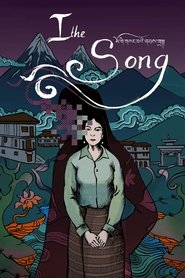
In Bhutan, a country of 700,000 people, everyone knows everyone else. Nima, a schoolteacher, faces trouble when an explicit intimate video surfaces online, featuring a woman who looks exactly like her. Determined to calm her students’ outraged parents, Nima embarks on a quest to find her naughty lookalike. But her doppelganger, Meto, has disappeared without a trace. The locals, struck by Nima’s uncanny resemblance to Meto, begin to believe she is Meto’s long-lost ghost. The village elders suggest singing Aum Tshomo’s sacred song to unravel the mystery. Now, Nima must open her heart and sing to rebuild her shattered life.

In the remote Bhutan, an undercover detective investigates the case of a missing Buddhist nun and falls into a risky alliance with his only suspect, an alluring young woman known as the village "demoness".

Milarepa depicts the humble beginnings of the man who was to become Tibet's greatest saint. A true story based on centuries-old oral traditions, a youthful Milarepa is propelled into a world of sorrow and betrayal after his father's sudden death. Destitute and hopeless, he sets out to learn black magic - and exact revenge on his enemies - encountering magicians, demons, an enigmatic teacher and unexpected mystical power along the way. But it is in confrontation with the consequences of his anger that he learns the most. Photographed in the stunning Lahaul-Spiti region of Northern India, Milarepa offers a provocative parallel to the cycle of violence and retribution consuming today's world.

Brother and sister Gyembo and Tashi are normal teenagers. They love soccer and their phones. In their Himalayan village, their father oversees a Buddhist temple that has been in the family for generations. He hopes his son will one day take over his duties. He would prefer that Gyembo leave his modern English-language school in favor of a monk school. In this thoughtful and tender portrait of a Bhutanese family, the generation gap is as large as their love for one another. Celibacy doesn't offer an enticing future to an adolescent boy, which Gyembo's father understands. Nonetheless, he still tries to convince his son that being a monk offers many advantages. Meanwhile, Tashi feels more like a boy than a girl, and dreams of a life as a pro soccer player. She wants to attend a soccer camp that would be the first step in being selected for the national team. Unfortunately, though happiness is high on the political agenda in Bhutan, not all wishes come true.

In Bhutan, 11-year-old Yangchen’s father is the country’s glacier specialist, and thus the only person authorized to climb the mountains, which are considered to be sacred. He spends months away from home measuring the rapidly melting glaciers. While hiking through the snow to the farthest reaches of the Bhutanese Himalayas, he faithfully shoots videos for his daughter with his phone. These videos take the viewer into breathtaking landscapes, but it also becomes increasingly apparent that something irreversible is happening.
Are tourists destroying the planet-or saving it? How do travelers change the remote places they visit, and how are they changed? From the Bolivian jungle to the party beaches of Thailand, and from the deserts of Timbuktu, Mali to the breathtaking beauty of Bhutan, GRINGO TRAILS traces stories over 30 years to show the dramatic long-term impact of tourism on cultures, economies, and the environment.

Absurd and slapstick comedy

Bhutan horror film

Peyangki is a dreamy and solitary eight-year-old monk living in Laya, a Bhutanese village perched high in the Himalayas. Soon the world will come to him: the village is about to be connected to electricity, and the first television will flicker on before Peyangki's eyes.

A house-warming weekend reunites four friends after a major fallout only to discover that they still have a lot of pain and anger to deal with if their friendship needs to be saved.

A young man who travels to Thimphu for work gets entangled in a messy ruckus with a notorious gang. He must either fight them or join them to survive.
