A precocious orphan from Central Asia comes to America to find his long lost mother. Along the way he befriends a down on his luck small time hustler, and together they set in motion a daring scheme to solve all their problems. However, things don't go according to plan.

Recording a 24-hour period throughout every country in the world, we explore a greater diversity of perspectives than ever seen before on screen. We follow characters and events that evolve throughout the day, interspersed with expansive global montages that explore the progression of life from birth, to death, to birth again. In the end, despite unprecedented challenges and tragedies throughout the world, we are reminded that every day we are alive there is hope and a choice to see a better future together. Founded in 2008, it set out to explore our planet's identity and challenges in an attempt to answer the question: Who are we?

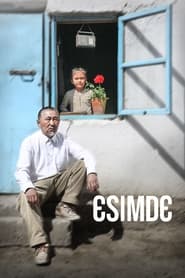
The plot of the movie brings two people together - an immigrant filmmaker from Belarus and a 10 years old girl from the village in the south of Kyrgyzstan.

A young Kyrgyz woman is kidnapped and forced to marry. A drama about the desire for freedom in the clutches of a tradition.

Esen, a young man who has been expelled from his village, escapes with the daughter of one of the most powerful men in the village. Whilst being pursued, he is forced to fight for her hand in a battle that results in the destruction of a sacred totem tree. This puts the whole village in jeopardy, and it is up to Esen to redeem himself and save them all.

The main hero of the film is an electrician with a far greater effect on the people around him than his job defines. He is the last link in a huge energetic system and he becomes the binding bridge between the geopolitical problems of post-soviet space and the common people. The economic devastation of the country had an enormous impact on the industrial workers and yet despite the upheaval, these people did not seize to love and suffer, to have and be friends and to enjoy their lives. In particular our resilient electrician, who possesses a wonderful and open heart. He not only brings electric light (which is often out) to the lives of the inhabitants of this small city, but he also spreads the light of love, loyalty, life and mainly laughter.

Serikpai and Amir grow up without a father, who once went to work in Russia, but never returned. They are waiting for him and hoping. Waiting for her husband and wife Polina. She remembers the short happiness of her former life. She tries to resist the current life, but it is given to her at too high a price…

It has been a lifelong dream of Kyrgyz director Melis Ubukeyev to create an elaborate film version of the Kyrgyz national epic 'Manas'. He spent years working with the National Academy of Sciences of Kyrgyzstan to gather material for this film project, which would ultimately remain a dream. However, the director's efforts were not in vain: Not only did he make films in 1962 and 1988 about Manasçı – the revered oral storytellers who have preserved the epic for generations through melodic recitation –, but in 1995, to mark the 1,000th anniversary of 'Manas', he also created a beguiling essay film that not only recounts the epic’s sweeping narrative through a mix of breathtaking imagery and opulent costumes, but also weaves it into a semi-documentary exploration of Kyrgyz history and identity. Once almost impossible to find, the film has recently been restored by the film studio Kyrgyzfilm and uploaded to YouTube in 4K.

At a time when most females in Asia possess little or no power over their lives, headstrong Kurmanjan Datka defies her family's authority -- and ultimately becomes the ruler of her native Kyrgyzstan region.

After his long-lost son is suddenly thrust back into his life, a charismatic con artist takes to the road with his two wives, swindling everyone they encounter along their path.

In Kyrgyzstan, a growing number of young people are preparing to migrate to Germany to work as nurses. A training program places them in elderly care facilities in Pirna, a small town in eastern Germany. “Why Germany, and why nursing?” the young Kyrgyz are asked when they apply for the program. A German filmmaker travels between the countries and captures perceptions about Germany from afar, as well as attitudes of senior citizens from Pirna regarding the current care system. In both places, she meets people who are contemplating their future and growing old, who may one day cross paths in the small town of Pirna.

Centaur lives a modest life with his family in rural Kyrgyzstan until he abruptly becomes the center of attention when he is caught stealing a racehorse at night. A story inspired by the myth when horses became the wings of men.

Follows the party worker who gave up his own child, and a young woman who left her baby in the garbage. After 19 years, it can be seen that the same boy and his mother are living together in a drug dispensary.

As „wings of men“ they became the faithful companion of a great nomadic nation thousands of years ago. Today, 28 years after the Soviet occupation, the little horse is an essential part of the cultural heritage and the search for identity of the modern Kyrgyz people. Based on its own story, a so called „good brown horse“ leads through the film and offers an insight of what it could mean to be „todays wings of men“. Told by a horse’s voice and through its eyes, this short film still is a documentary, but also a poetic journey to a nomadic culture.

Three teenagers living in a remote village spend their days playing fun. Each of the teenagers in these games forgets about the problems in their family. But adult reality is slowly creeping up on each of them. A reality where dads are fighting with each other for a place in the sun or just getting drunk. And mothers, in pursuit of their fate, sometimes forget about the little ten-year-old happiness left at home. And children who do not know how to pray like birds pray for the happiness of their mother and for the love of their parents.

This is a love story set in the steppes of Central Asia of today. Temür a thirty year old Kazakh decides to start life again in his ancestral village in the Kyrghyz Mountains. He discovers soon after his arrival that he is a misfit in this settlement of old conservative Islamic men,some women and children. The only ray of hope for him is Amira a young married woman who waits in frustration for her absentee husband - a Mujahideen. Temur watches sorrowfully as the individual village stories unfold at the same as he tries to help the community out in any way he can. In this way he comes closer to Amira and Taib, her young brother-in-law. In a dead end situation the lovers decide to leave the settlement and travel to a place that would hold out with their dreams. Written by Mira Tanna-Händel

Twelve-year-old Jekshen, an exceptional runner, lives in a beautiful mountain village in Kyrgyzstan. His parents are divorced, and life with his alcoholic father is difficult. Lonely Jekshen only has his girlfriend from school and his father’s friends for support. They encourage him to take part in a big race—a race that could change his life for the better.

The Chimp is the nickname of a teenage boy (with large ears) who lives in the small town of Balyktchy, Kirghizstan, a former part of the USSR in central Asia. His family is being torn apart by his dad's alcoholism, his emotions are being torn as he sees his friends pair off into couples, and his job working on the railtracks is uninspiring.
The world is on high alert, a nuclear bomb is incoming. A couple reveal secrets until the desperate end.