Shooting on 16mm film in Mozambique, director Ico Costa explores the textures of human behaviour as he follows young men who wonder what lies beyond their immediate surroundings. In the fragments of conversations captured in the Maputo market, a recording studio and on coconut trees, we find daily routines and tedium lead to chit-chat on desire, money and hope. In the interplay between performance and document, poetry emerges from fleeting everyday moments.

Azarias is a young orphan shepherd, keeper of a herd of oxen, where the ox Mabata Bata stands out. The oxen will be the basis of the "lobolo" payment, a traditional dowry that his uncle Raul must pay for his own marriage. Azarias’ dream is to be a normal child, to go to school, gold that is supported by his grandmother. One day, when Azariah is in the pasture, Mabata Bata steps into a mine - the result of the civil war in the country - and explodes. The young man fears his uncle's reprisals and flees to the forest, taking with him the remaining oxen. The grandmother and uncle leave in their quest to rescue him and persuade him to return.

The film explores the complexities, repression, and criminalization of social movements fighting for land and ecological restitution in Eswatini (formally known as Swaziland), Mozambique, and Zambia.

In the midst of Mozambique's devastating civil war, Muidinga, an orphaned refugee, wanders the countryside in search of his mother. His only companion is an elderly storyteller, and the only guide to finding his mother is a dead man's diary. This transporting drama underscores the power of imagination in surviving, and ultimately overcoming, the catastrophe of war.

In 1961 the liberation struggles start in Angola against the portuguese colonial power. The African students in Portugal fear for their safety and plan to flee outside the country. With the help of Theology students, French and North-American pastors, the operation code name "Angola" fled over 100 african students abroad towards freedom, amongst them several future leaders of african countries.

Amid the aftermath of Mozambique’s civil war, I visit my grandmother, confronting fading memories and blurred lines between truth and fiction. A former rebel’s presence in the village echoes the relentless ghosts of war, mirroring the tensions of my generation.

In Cabo Delgado, Mozambique, the poverty of the population and wealth of the subsoil remain irreconcilable, taking the lives of hundreds of miners. Did you know that your health also depends on your work?
Making of the film "Maputo Nakuzandza", by Ariadine Zampaulo.

The film deals with the judgment of the so-called "compromised", who integrated the colonial apparatus. At Josina Machel school, in an amphitheater with a full audience and balcony, there is a stage where Samora Machel and the members of the Frelimo political committee are located. He records Samora, an impeccable political actor, sometimes histrionic, in the role that he is attributed as the animator of the scene in the trial.

Mueda was a massacre. The name is that of the village in Northern Mozambique where in 1960 it took place. The Portuguese colonial regime did the killing. In independent Mozambique, those inhabitants of Mueda who survived regularly re-enact the massacre in situ. They themselves play the roles of victims, assassins, and spectators. Ruy Guerra, now a Brazilian but born in Lourenço Marques (now Maputo, the capital of Mozambique), filmed this extraordinary creation of liberated popular culture, intercutting it with first-hand interviews on the massacre. The mix is compelling, and the grave yet joyous spectacle unique.

We all have a dream... Nelson's dream is to learn how to read. He works at a traffic light in Maputo selling car products to people who stop. Every week a teacher joins him and all the others like him to teach them. With the hope of learning, Nelson never misses a class. It is with the hope of better days that Nelson lives.

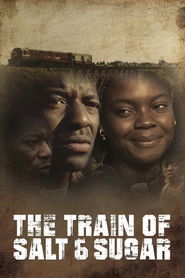
In 1989, Mozambique is a country ruined by civil war. The train that connects Nampula to Malawi is the only hope for people willing to risk their lives to exchange a few bags of salt for sugar. Running slowly over sabotaged tracks, the journey is filled with obstacles and violence. Mariamu, a frequent traveler, shares her trip with her friend Rosa, a nurse who is going to her new hospital, living the reality of war for the first time, Lieutenant Taiar, who only knows the reality of his military life, and another soldier, Salomão, with whom he doesn’t get along. Amongst bullets and laughter, stories of love and war unfold as the train advances towards the next stop.

"Ritual reversals" or "rituals of rebellion" are concepts used for mock rituals performed in Southern and Eastern Africa. During fertility rituals, like rain ceremonies, women in their songs and dances demonstrate obscene behaviour while they behave like men. These are secret performances open strictly for elderly men and women. Still, we were invited to record the rain making ceremony in the land of Chief Chassuka, Manika Province in Mozambique, in order to document the ritual for the younger generations. These rituals are a fading tradition probably due to the special character of the songs and dances.

After her daughter's death, Rita returns to the African country of her childhood to investigate the death of Yvone Kane, a former political activist and guerrilla fighter. There, she becomes embroiled in a journey into the past of a land haunted by war and evil.

Anifa survives a kidnap. Isa grows old surrounded by fear. In the heart of Maputo in Mozambique, this two sisters face together a place where the belief in black magic still pursues albino people.

A woman barely holding her family together, has to try even harder when her 14 year old daughter tells her she's pregnant and doesn't want her violent father to know.

Documentary on the struggle against the Portuguese colonial regime in Mozambique, focusing on the organization of civilian life in the liberated areas. Filmed in 1970 in Niassa, it was supported by the Mozambican liberation movement FRELIMO.

The Vumba Hills in central Mozambique, close to the Zimbabwe border, are the kingdom of Mambo (Chief) Chirara. The Mambo’s leading position is acknowledged by the government, and in addition to being the region's most important spiritual leader, the Mambo has the right to hold court cases that deal with minor crimes, problems involving spirits and domestic affairs. He is assisted by several subchiefs and ritual leaders. In the northernmost corner of the Mambo’s kingdom, Mbuya Gondo, an over 70-years-old woman, is a spiritual medium. She often holds ceremonies at a well-known rock drawing site. Mambo Chirara is not pleased with the old lady's activities. In his opinion, Mbuya Gondo acts too independently and demands too much money for carrying out the ceremonies. In the film, gender issues and local politics are brought to the surface as we follow these two leaders during a period of preparing for and performing the annual rainmaking rituals.

Ernania is hospitalized in a psychiatric hospital in Mozambique. She dreams about her little son, Hanic, and her husband, Pak, who is a soldier of the war. In the meantime, a quirky musical instrument plays: her own bed. Ernania’s musical virtuosity, attracts the attention of the hospital nurses. One day, her song is played in a radio program and Rosa, an evangelical priest of “Rádio Moçambique”, goes to the hospital to listen to Ernania’s song. Ernania takes the priest’s visit as an opportunity to run away from the hospital.