The past is always present in the life of Lyiza who has to live with the traumatic memory of her parents' murder, during the genocide in Rwanda. When she recognizes in the father of her classmate, the person responsible for their murder, a great tension started. The harmony returns through the intervention of a teacher who takes the youngsters to the museum of the genocide, the place of memory, and guides Lyiza towards forgiveness.

In the hilltops of Burundi, a group of escaped coltan miners form an anti-colonialist computer hacker collective. From their camp in an otherworldly e-waste dump, they attempt a takeover of the authoritarian regime exploiting the region's natural resources – and its people. When an intersex runaway and an escaped coltan miner find each other through cosmic forces, their connection sparks glitches within the greater divine circuitry.

For the first time, light is shed on the Inkotanyi politico-military movement that ended the genocide of the Rwandan Tutsi in 1994 and is led by Paul Kagame, currently President of Rwanda.

An orphan of the Rwandan genocide travels from Kigali to the countryside on a quest for justice.

“Rising from Ashes” is a feature length documentary about the first Rwandan National Cycling Team and their six year journey to the Olympic games in London. It's not about the bike. It's about second chances, how our past doesn't have to define our future, and the impossible triumph of the human spirit over one of the world's most devastating genocides.
John Bishop encounters one of the most endangered animals on Earth, and discovers they and his family have more in common than he ever imagined. Filming in the jungles of Rwanda for John Bishop’s Gorilla Adventure, the comedian realises adolescent male mountain gorillas are just like his teenage sons – bulging muscles but no sense. Plus they fart, flirt and pick their noses. We follow John as he joins a group of vets who have dedicated their lives to saving the, sadly, precious few mountain gorillas left in the wild rugged mountains and valleys between the borders of Rwanda, Congo and Uganda, which were made famous to UK viewers by David Attenborough’s iconic sequence filmed among them in the 1970s.

Rwanda, 1973. In the prestigious catholic institute 'Notre-Dame du Nil', perched on a hill, young Rwandan girls study to become the elite of the country. In the process of graduating, they share the same dormitory, the same dreams, the same problems of teenage girls. But in every corner of the country as well as in the school there are deep antagonisms that will forever change the destiny of these young girls and the whole country.

A young Congolese woman, forced to work in an illegal mineral mine, escapes her captors. She finds a new life for herself after joining a renowned all-women boxing club in the border city of Goma.

There she stands, confidently, like a goddess of technological junk, surrounded by endless mountains of rubbish, plastic, stench and rare earths. Her accusations are angry, composed and to the point.

A young student finds her lack of English brings her considerable ridicule from her classmates.

Lia, a Belgian-Rwandan basketball player facing the twilight of her career. Twenty years after fleeing the genocide, she is asked to join the Rwandan national basketball team. This journey stirs buried memories of a painful past: exile, family silences and the pain of a fractured identity. Through her eyes, the film explores confrontation between memory and the present, and a nation scarred by tragedy with a contemporary Rwanda brimming with life and creativity.

30 years after the genocide that tore apart their mothers’ worlds, a group of young Rwandans confront the family secrets and the wounds their generation is carrying. They are led by Emilienne, a therapist and genocide survivor, to try to break cycles of intergenerational trauma together.

The Democratic Republic of Congo has been called a geological scandal due to its mineral rich soil. Unfortunately, those minerals, necessary to sustain today's technology, are funding the deadliest war since WWII.
Following the story of a genocide survivor as well as son of a killer, the film revolves around the meaning of an old coat and its symbolic value for the young boy’s dramatic past. (African Film Festival, New York)

It begins with a chance encounter between Ro and Ju on a film set. A conventional love film? The characters not only change bodies, identities and desires over seven countries. They struggle with perceptions of themselves and others, fail because of bad scripts, a lack of visas, social expectations or their own demands. The film shows that love is both individual and universal at the same time. It shows diversity in action and not only dispels prejudices about gender relations and sexism in different corners of the world, but also touches on topical issues such as the war in Ukraine. The film is an ode to love and a declaration of love to filmmaking. Film sets, the madness and confusion of film production and the excitement before the premiere are also themes of the film.
Between 500,000 to 800,000 people belonging to the Tutsi minority ethnic group as well as some moderate Hutu and Twa were killed by armed Hutu militias over the course of 100 days between April 7 and July 15, 1994.

Eva, a young Rwandan woman, dreams of attending medical school. But her aspirations are interrupted when she is kidnapped by a group of men as a part of the Guterura rite of enforced marriage. Abandoned by her family, she struggles to cope with the grim reality of her new life with her new husband Silas and his cousin. While Silas is away working, the two young women form a tender connection as they spend their days doing household chores, beading, making tea, and swapping family histories and memories of the genocide. Despite this newfound ally, Eva contemplates running away to a life of freedom.

Fifty years after the Holocaust, the world allowed another genocide to take place, this time in Rwanda. In April, 1994 the international community, including the U.S., sat by and watched as 800,000 Tutsi men, women and children were massacred. The killings took place under the eyes of UN peacekeepers. Today, Rwanda remains torn by ethnic killings. Shot over three years, CHRONICLE OF A GENOCIDE FORETOLD follows several Rwandans before, during, and after the genocide.

After being imprisoned for the killing of ethnic Tutsis during the Rwandan genocide, Manzi must face the emotional and psychological consequences of his most personal crime: the murder of his best friend's family.

Kwame, an African man, wants to travel outside of his compound, but he must first get a visa from a Caucasian gatekeeper who controls movements in-and-out of the house. It is only with the help of a Caucasian girlfriend that he succeeds.

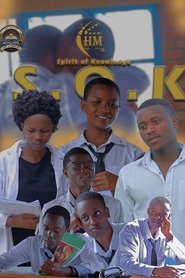
Welcome to Future High School, where knowledge is power, and every student fights to find their place. S.O.K: Spirit of Knowledge is a gripping high school drama series that blends reality, crime, and comedy to tell the real stories of youth. When two new students, Fabrice and Blaise, step into the school, they shake up the existing social order. Old rivalries resurface, friendships are tested, and the battle between good and bad influences begins. Among them, Prisca, Enock, Ange, Jules, and Gesca face their own personal challenges, from academic pressure to hidden secrets. With a mix of intense storytelling, humor, and real-life struggles, S.O.K: Spirit of Knowledge is more than just a school drama—it's a mirror of life’s biggest lessons.

Jean Luc, a 30-year-old man from Belgium, has never met his Rwandan father. When his mother falls ill, he travels to Rwanda to find him, armed with only a portrait and the name of the place where his parents met. Surprisingly, Bonheur speaks Kinyarwanda, making communication easy. However, things get complicated when he meets Olive, a beautiful fisherwoman, and develops romantic feelings for her.