

Available For Free On








Trailers & Videos
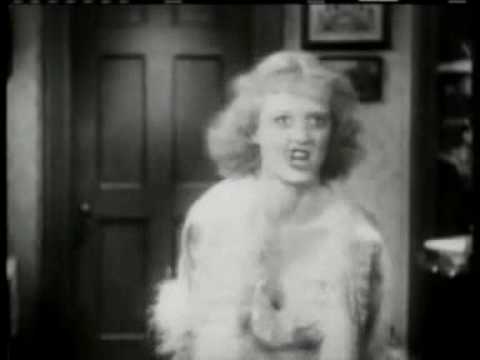
bette davis belle and sebastian of human bondage
Cast

Leslie Howard
Philip Carey

Bette Davis
Mildred Rogers
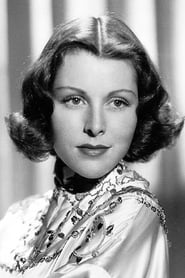
Frances Dee
Sally Athelny
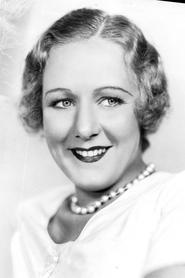
Kay Johnson
Norah
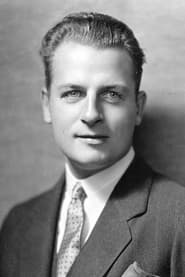
Reginald Denny
Harry Griffiths
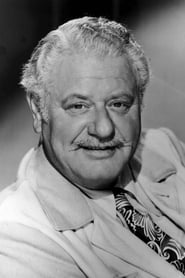
Alan Hale
Emil Miller
Reginald Sheffield
Cyril Dunsford
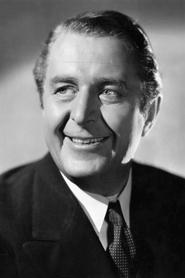
Reginald Owen
Thorpe Athelny

Desmond Roberts
Dr. Jacobs
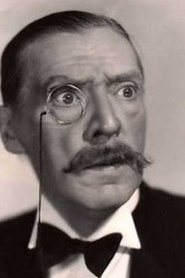
Frank Baker
Policeman Removing Mildred (uncredited)
Kenner G. Kemp
Hospital Interne (uncredited)

Tempe Pigott
Philip's Landlady Agnes Hollett (uncredited)

Douglas Gordon
Hawker (uncredited) (voice)
More Like This



Reviews
CinemaSerf
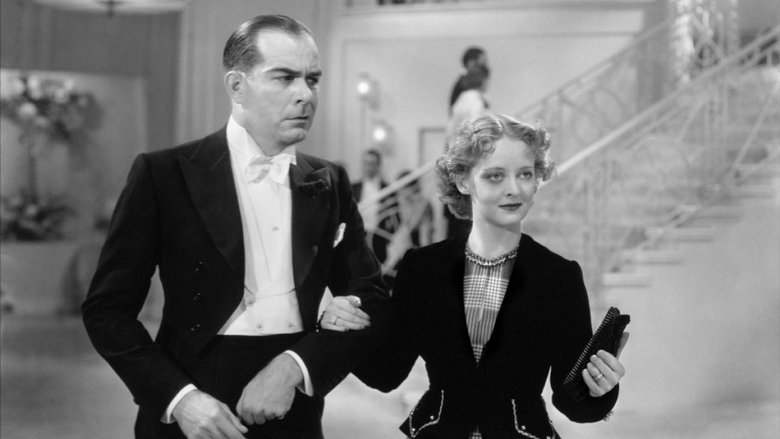
I can tell when I am engaged with a film if I want to get off the chair and strangle one of the cast... Well Leslie Howard engenders exactly that feeling as he plays the hapless, lovestruck "Philip" who has fallen in love with the nasty, scheming "Mildred" - Bette Davis (with a rather dodgy English agent). The chemistry between the two of them is great. She treats him appallingly, yet like a doting puppy he comes back for more each time. John Cromwell keeps this going deftly; we see the characterisations from W. Somerset Maugham's novel unfold before us and I felt genuinely invested.
tmdb28039023
Early on in Of Human Bondage Philip Carey (Leslie Howard) is told “You will never be anything but mediocre.” Soon after, Mildred Rogers is described as “anemic … ill-natured and contemptible.” Neither will ever do anything to disprove these assessments. Carey especially will never be able to overcome his weakness; he was literally born with a clubfoot, but his real problem is that he never develops a figurative spine. We leave the film convinced that, had Mildred not died, Carey would have kept taking her back in at the expense of far worthier women – worthier than Mildred, yes, but worthier than him as well.
Now, as mediocre and contemptible as Carey and Mildred are – and they take mediocrity and contempt to heights, or rather lows, that arguably have yet to be matched almost a century later –, there is a sort of astronomical fascination in watching them follow their preordained trajectories; they’re like heavenly bodies fixed in their orbits, she a star going supernova and he a barren planet becoming engulfed in the ensuing blast.
Bondage is a mixed bag to say the least for Howard, even if Philip Carey isn’t – though not by much either – the most thankless role in his career; five years later he would go on to play the equally insipid Ashley Wilkes in Gone with the Wind, opposite two other legends in the same league as Davis.
I will say a couple of things for the Carey character, though; number one, he’s fun to watch, not because of what Howard does with it (which is, wisely as it turns out, next to nothing), but because of what goes on in his febrile mind – i.e., his obsession with Mildred, whom he sees everywhere when awake and dreams about when asleep, and which the film manifests through some very neat optical effects (my favorite is a classroom skeleton that takes on Mildred’s likeness, in what may be construed as a bit of reverse foreshadowing). And number two, Howard’s pale shadow of a man makes Davis look even better than she already does – which is a lot –, not that she really needs the help.
Beautiful though she was, Davis always had a gift for the grotesque (which reached its zenith in What Ever Happened to Baby Jane?), and with Mildred she has no trouble conveying, through her faux ingénue façade, the character’s inner moral corruption and physical decay; of particular note is her climactic The Reason You Suck Speech to Carey (and even then it’s hard to sympathize with him, since most if not all the s--- that she calls him on is pretty much true).
You've reached the end.