
Palestine 36
In 1936, as Palestinian villages revolt against British colonial rule and Zionist immigration from Europe accelerates toward the ethnic cleansing of Palestinians, Yusuf moves between Jerusalem and his rural home amid escalating unrest and a decisive moment for the British Empire.
Production



Production
Trailers & Videos

Official US Trailer
![Thumbnail for video: Official UK Trailer [Subtitled]](https://img.youtube.com/vi/wWtwnae_5UI/hqdefault.jpg "Thumbnail for video: Official UK Trailer [Subtitled]")
Official UK Trailer [Subtitled]

Featuring Jeremy Irons, Robert Aramayo and Liam Cunningham, PALESTINE 36 is Now Showing in Cinemas.

Historical Drama 'Palestine 36' is the Only Film to Shoot in Palestine in the Last 2 Years
Now Showing in Cinemas
Saleh Bakri is Khalid
PALESTINE 36: A Conversation with Annemarie Jacir
Clip
![Thumbnail for video: Tickets are now On Sale [Subtitled]](https://img.youtube.com/vi/H2sRCNXtIrw/hqdefault.jpg "Thumbnail for video: Tickets are now On Sale [Subtitled]")
Tickets are now On Sale [Subtitled]

PALESTINE 36 (2025) - Clip 1
Cast

Yasmine Al Massri
Khouloud

Billy Howle
Thomas Hopkins
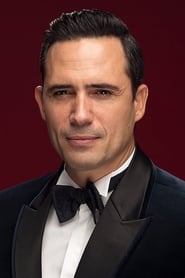
Dhafer L'Abidine
Amir

Ward Helou
Kareem

Robert Aramayo
Captain Wingate

Yafa Bakri
Rabab

Wardi Eilabouni
Afra
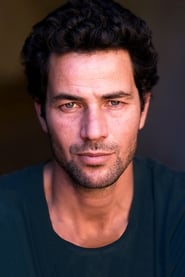
Saleh Bakri
Khalid
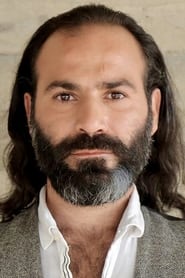
Jalal Altawil
Father Boulos
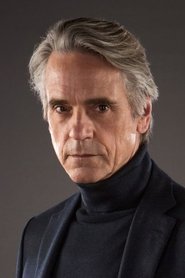
Jeremy Irons
High Commissioner Wauchope

Hiam Abbass
Hanan
Kamel El Basha
Abu Rabab

Joanna Arida
Dyala's Cousin

Sofia Asir
Dyala

Samer Bisharat
Payroll Sami

Liam Cunningham
Charles Tegart

Ahmed Shihab-Eldin
Maher

Sam Hoare
Diplomat Charles
Eyad Hourani
Qusay
Anwar Khalil
Naim
More Like This

















Reviews
CinemaSerf
With the British Empire trying to reconcile it’s own Palestinian agenda with those of the indigenous cotton farmers and a burgeoning, homeless, Jewish population arriving with expectations of their own homeland, this film follows events through the eyes of “Yusuf” (Karim Daoud Anaya) as he finds himself drawn into the conflict. He comes from a rural village but works part-time for a local publisher whose wife (Yasmine Al Massri) is a clandestine writer of articles on freedom for the Palestinians. These commentaries become more pertinent as the frequent theft of traditional lands for allocation to the new emigrant settlers leads to rebellion against colonial rule. As that becomes more violent and bloody, the governor (Jeremy Irons) allows the rather odious “Capt. Wingate” (Robert Aramayo) a pretty free, and brutal, hand - despite the protestations of his more conciliatory secretary “Thomas” (Billy Howle) - who just happens to be a source of information for both her newspaper and for an insurgency that is becoming both bolder and better equipped. It is interesting that almost one hundred years later, the same peoples are fighting for control of the same lands, and that in the intervening years mankind’s abilities to co-exist, faith-to-faith, hasn’t really become any easier. This film doesn’t really go into much detail, and from any historical perspective it’s a fairly shallow analysis of a complex scenario that tries to illustrate many of the frustrations faced by a community treated appallingly on one side, but that doesn’t make any attempt to represent the Zionist position at all, beyond the obvious assertions of illegal land-grabbing. It doesn’t try to explore or explain the extent to which many of these new arrivals were essentially “lured” here with false promises by people giving away things that weren’t their’s to give in the first place. It does, however, offer up something of the political naïveté of European administrations that were more concerned about their own position (and, of course, oil) than about sorting this dispute out fairly. Not for the first time, an half-baked policy of partition was decided upon. The acting is all fine, nothing more really, but the photography and the narrative itself showcase not just the location but also of the desire of a collection of hitherto unaffiliated tribal people to work together to attain their own statehood in the face of a vastly superior military machine and a political infrastructure with other fish to fry. It’s incomplete and probably a bit simplistic, but as an explanatory introduction it delivers engagingly and thought-provokingly, too.
Puffypoofy
By Oren Kessler, author of the book 'Palestine 1936'>
I have a number of quarrels with this film but I’ve limited myself to three of its most egregious failings:
>
> The utter distortion of how Jews acquired land (whatever land they owned was paid for – not “transferred” over by perfidious Brits)
>
> The complete absence of a guy named Hajj Amin al-Husseini (maybe you’ve heard of him)
>
> The silencing of the nearly 400,000 Jews who lived in Mandate Palestine in 1936. I don’t mean metaphorically. I mean there are exactly two words spoken by a Jewish character in as many hours of film.
>
> It’s the last of these that’s the most glaring omission. Eight minutes in, at a ceremony inaugurating the Palestine Broadcasting Corporation, Palestine High Commissioner Arthur Wauchope – played by Oscar-winner Jeremy Irons – nudges an unnamed figure in a costume beard to the microphone to intone “Kol Yerushalayim” (“The Voice of Jerusalem”), before an unnamed Arab dignitary utters the equivalent “Iza’at al-Quds.”
>
> One later scene shows Jewish immigrants in the distance, wordless but conspicuously light-featured, diligently toiling behind a kibbutz wall. And that’s it. It’s a glaring, flagrant omission.
>
> This is, after all, a film about an Arab revolt against Jews in which the latter are all but airbrushed because the filmmaker appears to wish they weren’t there in the first place. But wishing doesn’t make it so.
>
> Here’s the film’s promotion poster for the Arab world. Next to Irons, you may recognize Liam Cunningham (Davos Seaworth in Game of Thrones) and Robert Aramayo (a young Eddard Stark in the same series). What you won’t see it a single Jewish character, because they’ve been wished out of the film.
>
> There are things to praise about the film. Archival footage is skillfully restored, colorized and integrated. There are a few funny moments, like an Arab child introducing a British visitor to his family donkey as “Balfour – Lord Balfour.” Several of the Arab actors – many of them citizens of Israel – deliver compelling performances.
>
> But as a work of history, it’s malpractice.
>
> We shouldn’t expect any different from Qatar or Turkey, two of the primary state backers (along with Iran) of Hamas. But I do think we can and should demand better from the BFI and BBC. Or, for that matter, from the Oscars.
You've reached the end.