Solaris
The planet where nightmares come true…
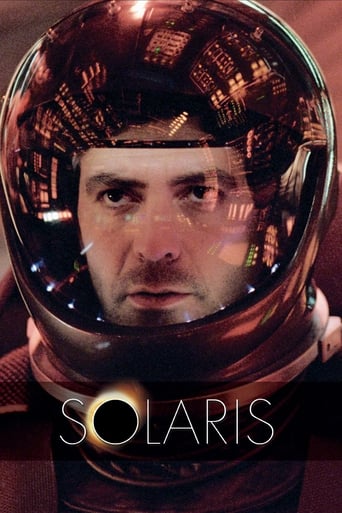
A psychologist is sent to a space station orbiting a planet called Solaris to investigate the death of a doctor and the mental problems of cosmonauts on the station. He soon discovers that the water on the planet is a type of brain which brings out repressed memories and obsessions.
Production

Production
Available For Free On



Trailers & Videos

Tarkovsky's SOLARIS (Trailer) - coming Nov. 30 | Austin Film Society

Solaris (Modern Trailer)

Solaris. Part 2 (fantasy, dir.Andrey Tarkovsky, 1972)

Solaris. Part 1 (fantasy, dir.Andrey Tarkovsky, 1972)
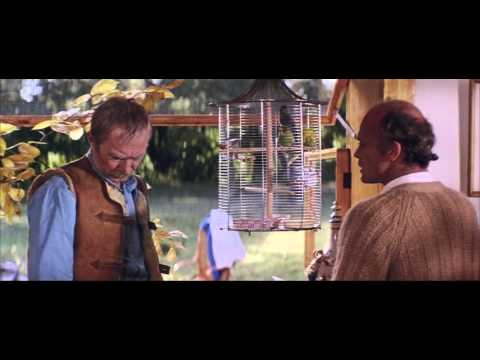
Solaris 1972 ( English dubbing )
![Thumbnail for video: MOVIE : SOLYARIS (Solaris) [1972]](https://img.youtube.com/vi/seCRhjrLNy4/hqdefault.jpg "Thumbnail for video: MOVIE : SOLYARIS (Solaris) [1972]")
MOVIE : SOLYARIS (Solaris) [1972]
Cast


Donatas Banionis
Kris Kelvin

Jüri Järvet
Dr. Snaut

Vladislav Dvorzhetsky
Henri Berton

Mykola Hrynko
Kelvin's Father

Anatoliy Solonitsyn
Dr. Sartorius

Olga Barnet
Kelvin's Mother

Aleksandr Misharin
Shanahan, Chairman of the Anri Berton Commission


Sos Sargsyan
Dr. Gibarian
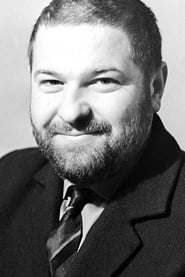
Yulian Semyonov
Chairman of the Scientific Conference

Georgiy Teykh
Prof. Messenger
More Like This
















Reviews
CinemaSerf
Acclaimed psychologist "Kelvin" (Donates Banionis) is despatched to a space station to investigate the mysterious death of one of the three remaining scientists who are working on the surface of a remote moon. Upon arrival he discovers that there are now just the two of the original eighty-plus crew left aboard the rather ramshackle facility. "Snaut" (Jüri Järvet) and "Sartorius" (Anatoliy Solonitsyn). Their welcome is, to put it mildly, bizarre and before long he starts to dream. His apparitions become more vivid, more realistic, and they feature his deceased wife "Khari" (Natalya Bondarenchuk). Are these just hallucinations or are they more. Might they be real? Might they exist in an alternate reality? Is it something in the water? Andrei Tarkovsky uses his dialogue sparingly as he tautly directs this mystery. We are drip fed information - sometimes contradictory, sometimes speculative - just as "Kelvin" receives it - and we are left in the same quandary as he finds himself in. It's a sort of groundhog day scenario that plays out time and time again - but he cannot decide if he wants to break it, amend it or sustain it, and his colleagues are little help as they have long suffered from the same symptoms. I won't lie - it can be slow progress at times. It's not always helped by the rather soporific Artemyev score, and the pace is a little wobbly as we get to grips with the scenario, but once there this is a considered look at just how the human mind may/can/will work when tested and it's well illustrative of the fact that there is way more out there that we don't understand than we do. It does benefit from a big screen, if only to add a scope to the broadness of the production and the concept.
You've reached the end.