
Whitney
All the music. All the stories. All the answers.
Examines the life and career of singer Whitney Houston. Features never-before-seen archival footage, exclusive recordings, rare performances and interviews with the people who knew her best.
Production



Production
Available For Free On

Trailers & Videos
Whitney | Official U.S. Trailer | In Theaters July 6
Whitney Trailer | World Exclusive
Whitney Official Teaser Trailer | In Theaters July 6
Cast
Whitney Houston
Self (archive footage)
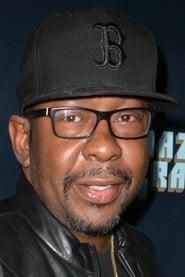
Bobby Brown
Self - Ex-Husband

Cissy Houston
Self - Mother

Clive Davis
Self - Founder, Arista Records

L.A. Reid
Self - CEO and President, Arista Records 2000-2004
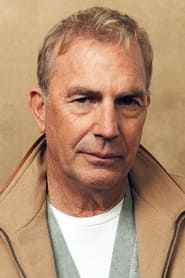
Kevin Costner
Self - Actor
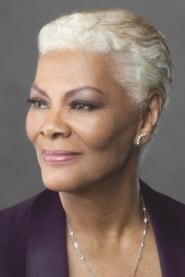
Dionne Warwick
Self - Whitney's Cousin (archive footage)

Bobbi Kristina Brown
Self (archive footage)
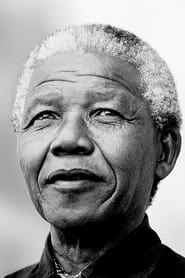
Nelson Mandela
Self (archive footage)
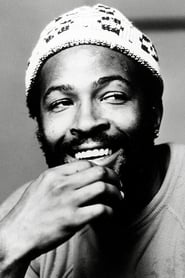
Marvin Gaye
Self (archive footage)

Babyface
Self - Songwriter / Producer

Arsenio Hall
Self (archive footage) (uncredited)
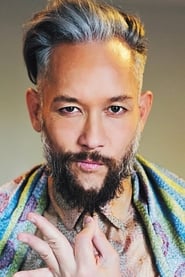
Kevin Alexander Stea
Self (archive footage)
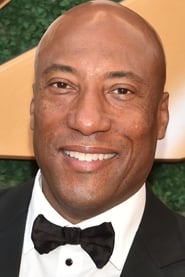
Byron Allen
Self (archive footage) (uncredited)
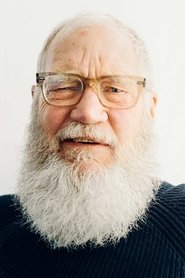
David Letterman
Self (archive footage) (uncredited)
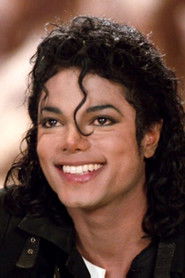
Michael Jackson
Self (archive footage) (uncredited)
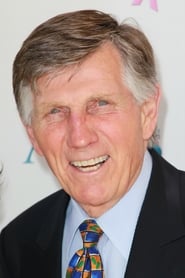
Gary Collins
Self (archive footage) (uncredited)
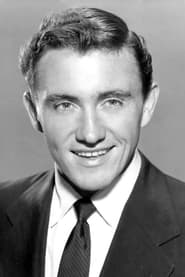
Merv Griffin
Self (archive footage) (uncredited)
More Like This


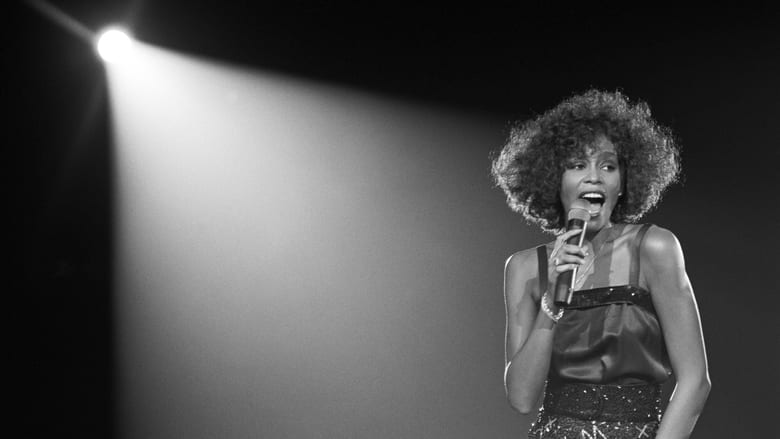




Reviews
Stephen Campbell
**_More emotional than I expected_**
> _I'm older. I'm matured. But that doesn't mean, that has nothing to do with me feeling old. I'm older, I'm matured, I'm maturated now, and looking forward to the years to come, you know, good years._
- Whitney Houston speaking to Shaun Robinson; _Access Hollywood_ (November 17, 2011). This was Houston's final interview; 13 weeks later, she was dead.
I wasn't a huge fan of Nick Broomfield and Rudi Dolezal's _Whitney: Can I Be Me_ (2017). The film was built on the foundation of never-before-seen backstage footage from Houston's World Tour 1999, but I felt the narrative was poorly constructed, jumping from her divorce from Bobby Brown in 2007 to her death in 2012 with very little detail on what happened in those five years. This had the effect of making the last part of the documentary feel rushed and incomplete. I went into it not knowing a huge amount about Whitney Houston (apart from the obvious bits and pieces that everyone knows), and I came out still not knowing a huge amount about her.
Written and directed by Kevin Macdonald (_One Day in September_; _Touching the Void_; _Marley_), Whitney covers almost identical terrain as Broomfield and Dolezal, with many of the same interviewees appearing in both films, and much of the same factual information presenting itself (Houston tried drugs long before becoming a celebrity; she was criticised as "_acting white_" and selling out her culture by many black people, and was booed at the 1989 Soul Train Music Awards (where her single "Where Do Broken Hearts Go" was nominated for Best R&B/Urban Contemporary Single - Female"); she was hounded with questions regarding her sexuality for much of her life, etc). One hugely important absence from both films, of course, is Robyn Crawford, Whitney's one time best friend, road manager, and probable lover, who was pretty much the only person in Houston's life who seemed to tell her what was what and have her best interests at heart. Apart from a beautiful obituary for _Esquire_ (on whose editorial staff Crawford's wife works), Crawford has maintained a dignified silence since Houston died, and neither Broomfield and Dolezal nor Macdonald were able to persuade her to speak on camera. This leaves a sizeable lacuna in the narratives of both films, as it is fairly unlikely anyone will really get to the core of who Houston was until (or indeed if) Crawford decides to tell her own story. As a side note, one interesting figure who didn't appear in _Can I Be Me_, but who does unexpectedly pop up in _Whitney_ is Clive Davis, president of Arista Records, and the man who signed Houston to her first record deal.
For all their similarities, however, I found Macdonald's film superior to _Can I Be Me_. _Whitney_ has two major, and interconnected, advantages over the earlier film. Can I Be Me is more concerned with facts, and probably covers more "Did you know" moments, such as the idea to open "I Will Always Love You" capella style was actually Kevin Costner's. However, having said that, Macdonald does manage to squeeze in a couple of not especially well known moments of his own; for example, Houston's haunting rendition of "The Star Spangled Banner" at the 1991 Super Bowl (where she had her bandleader and arranger Rickey Minor take the radical step of altering the time signature from a 3/4 to a 4/4) was completely unrehearsed, and the revelations regarding Dee Dee Warwick are shocking to say the least. However, what Macdonald does much better than Broomfield and Dolezal is that, on several occasions, he takes time out from the narrative to simply let the audience hear her sing. Probably because of this, his film is considerably more emotive. I was very moved by it on a couple of occasions; I don't remember being moved by _Can I Be Me_ at all. One scene in particular I found very upsetting recalls that horrific scene in Asif Kapadia's _Amy_ (2015), where Amy Winehouse is performing in Serbia a month before she died. In _Whitney_, it's footage from her Nothing But Love World Tour 2010, as she tries and completely fails to sing "I Will Always Love You" in Newcastle. The crowd is respectful enough, but given that so much of the documentary is simply about her voice, seeing her like this is very sad, as with her hoarse voice, she can barely stay in tune, let alone hit the high notes, sounding more like someone doing a bad karaoke rendition than one of the greatest singers of all time.
Another very well handled part of the documentary's narrative is its coverage of what could be termed "mainstream media complicity" in her suffering. Look, Whitney Houston was a drug addict and a terrible mother, who was indirectly responsible for Bobbi Kristina Brown's death, insofar as she gave her child no stability, and introduced her to a world of substance abuse. Nobody is arguing anything different. But she was also a person, suffering deeply, in public, and very few people did, or even tried to do, anything to help her. The film presents a 2002 sketch from _Saturday Night Live_ with Maya Rudolph as Whitney, in which she addresses the infamous Diane Sawyer "_crack is whack_" interview, and a scene from a 2005 episode of _American Dad!_, in which an emaciated Whitney "sings for crack" in the Smith living-room. These clips were probably funny at the time, but aren't especially funny now, and they serve to highlight one of the most bizarre paradoxes of our celebrity-obsessed society; we love to build people up and up and up, but, at some arbitrary point in time, we decide they've become too popular, too successful, too talented, so we do anything to pull them down, and when something goes wrong in their lives, really catastrophically wrong, our response as a society is not empathy, kindness, or understanding, but scorn, derision, and sarcasm. What a strange world we've made.
You've reached the end.