
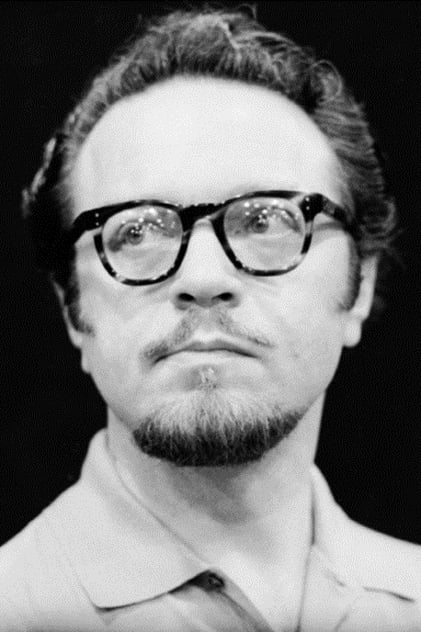
Alfred Drake
Acting
Biography
Alfred Drake (October 7, 1914 - July 25, 1992) was an American actor and singer. Born as Alfred Capurro in New York City, the son of parents emigrated from Recco, Genoa, Drake began his Broadway career while still a student at Brooklyn College. He is best known for his leading roles in the original Broadway productions of Oklahoma!; Kiss Me, Kate; Kismet; and for playing Marshall Blackstone in the original production of Babes in Arms, (in which he sang the title song) and Hajj in Kismet, for which he received the Tony Award. He was also a prolific Shakespearean, notably starring as Benedick in Much Ado About Nothing opposite Katharine Hepburn. From Wikipedia, the free encyclopedia
Born: October 7, 1914
Place of Birth: New York City, New York, USA
Known For
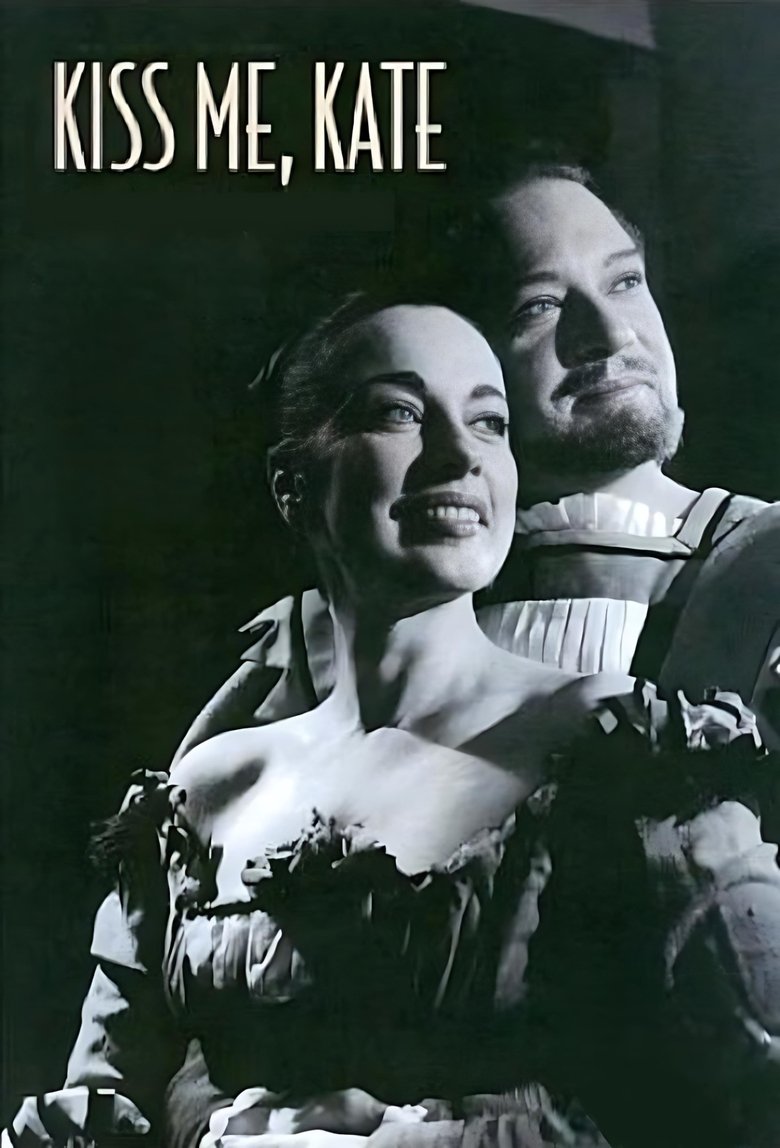
Kiss Me, Kate
Broadcast live on the Hallmark Hall of Fame series on NBC, a pair of divorced actors are brought together to participate in a musical version of The Taming of the Shrew. Of course, the couple seem to act a great deal like the characters they play, and they must work together when mistaken identities get them mixed up with the mafia.
Hallmark Hall of Fame
Long-running anthology program sponsored by Hallmark Cards. Beginning in 1951 and continuing into 2019, the series received 80 Emmy Awards, 24 Christopher Awards, 11 Peabody Awards, 9 Golden Globes, and 4 Humanitas Prizes. Early seasons were a weekly live drama, eventually transitioning to videotaped and then filmed productions broadcast as occasional specials.
Hallmark Hall of Fame
Long-running anthology program sponsored by Hallmark Cards. Beginning in 1951 and continuing into 2019, the series received 80 Emmy Awards, 24 Christopher Awards, 11 Peabody Awards, 9 Golden Globes, and 4 Humanitas Prizes. Early seasons were a weekly live drama, eventually transitioning to videotaped and then filmed productions broadcast as occasional specials.
The Bell Telephone Hour
“The Bell Telephone Hour” was a musical variety show that aired on “NBC” TV from 12 January 1959 to 14 June 1968 that showcased the best in Broadway, Classical, Concert, Jazz and Popular music each week. The series had its’ own house band appropriately named the “Bell Telephone Orchestra”. The show also had its’ own theme song being the “Bell Waltz” composed by “Donald Voorhees” who was also the show's Orchestra conductor. Some of the greatest violinists of the 1960’s performed on this show that aired in the old “Black & White” format. Some of these great violinists included “Erica Mornin”, “Isaac Stern", "Michael Rabin", "Ruggiero Ricci", "Yehudi Menuhin" and "Zino Francesacatti". From time to time some of the great singers and bandleaders of the 1960’s would perform on the show as well. Some of these were “Bing Crosby”, “Gordon MacRae”, “John Gary”, “Leslie Uggams”, “Mary Martin”, “Nelson Eddy”, “Patti Page” and “Roy Rogers”. The TV show followed on the heels of its’ predecessor with the same name on “NBC” radio that aired from 29 April 1940 to 1958 on Monday nights at 8 PM. The name of the show was derived from its’ Major sponsor “Bell Telephone Laboratories”. The TV version began airing on Friday nights at 8:30 PM once a month. It later was given it’s same time slot now airing every other week alternating with another show on the other weeks such as News shows and specials. The show time slot changed quite often over the years. In September 1960 it aired at 9 PM and in September 1961 it moved to 9:30 PM. In October 1963 it moved to Tuesday nights at 10 PM, September 1965 it moved to Sunday night at 6:30 PM and in September 1967 it made its' final move back to Friday night at 10 PM.
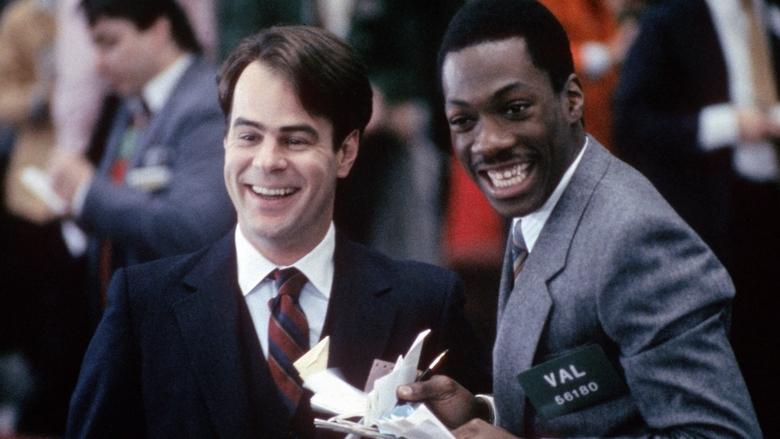
Trading Places
A snobbish investor and a wily street con-artist find their positions reversed as part of a bet by two callous millionaires.

Broadway's Lost Treasures III: The Best of The Tony Awards
Broadway royalty and Tony-winners Tommy Tune, Carol Channing, Robert Goulet, and Harvey Fierstein are your hosts for this third compilation of great musical performances from the archives of the Tony Award® broadcasts. Legendary stars from legendary shows strut their stuff in 23 performances that have become part of Broadway history.
Carolina
Short location-centric documentary.

Night of 100 Stars
The most glittering, expensive, and exhausting videotaping session in television history took place Friday February 19, 1982 at New York's Radio City Music Hall. The event, for which ticket-buyers paid up to $1,000 a seat (tax-deductible as a contribution to the Actors' Fund) was billed as "The Night of 100 Stars" but, actually, around 230 stars took part. And most of the audience of 5,800 had no idea in advance that they were paying to see a TV taping, complete with long waits for set and costume changes, tape rewinding, and the like. Executive producer Alexander Cohen estimated that the 5,800 Radio City Music Hall seats sold out at prices ranging from $25 to $1,000. The show itself cost about $4 million to produce and was expected to yield around $2 million for the new addition to the Actors Fund retirement home in Englewood, N. J. ABC is reputed to have paid more than $5 million for the television rights.
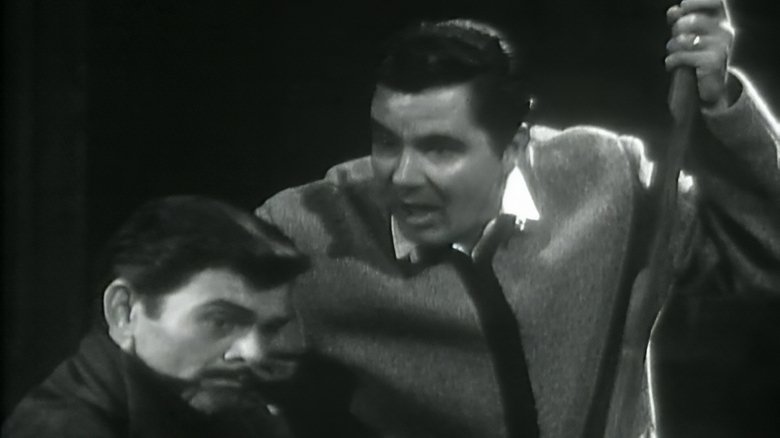
Hamlet from the Lunt-Fontanne Theatre
A stage production of Hamlet filmed at the Lunt-Fontanne Theatre in New York. It was deliberately staged in the style of a "dress rehearsal", but performed in front of a live audience.

The Philco Television Playhouse
The Philco Television Playhouse is an American anthology series that was broadcast live on NBC from 1948 to 1955. Produced by Fred Coe, the series was sponsored by Philco. It was one of the most respected dramatic shows of the Golden Age of Television, winning a 1954 Peabody Award and receiving eight Emmy nominations between 1951 and 1956.
Filmography
as Fred Graham / Petruchio (seg. "Kiss Me, Kate") (archive footage)
as The Great Ak (voice)
as President of Exchange
as Self
as Fred Carter
as Self
as Narrator
as Claudius
as Self
as Frederick Graham / Petruchio
as Jack Point
as Self
as Self - Singer
as Marco Polo
as Capt. Dick Warrington
as Jack Point
as Frederick Graham / Petruchio
as Captain Brown
as Narrator
as Howard Young
as Harold Russell (voice) (uncredited)