
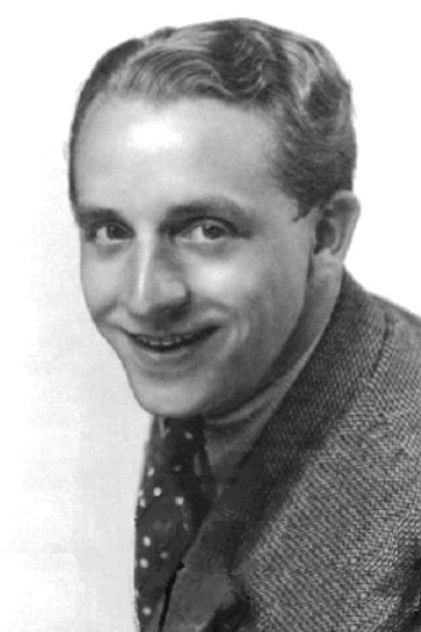
Hans Fiebrandt
Acting
Biography
No biography available for Hans Fiebrandt.
Born: August 16, 1905
Place of Birth: Berlin, Germany
Known For
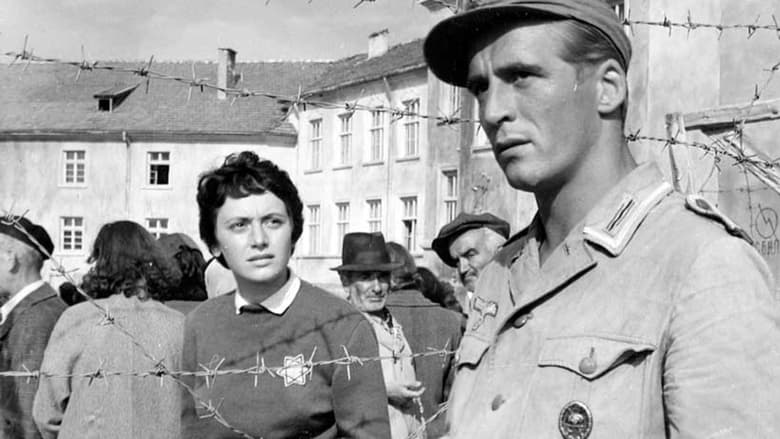
Stars
Stationed in a secluded Bulgarian village in 1943, Walter – a German Wehrmacht sergeant and artist – lives in almost idyllic distance from the war. Then a transit camp is set up for Jews arriving from Greece. When Ruth, one of the internees, asks Walter to help a pregnant woman, the two form an unlikely bond.
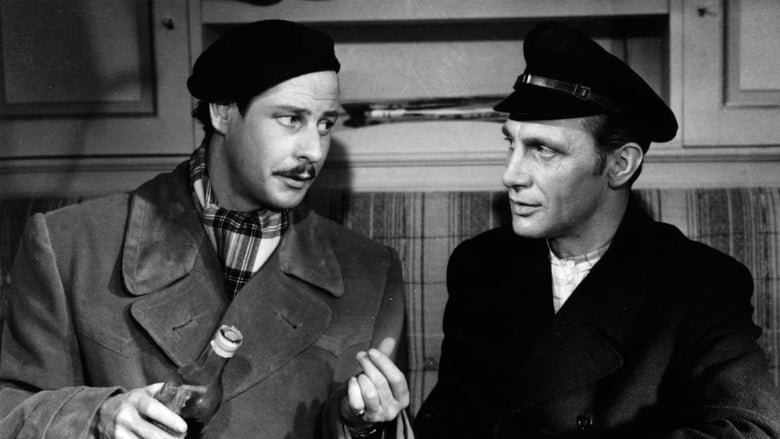
Die letzte Heuer
The ship stoker Heini Holler leaves Greece for health reasons and reports to the consulate of fascist Germany. The consul sends him back to Hamburg. He had previously reported him to the Gestapo there as politically suspicious. On his arrival, Holler is immediately arrested. His comrades kidnap the consul and demand an exchange for Heini, which is to take place in Marseille. The Gestapo agree to this as a pretense and secure the support of the French police to arrest the kidnappers. However, the solidarity of the sailors in Marseille is stronger and Heini is able to cure his lung disease in the Soviet Union.
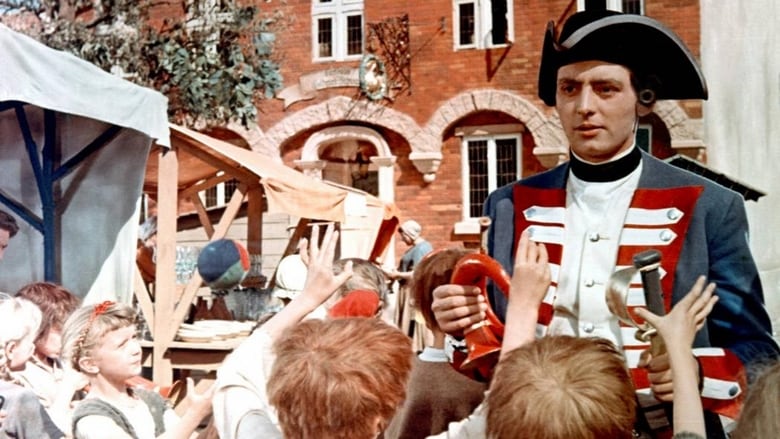
The Tinder Box
A young soldier discovers three chests of copper, silver and gold and an old tinder-box in the hollow of an old oak tree. He is now rich. But he squanders the money until it is all gone. All he has left is the old tinder-box. He uses it to light a small pipe and three large dogs come to his rescue. Based on the fairy-tale by Hans Christian Anderson.

Polizeiruf 110
Polizeiruf 110 is a long-running German language detective television series. The first episode was broadcast 27 June 1971 in the German Democratic Republic, and after the dissolution of Fernsehen der DDR the series was picked up by ARD. It was originally created as a counterpart to the West German series Tatort, and quickly became a public favorite.

Ernst Thälmann – Son of the Working Class
This film is the first of a two-part historical and biographical portrait of the communist politician and anti-fascist Ernst Thälmann. In early November 1918, Ernst Thälmann is an unwilling soldier serving on the western front. As the revolutionary movement at home is threatened by the betrayal of the Social Democrats and fissures in the working class, Thälmann calls on his fellow soldiers to put down their weapons and unite with the workers in the communist struggle at home. Thälmann’s qualms about which side he is fighting on continue, but when the local police attempt to prevent a shipment of provisions and supplies from reaching the people in Petrograd, he intervenes and the ship is unloaded. With this moment of clarity, Thälmann continues to follow his political convictions and joins the workers at the Hamburg uprising in October 1923.

Recovery
The authorities expect the case of Friedel Walter, alias "Dr. Mueller," to be a straightforward one: he was working as a doctor without proper credentials under a false name. But Mehlin, the man in charge of his case, knows that there is more to the story. When he was injured fleeing from a concentration camp, resistance worker Irene asked her medical student boyfriend Walter to give him medical care.
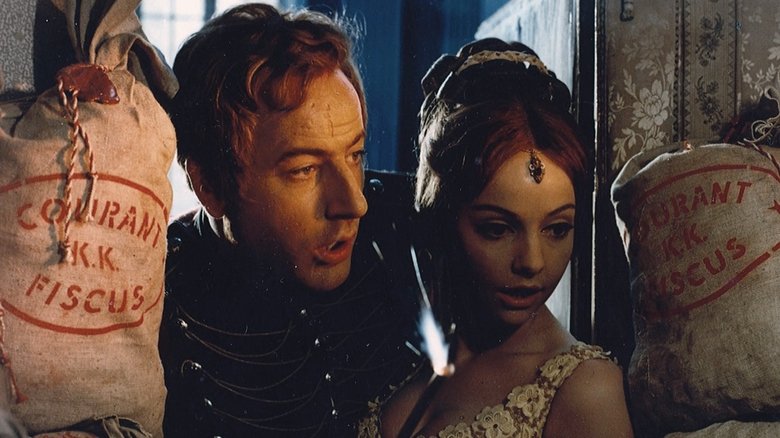
Hauptmann Florian von der Mühle
This story of the miller Florian, who gave all his money to the war against Napoleon, is loosely based on a true story. After the war, Florian's reimbursement is challenged, and he must also pay taxes on his destroyed mill. He resists the tax collectors and takes off to Vienna, where he intends to defend his rights. On the way, he rescues the Duchess of Guastalla from assault. She also wants to go to Vienna, as His Majesty Franz II is trying to contest an heir in her favor. With cunning, luck, and dagger, Florian fights his way through a slew of nobility and their secret police.
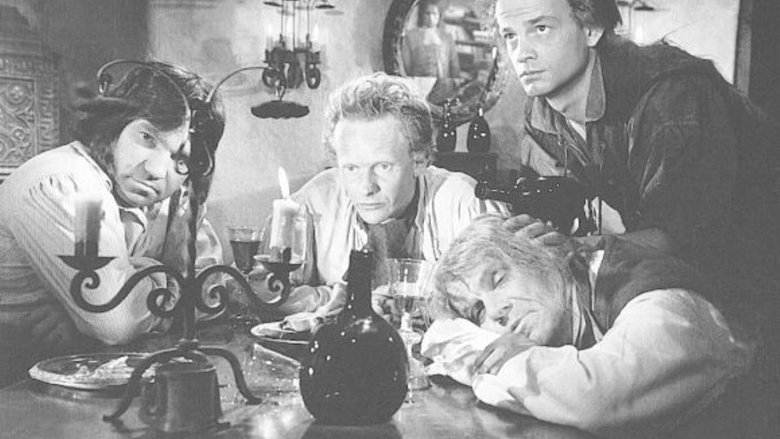
The Blue Swords
The story of Johann Friedrich Böttger, an apothecary’s apprentice and alchemist’s assistant. Fleeing from the Prussian King, he goes to Saxony, where King Frederick August the Strong takes him to a fortress and demands that he create gold. Böttger is equipped with everything he would need for the task, but he has known for a while that actual gold production is a myth and instead experiments with porcelain—white porcelain, as the Chinese are said to possess. In 1709, he finally succeeds in surprising the King with the "white gold," the first white porcelain made in Europe, he hopes for freedom.

Damals in Paris
1944: Geneviève and René live in occupied Paris. They love each other, and the young woman looks fearfully at René's activities in the Resistance. She wants to stay out of it, and sometimes there are arguments about it. After one such argument, René goes to a meeting with a German comrade. While he is away, the Gestapo come to the house to take the resistance fighter Louise away. Geneviève intervenes and is arrested. The men of the resistance are very worried as she knows about a planned bridge demolition. René trusts her, and Geneviève does indeed withstand the torture. The bridge can be blown up as planned, contributing to a decisive defeat for the German army.

Die Millionen der Yvette
French milliner Yvette has a small fashion salon in Düsseldorf. The young gentlemen of society fall at her feet, but she is not accepted into their circles. That's why her former lover Maurice Daurignac manages to persuade her to pull off a big coup to get revenge on "high society". She pretends to be the heiress to ten million gold francs. A notary arrives from Paris accompanied by two supposed policemen and delivers the alleged money in a sealed parcel to the Bleichstetter bank in Düsseldorf, where it remains until the end of the inheritance process. The case drags on, and in the meantime the two are living large. When the bombshell bursts, Yvette has the young lawyer Dr. Hellmer to thank for the fact that she cannot be thrown to the angry citizens.
Filmography
as Gerichtsmediziner
as Apotheker
as Carlé
as Genosse Hauptwachtmeister
as Der König
as Krügel
as Angestellter im Einwohnermeldeamt
as Frontsoldat
as Gestapobeamter Möller
as Gehilfe von Dünnbrot