
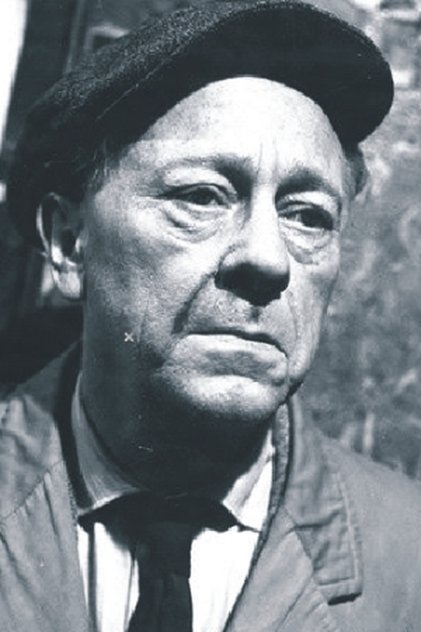
Hans Hardt-Hardtloff
Acting
Biography
No biography available for Hans Hardt-Hardtloff.
Born: August 8, 1906
Place of Birth: Cologne, Germany
Known For
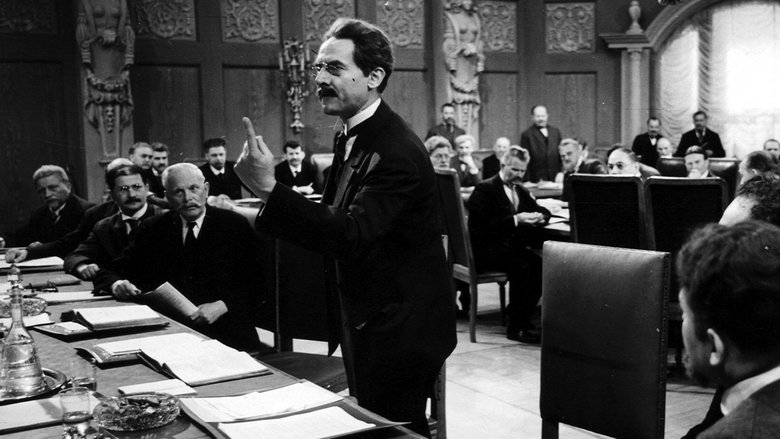
As Long as There’s Life in Me
This is part one of a two-part biopic about Karl Liebknecht. In 1914, Germany is arming itself for war. Karl Liebknecht, left-wing revolutionary Social Democrat, workers’ leader and a virulent antimilitarist, is one among 110 SPD members of Parliament who vote against approving war loans. From then on, he is considered un-German and a traitor to the fatherland, and his own party’s leadership turns against him. Despite threats, Liebknecht speaks up against the war and writes the manifesto “The Main Enemy Is at Home.” Even when he is arrested and charged with treason, he does not surrender.

Entlassen auf Bewährung
After causing a deadly hit-and-run motorcycle accident, Conny Schenk spends two years in prison, where he is able to complete a printing apprenticeship and is released early for good behavior. While he is still on probation, money is stolen at the company where he works and everyone is quick to suspect Conny. Can he overcome his past mistakes and start fresh, or will the mistrust of his colleagues and friends become a self-fulfilling prophecy?
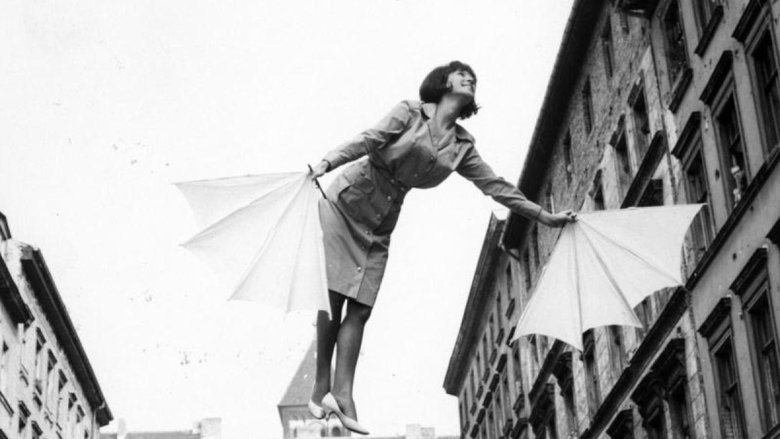
Miss Butterfly
After the death of their father, 18-year-old Helene Raupe (“coccoon”) and her younger sister Asta come under the guardianship of the youth welfare office in East Berlin. Helene fails miserably as a fishmonger, fashion assistant and bus conductor, all jobs ordained for her by the authorities. The young woman really only “emerges” in her fantasies, where she can escape from her dull, normal life.
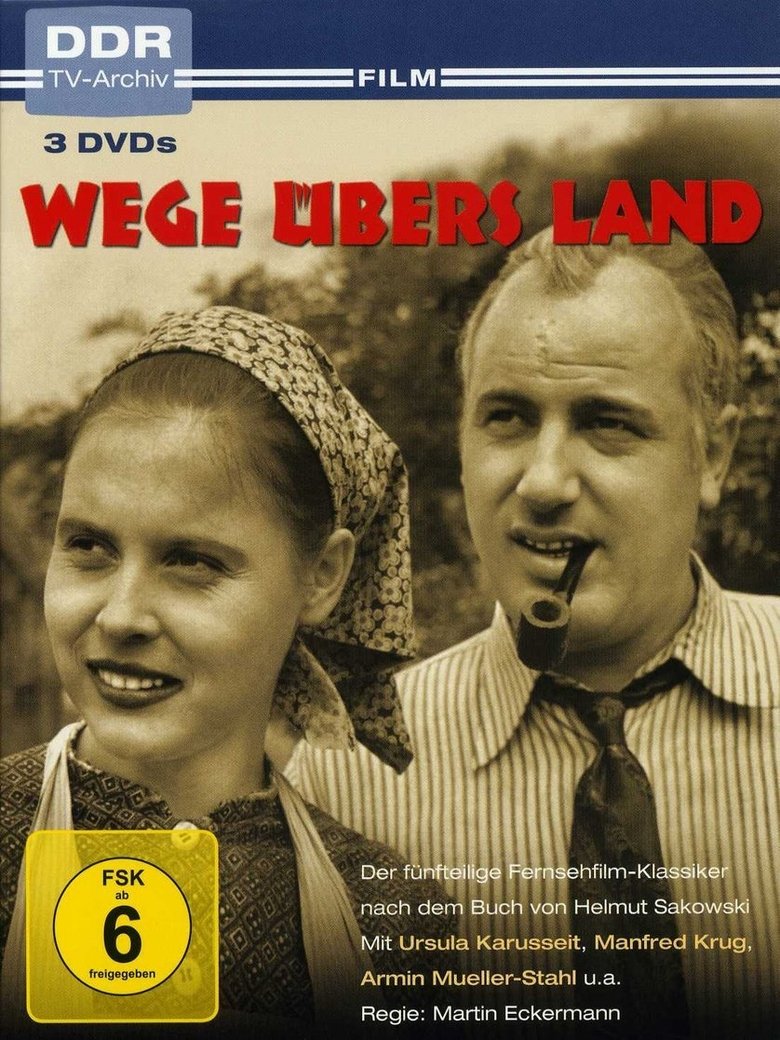
Ways across the Country
East German TV miniseries about the young maid Gertrud Habersaat, who marries, moves from Mecklenburg to Poland in the early 1940s, has to come back to Mecklenburg as a refugee during World War II and finally finds her place during the 1950s.

Tinko
After 1945, land reform forces Old Kraske to become an agricultural worker, but he continues to work on his own, flatly refusing to join any collective farming activities. He desperately wants a large-scale farm like Kimpel's in order to pass it on to his adored grandson, Tinko. When Kraske's son Ernst returns from a POW camp and gives his support to the new communal project, tensions arise within the family and little Tinko is caught in the middle.
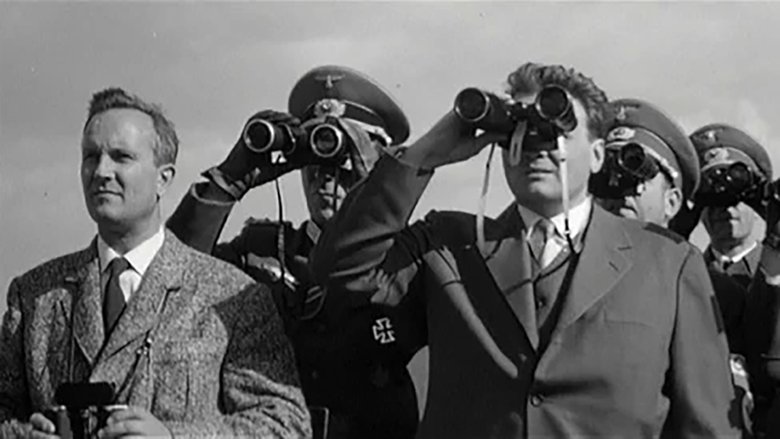
Frozen Flashes
In November of 1939, the British consulate in Norway receives documents saying that the Nazis are conducting secret rocket research in Peenemünde. But the British doubt the authenticity of the so called "Oslo report". Thus, the Germans continue their experiments unimpeded. At the same time, resistance groups from France, England, Poland, and Germany try to find and to sabotage the secret Nazi research base. When the first "V 2" rocket is successfully launched, the Allied commanders finally become interested in the "Oslo report".
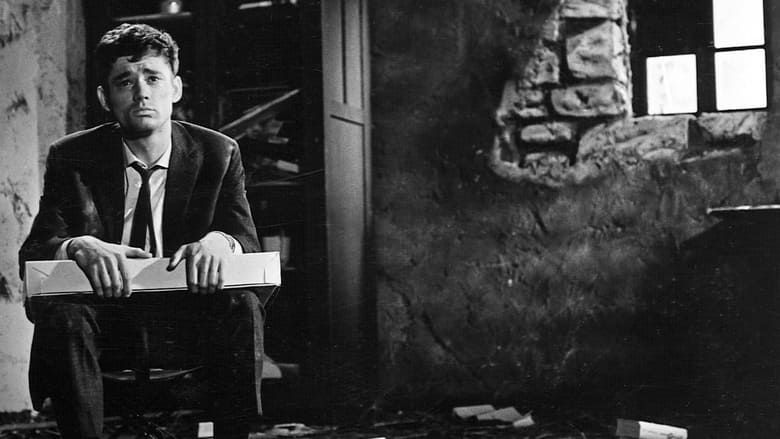
Just Don't Think I'll Cry
High-school senior Peter considers the adults around him to be hypocritical, self-congratulatory, and immersed in the past. He gets suspended for writing an essay that his teachers consider to be a challenge to the state. Just Don't Think I'll Cry became one of twelve films and film projects-almost an entire year's production-that were banned in 1965-1966 due to their alleged anti-socialist aspects. Although scenes and dialogs were altered and the end was reshot twice, officials condemned this title as "particularly harmful." In 1989, cinematographer Ost restored the original version, and this and most of the other banned films were finally screened in January 1990. Belatedly, they were acclaimed as masterpieces of critical realism.
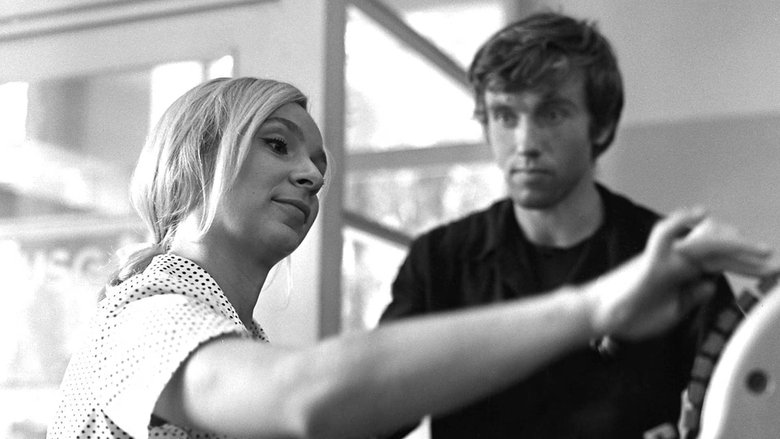
Standesamt - Eintritt frei
East Berlin, early 1970s: the funny, somewhat eccentric repair mechanic Roland and the cashier Christel quickly become a couple. After some back and forth, they get married and their first child is soon on the way. But the young couple's everyday life is not always free of conflict: Christel has taken an evening course to get ahead professionally, while Roland takes care of the child and household after work. Will their love withstand the strain? In "Standesamt - Eintritt frei", director Manfred Mosblech tells a subtle and cheerful everyday GDR story about two young people who are searching for the right path for themselves between professional life, friendships and marriage.
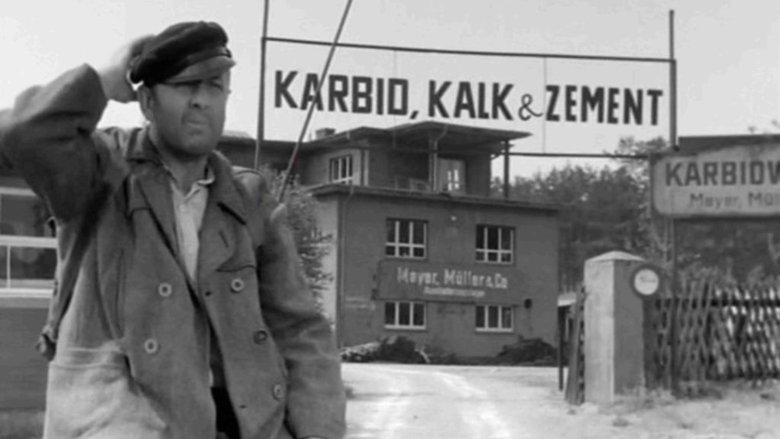
Carbide and Sorrel
After the second World War, Dresden has a lot of reconstructing to do. To get the cigarette factory he once worked for running again, Kalle has to travel to Wittenberg - the only place where carbide can be found. Once there, Kalle find himself in the unfortunate situation of having to hitchhike his way back to Dresden, transporting seven heavy barrels of carbide. However, his inventiveness and optimistic attitude help transform the grueling task into an adventurous, entertaining, and funny journey.
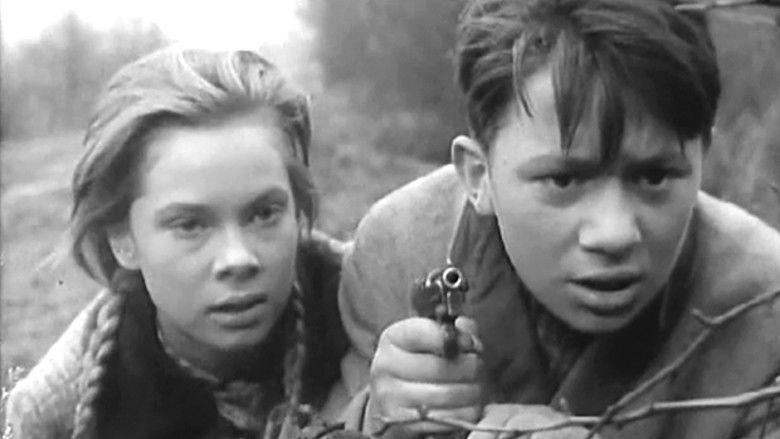
When Martin Was Fourteen
Martin′s and his girlfriend′s Kathrin′s childhood comes to an abrupt end in 1920, when their Mecklenburg village is drawn into the events surrounding the Kapp putsch. By accident, Martin discovers a charge of weapons that land owner von Bröder had put away for the reactionary forces, and gives them to the workers in the city. When the village starts to organize a strike against the putsch, soldiers arrive at the village to hold down the residents of the village.
Filmography
as Schießbudenbesitzer
as Kluge
as Josef Probst
as Burasch
as August Bebel
as Willi
as Herrmann Hecht
as Nepomuk
as Siebold
as Kapitän
as Polizist
as Wegmann
as Karsten
as Commander
as Prisoner Paulsen in Dora
as Hütte
as Ackerknecht
as Major Smith
as Betrunkener im Bus
as Kuhlmey
as Annes Vater
as Vorsitzender der Fischereigenossenschaft
as Tischler
as Gebhardt
as Connys Vater
as Leutevogt Kowalewski
as Direktor Alfred Hirte
as Vater Stammer
as Rolf Meternagel
as Soldat in Pulverkammer
as Direktor Neudeck
as Garagenbesitzer
as german converter Hans