

Henriette Confurius
Acting
Biography
Henriette Confurius is a German actress best known to international audiences for her role in the Netflix sci-fi television series Tribes of Europa.
Born: February 5, 1991
Place of Birth: Berlin, Germany
Known For

Bambi
The Bambi, often called the Bambi Award and stylised as BAMBI, is a German award presented annually by Hubert Burda Media to recognize excellence in international media and television to personalities in the media, arts, culture, sports, and other fields "with vision and creativity who affected and inspired the German public that year", both domestic and foreign. First held in 1948, it is the oldest media award in Germany. The trophy is named after Felix Salten's book Bambi, A Life in the Woods and its statuettes are in the shape of the novel's titular fawn character. They were originally made of porcelain until 1958, when the organizers switched to using gold, with the casting done by the art casting workshop of Ernst Strassacker in Süßen.

Allerleirauh
A king is married to a woman with golden hair. The queen falls ill, and realising she’s going to die she asks her husband that, if he’d ever remarry, it would be only to a woman as beautiful as her with the same golden hair. Unfortunately, the only one to fit the description is his own daughter, Princess Lotte. He decides to marry her. All she can do is flee. She dirties her face and hands with soot and escapes.
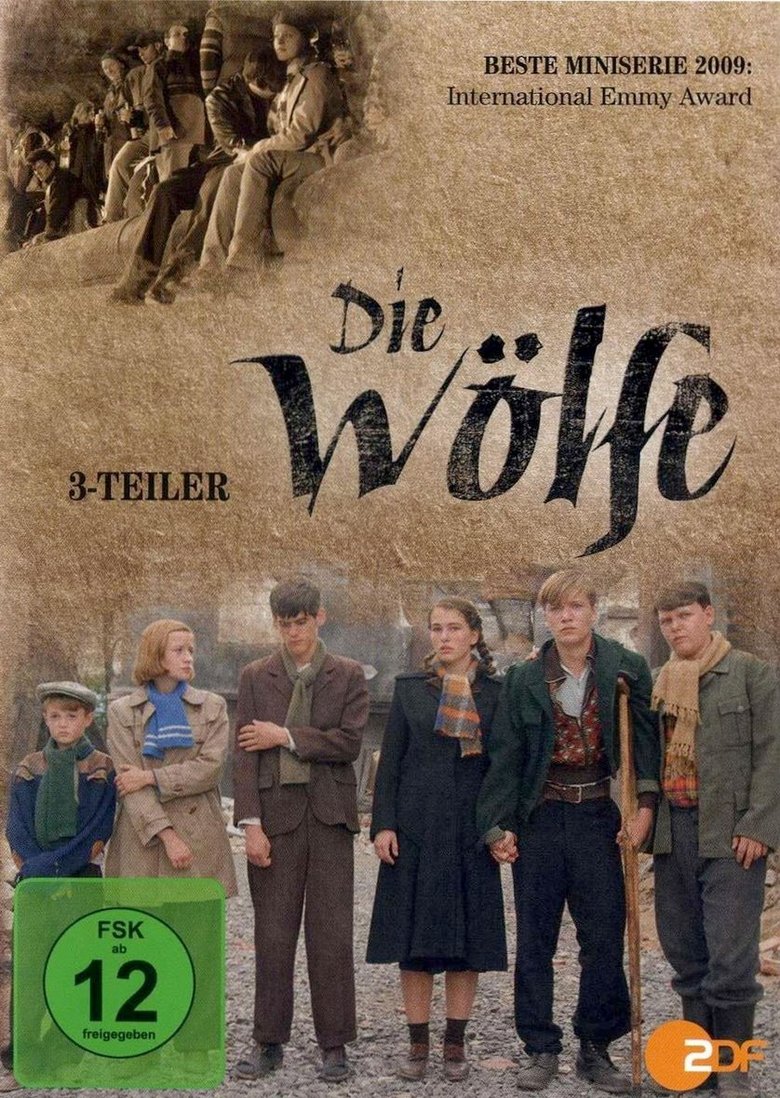
Die Wölfe
The story of a group of Berlin youths from the post-war period to the post-reunification era. A gripping story of friendship, love and betrayal against a global political backdrop, told in a three-part documentary drama. Friends Kurt, Lotte, Jakob, Silke and Bernd experience everyday life together in post-war Berlin in 1948: between rubble women and the black market, rival youth gangs and first love. Thirteen years later, as the flow of refugees to the West increases, they try to hold on to their friendship. But the estrangement becomes ever more apparent and the gang members lose sight of each other. Only after the fall of the Berlin Wall in 1989 do the former friends finally find each other again and have to ask themselves whether they are still bound by the vow they once made: "Nothing can separate us, not even death"...

Wer weiß denn sowas?

1918 Aufstand der Matrosen

Line of Separation
After the fall of the Third Reich, the small town of Tannbach is cruelly divided between East and West regimes and the town’s inhabitants suffer the consequences. A gripping historical drama exploring the devastating effects decades of conflict had on communities from the end of the Second War War to the fall of the Berlin Wall.
Line of Separation
After the fall of the Third Reich, the small town of Tannbach is cruelly divided between East and West regimes and the town’s inhabitants suffer the consequences. A gripping historical drama exploring the devastating effects decades of conflict had on communities from the end of the Second War War to the fall of the Berlin Wall.

The Glory of Life
Because of the power of love, the last year of Franz Kafka's life becomes his happiest. The well-known writer has never before been able to allow himself to experience intimacy, he suffers from tuberculosis and is dependent on his overbearing family. In the summer of 1923, he met Dora Diamant in the seaside resort Graal-Müritz on the Baltic Sea coast, where he is convalescing and she is working in a Jewish Volksheim. He is a man of world, the 14 years younger woman is from the deep East, he can write, she can dance. She has both feet firmly on the ground, he is always hovering a little above it. She embraces the indicative, he gets tangled up in the conjunctive. But the worldly wise Dora accepts him as he is. And he accepts her. Together they go to Berlin and when Franz's health deteriorates rapidly, to a sanatorium in Austria. They are granted a single year together until Franz Kafka's health deteriorates incurable. However their year together allows them to feel the glory of life.

Fog in August
A Yenish boy is placed in a mental hospital and experiences the Nazi euthanasia program. Aware of what was happening and attached to friends, the lad attempts to sabotage the program. The film addresses the complexities of the program director, the lives of the child victims, and the struggles of the child protagonist. More than five thousand children died in the Nazi euthanasia program.

Sie sagt. Er sagt.
In a criminal trial at the Berlin district court, in which the accusation of rape is being heard, it is one statement against the other - a seemingly insoluble dilemma, both legally and humanly, that has enormous explosive power. Because beyond the professional and private future of two people, it is about nothing less than the values and prejudices that define us as a society. It is a case of high public attention: the well-known TV presenter Katharina Schlüter and the industrialist Christian Thiede have had a secret affair that has lasted for years, and now they are sitting opposite each other in the courtroom as hostile parties. On the witness stand, Schlüter describes how what was initially consensual sex in Thiede's apartment turned into rape. But are circumstantial evidence sufficient? Experts and witnesses are questioned, and an unexpected turn of events doesn't make it any easier for the court to decide on credibility and truth.
Filmography
as Zulima
as Verteidigerin Breslau
as Ulrike Bandow
as Caro
as Dora Diamant
as Lena Fischmann
as Anja Grimm
as Natalia
as Charlie
as Mara
as Liv
as Lene
as Isa von Gems
as Ava
as Helene Hartung
as Girl in bookstore
as Magd Rosa
as Lisbeth
as Edith Kiefer
as Self
as Anna von Striesow
as Anna Erler
as Charlotte von Lengefeld
as Lehrerin Rosaria
as Alice Licht
as Elly Seitz/Brauer 1918–1930
as Princess Lotte
as Nadja Meifeld
as Kyra
as Rosalie
as Mia Fröhlich
as Silvia Hermann
as Ida Gustavsson
as Lola Heinrich
as Paula Gastein
as Rebecca Pramann / Miriam Molitor
as Kayla
as Lotte
as Yvonne Lade
as Niko
as Nicole Habermann
as Nadja Ivanov
as Ilka Carstensen
as Dole
as Self
as Clara Eschenbach
as Lisa Bollmann
as Jenny
as Laura Hoffmann
as Self
as Romy Kobilke
as Kim Krinowsky
as Nele Klarbach
as Lisa Kranz
as Julia März
as Self
as Trista (White Rabbit)
as Dora Diamant