

Jørgen Weel
Acting
Biography
No biography available for Jørgen Weel.
Born: August 13, 1922
Place of Birth: Frederiksberg, Danmark
Known For
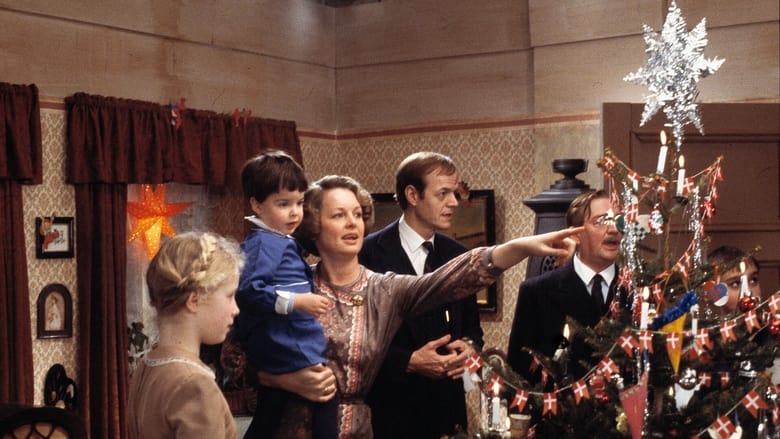
Matador
Matador is a Danish TV series produced and shown between 1978 and 1982. It is set in the fictional Danish town of Korsbæk between 1929 and 1947. It follows the lives of a range of characters from across the social spectrum, focusing specifically on the rivalry between the families of two businessmen: The banker Hans Christian Varnæs, an established local worthy, and social climber Mads Skjern, who arrives in town as the series opens. The name Matador was taken from the localised edition of the boardgame Monopoly, also the series' tentative English title. In addition, in contemporary Danish a "matador" is often used to describe a business tycoon, in the series referring to the character of Mads Skjern and his craftiness as a self-made entrepreneur. Directed by famed Danish film maker Erik Balling, Matador was the idea of author Lise Nørgaard who wrote the bulk of the episodes alongside Karen Smith, Jens Louis Petersen and Paul Hammerich. The series is one of the most well-known and popular examples of Danish television and represents the peak of longtime development of Danish TV drama by the public service channel Danmarks Radio. The series has become part of the modern self-understanding of Danes, partly because of its successful mix of melodrama and a distinct warm Danish humour in the depiction of characters, which were portrayed by a wide range of the most popular Danish actors at the time; but also not least because of its accurate portrayal of a turbulent Denmark from around the start of the Great Depression and through Nazi Germany's occupation of Denmark in World War II.

The House at Christianshavn
The series follows the residents of an apartment building on Copenhagen's Christianshavn, as they go about their daily lives and challenges. There is Olsen, a mover with an old fashion view of the world, Clausen who runs the local pet shop, Egon the career focused assistant, their wives who work hard to keep their spouses lives together, the young couple Tue and Rikke who recently moved in, the hard working caretaker Meyer, who never puts in to much effort, and of course Emma, the innkeeper of Rottehullet, where all the important decisions are made while running up the bar tab. The series was produced by Nordisk Film for Danmarks Radio TV station between the years 1970-77. The series' first director was Ebbe Langberg, then Erik Balling and Tom Hedegaard respectively. The series was conceived by an author team of well-known Danish authors such Leif Panduro, Benny Andersen, and Lise Nørgaard.
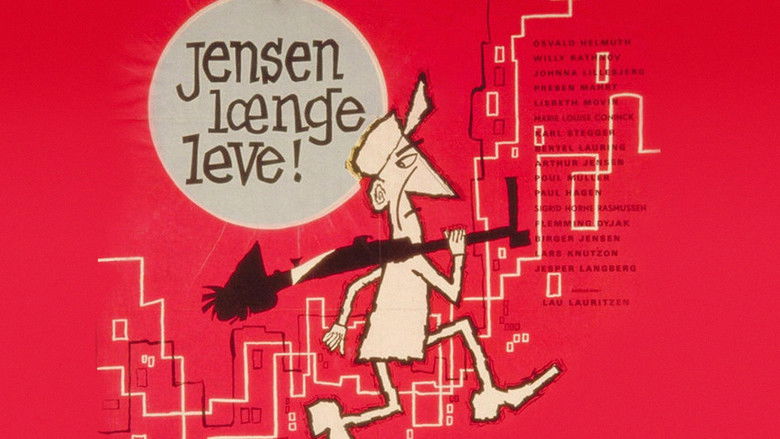
Jensen længe leve!
A prisoner who has just escaped from prison finds the body of Jensens, a marshal, in Jensens' shop. Fearing that he will be suspected of murder, he moves the body in a trunk to a forest, where it is to be hidden. On the way, he loses the trunk from his cart and Jensen from the trunk. Immediately afterwards, another gentleman runs over the body, hides it in the back of his cart, wants to bury it, etc.
A Town in the Province
In 1970s Denmark, the criminal police in a provincial town solve different criminal cases, when the police was dominated by men and DNA was not yet a tool in investigation.
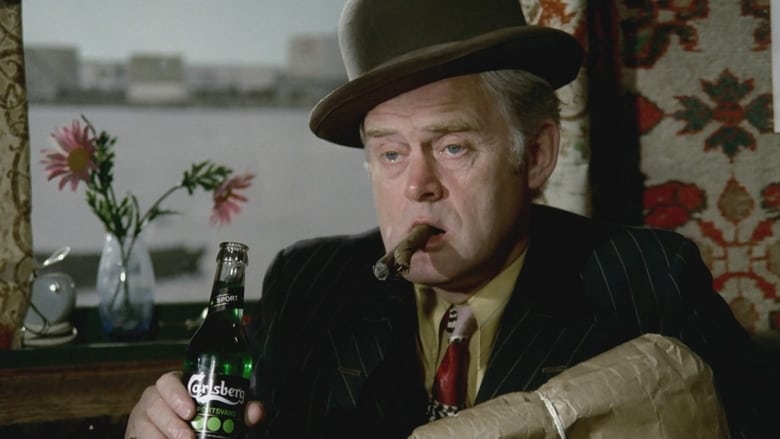
The Olsen Gang Runs Amok
When Egon Olsen gets out of Vridlose State Prision once again, his friends Benny and Kjeld do not want to know about his new ingenious plan: they are actually WORKING in a shop! Thus, he has to think of something else to get his hands on the money of some international gangster.
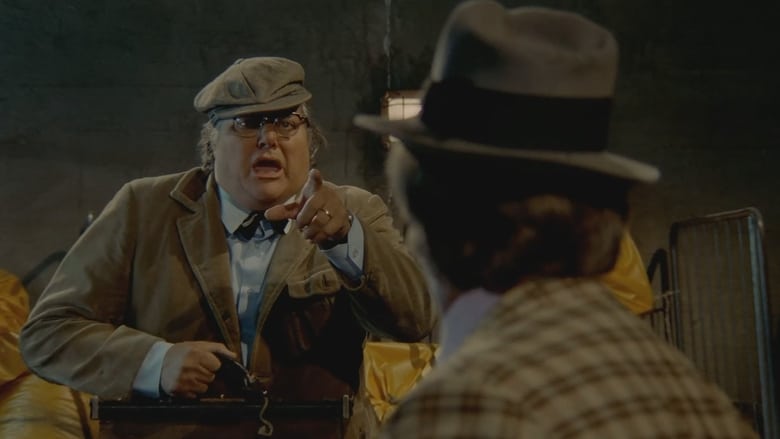
The Olsen Gang Jumps the Fence
As usual, Egon has an ingenious plan. And, as usual, it works just fine until one of the gang members makes some kind of funny error. This time, however, even Egon's life is in danger, for some international criminals try to get rid of him by throwing him into a container filled with acid.
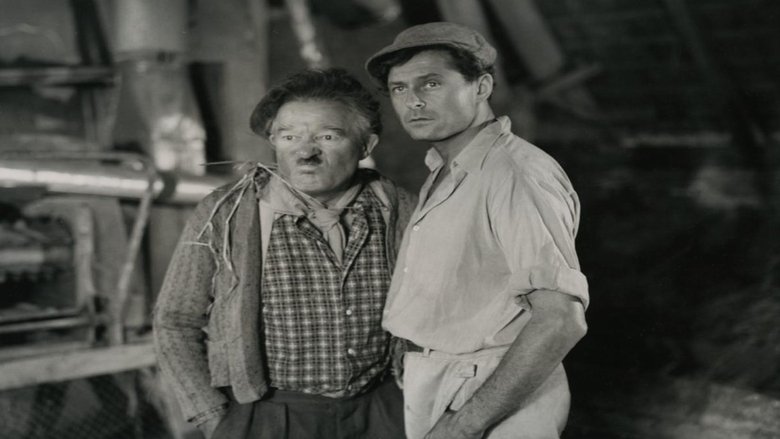
Det gamle guld
Due to his gambling addiction, farmer Hans Sværke has brought his farm to the brink of bankruptcy, thereby opening up the opportunity for the wealthy landowner Karius to achieve his goal of taking over the farm. However, parish bailiff Mikkelsen vouches for Sværke and saves him for the time being, and Sværke then leases the farm. Sværke dies, and his talented son Niels takes over the lease. He and the farmer's daughter, Grethe, are happy together, and Niels manages to get her hired at the farm. But Karius' daughter, who is in love with Niels, burns with jealousy and persuades her father to take advantage of Niels' difficult financial situation and take over the farm. Things look bleak for Niels, who has been cornered by the wealthy landowner. But one day while plowing, he sees something glinting in the soil...
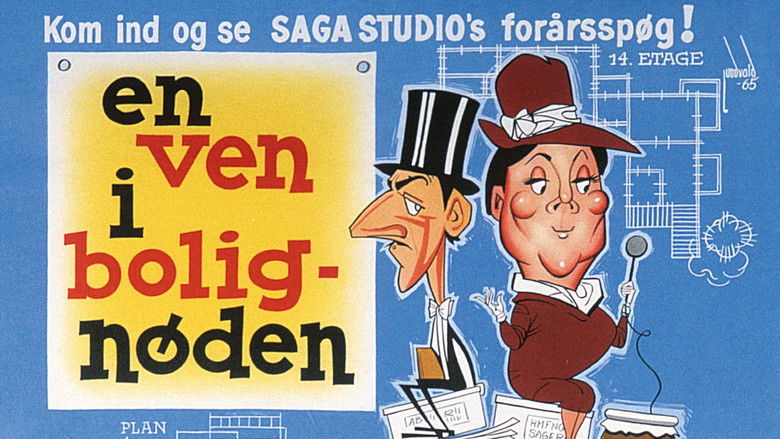
En ven i bolignøden
Among the residents of the boarding house on Fredhvilevej are Børge Blom, a civil servant, the feisty Nelly Smith, and taxi driver Ib Nielsen. Because their house is to be demolished to make way for a parking lot, they are given 14 days' notice to vacate. Good advice is now hard to come by, and after a fruitless visit to the Ministry of Housing, they agree to resort to unconventional methods—they occupy Louisenborg Castle! Upon arriving at the castle with their belongings, confusion reigns supreme—there is moving chaos, a visit from an Arab prince, plenty of drinks, and love in the corners.
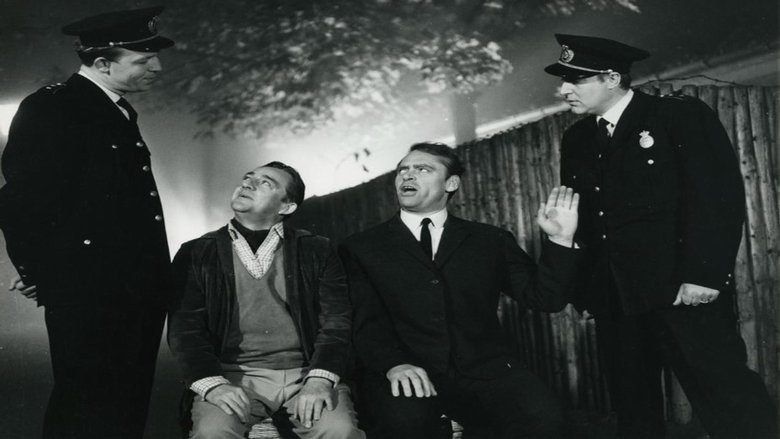
Don Olsen kommer til byen
Bank director L.W. Jacobsen resides in a small provincial town. He is not particularly interested in his wife, Elsebeth, but rather in teacher and city council member Miss Mortensen. Thorsen, the town's manufacturer, is a member of the same city council group as Jacobsen. Then Don Olsen comes to town. Olsen is not interested in the upper class, but rather in people. By chance, Thorsen and Olsen meet and soon become drinking buddies. Thorsen drags the milkman's horse home to his apartment in the middle of the night. The scandal is a reality. Thorsen wants to flee, but with Olsen's help, he instead woos the townspeople and Miss Mortensen under the motto "Make good times better."

The Marksman
A man decides to perpetrate a series of killings and publicise them as political acts in an attempt to protest against nuclear armaments.
Filmography
as Bartender (uncredited)
as Emil, Anne Gretes mand
as Knallertkører
as Politibetjent (uncredited)
as Dørmand
as Postbud, Østergaard
as Niels Jacobsen
as Postbud
as Anton
as Ung socialdemokrat
as Dansende gæst