
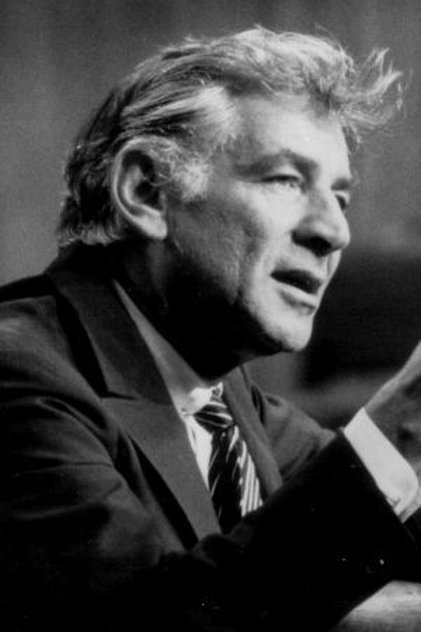
Leonard Bernstein
Sound
Biography
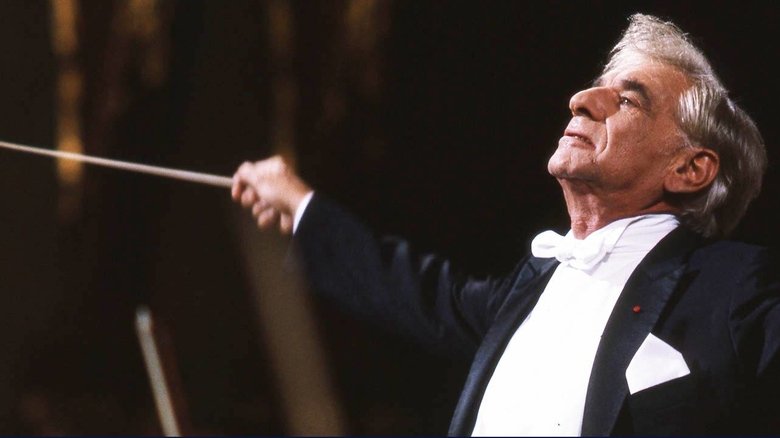
Leonard Bernstein was an American composer, conductor, pianist, music educator, author, and lifelong humanitarian. He was one of the most significant American cultural personalities of the 20th century. According to music critic Donal Henahan, he was "one of the most prodigiously talented and successful musicians in American history".
Born: August 25, 1918
Place of Birth: Lawrence, Massachusetts, USA
Known For

Beethoven Fidelio
This production is a gala affair; the sets are traditional (evocative of 18th-19th century Spain); the lighting is bright, so colors are good and one can see all of the action. Singers are generally well chosen and perform admirably. However, at this point, slight reservations creep in; although Janowitz (Fidelio/Leonore) and Kollo (Florestan) look "good" and act well, the singing parts tax them a bit when pushed to the limit. Most of the time that doesn't matter, and an argument can be made that a little vocal strain is in character with their dire plight. Ideally, for me, Vickers as Florestan would have added extra vocal heft and more sensitive acting than Kollo.
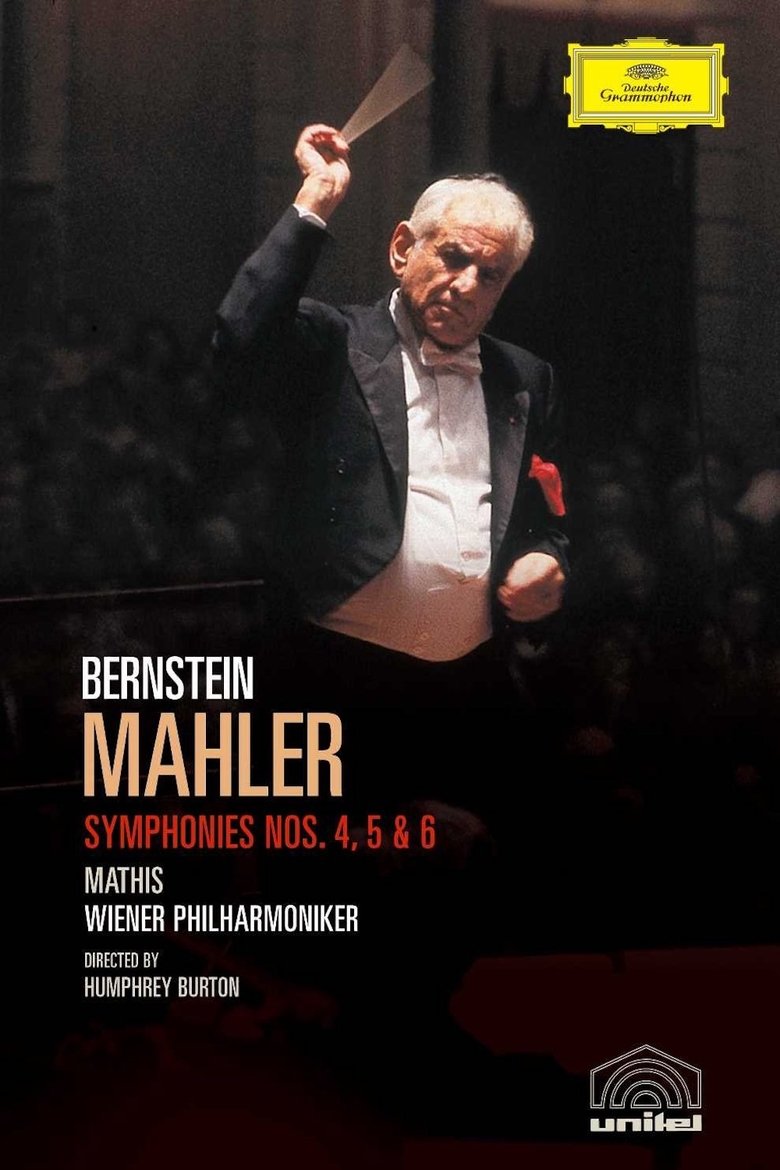
Mahler - Symphonies Nos. 4, 5 & 6
For Mahlerites, his symphonies are much more than musical performances--they can be an emotional or spiritual journey through the struggles, fears, and triumphs of life. This Sixth Symphony is a 1976 performance in the Vienna Musikvereinssaal with PCM stereo and DTS 5.1. The 2 dvd set also includes the 4th and 5th symphonies, which are performed as magnificently as the Sixth.
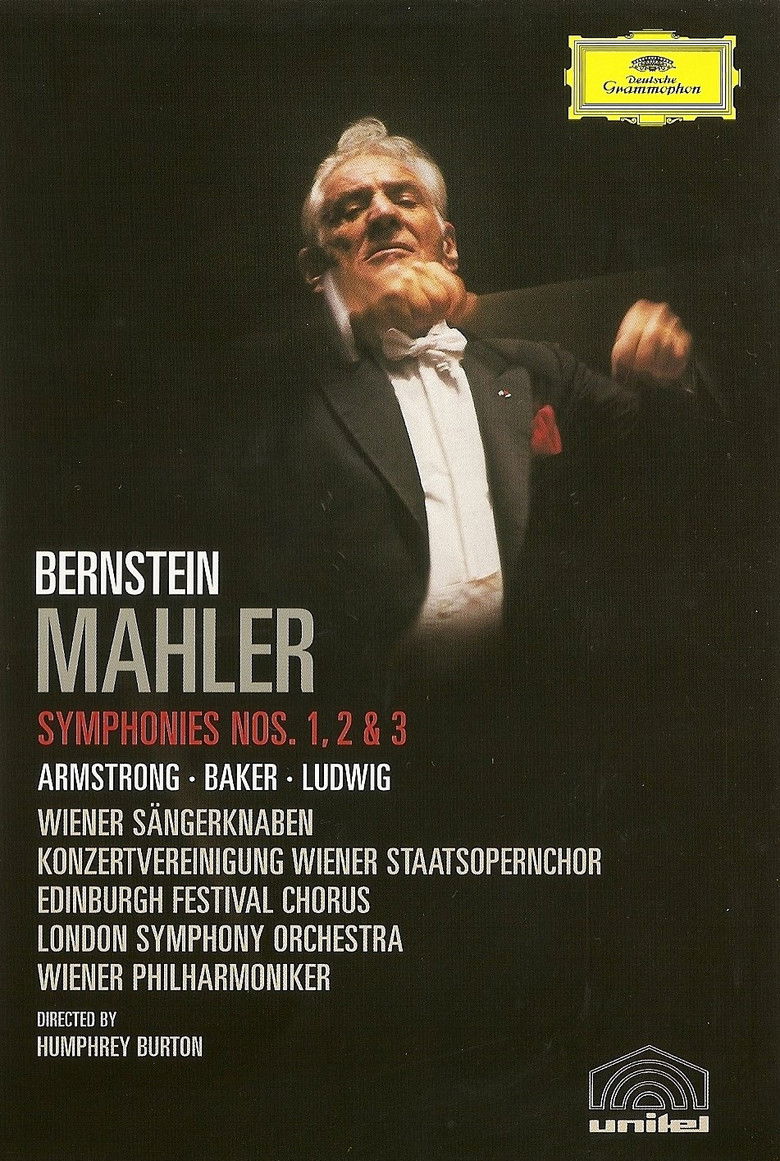
Mahler - Symphonies Nos. 1, 2 & 3
Beginning with the First Symphony, Bernstein reveals Mahler's position at the hinge of modernism, while emphasizing his emotional extremism. The uplifting Second "Resurrection" Symphony, with which Bernstein had an especially long and close association, is recorded here in a historic performance from 1973, set in the Romanesque splendor of Ely Cathedral. In the Third, Bernstein encompasses the symphony's spiritual panorama like no other conductor, with the Vienna Philharmonic players alive to every nuance.
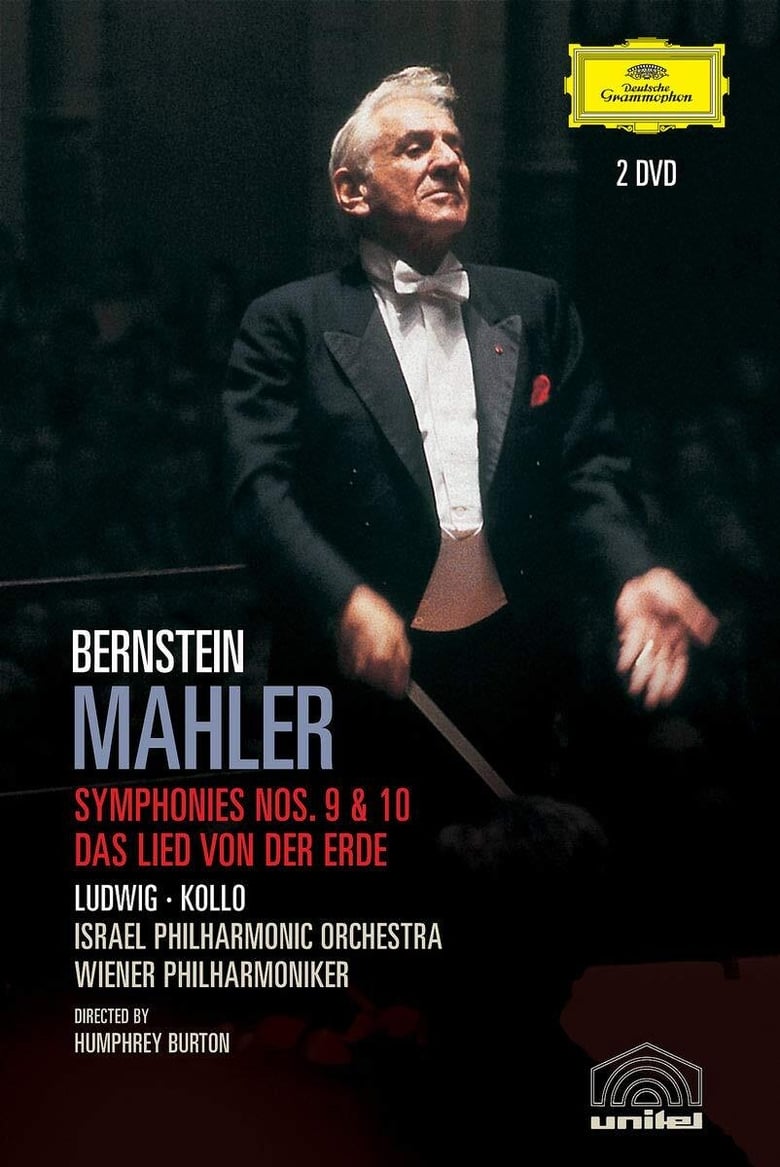
Mahler - Symphonies Nos. 9 & 10 / Das Lied von der Erde
Filmed on tour at Berlin's Philharmonie, this account of the valedictory Ninth Symphony is an intense interpretation, expressing Bernstein's conviction that modern man had at last caught up with the message encoded in Mahler's last completed work. Having made his famous 1966 studio recording of "Das Lied von der Erde" in Vienna, Bernstein re-recorded this in Israel with the same searing subjectivity. René Kollo draws on the voice of a great Wagner tenor, while Christa Ludwig, the greatest exponent of the contralto songs at the time, is unbearably poignant in the final movement's fusion of elation and sadness.

Bernstein In Vienna: Beethoven, Piano Concerto No. 1 in C Major
In Vienna's Musikverein, Leonard Bernstein and the Vienna Philharmonic celebrates Ludwig Van Beethoven's 200th birthday with a joyful performance of his Piano Concerto No. 1 in C Major. Maestro Bernstein conducts the orchestra from the keyboard in this historic concert.
Leonard Bernstein: A Genius Divided
One of the first US born conductors to receive worldwide fame, Leonard Bernstein is an exceptional composer and certainly not only due to The West Side Story. Instead of concentrating exclusively on his most famous work, Thomas von Steinaecker sets out to paint a complete picture of Bernstein. Thus, the documentary focusses on the American’s less known later works and on three compositions in particular: his Mass, the musical 1600 Pennsylvania Avenue and the great final opera A Quiet Place. The film paints a vivid picture of the multitalented Bernstein, struggling with his role as composer and conductor, tackling the tension between successes and flops, between the politics of his time and his own liberal humanitarian claim. It looks back on Bernstein’s major achievements, such as his acclaimed conducting of Mahler and his involvement in the Young People’s Concerts, and it shows Bernstein’s work with young aspiring musicians as well as his political commitment.

The Unanswered Question I : Musical Phonology
This series comprised six lectures on music, which cumulatively took the title of a work by Charles Ives, The Unanswered Question. Bernstein drew analogies to other disciplines, such as poetry, aesthetics, and especially linguistics, hoping to make these lectures accessible to an audience with limited or no musical experience, while maintaining an intelligent level of discourse: Phonology is the linguistic study of sounds, or phonemes. Bernstein's application of this term to music results in what he calls "musical phonology".
The Unanswered Question II : Musical Syntax
This series comprised six lectures on music, which cumulatively took the title of a work by Charles Ives, The Unanswered Question. Bernstein drew analogies to other disciplines, such as poetry, aesthetics, and especially linguistics, hoping to make these lectures accessible to an audience with limited or no musical experience, while maintaining an intelligent level of discourse: Syntax refers to the study of the structural organization of a sentence, or as Bernstein summarizes, "the actual structures that arise from that phonological stuff."
The Unanswered Question III : Musical Semantics
This series comprised six lectures on music, which cumulatively took the title of a work by Charles Ives, The Unanswered Question. Bernstein drew analogies to other disciplines, such as poetry, aesthetics, and especially linguistics, hoping to make these lectures accessible to an audience with limited or no musical experience, while maintaining an intelligent level of discourse:Semantics is the study of meaning in language, and Bernstein's third lecture, "musical semantics", accordingly, is Bernstein's first attempt to explain meaning in music. Although Bernstein defines musical semantics as "meaning, both musical and extramusical" this lecture focuses exclusively on the "musical" version of meaning.
The Unanswered Question IV : The Delights and Dangers of Ambiguity
This series comprised six lectures on music, which cumulatively took the title of a work by Charles Ives, The Unanswered Question. Bernstein drew analogies to other disciplines, such as poetry, aesthetics, and especially linguistics, hoping to make these lectures accessible to an audience with limited or no musical experience, while maintaining an intelligent level of discourse: Bernstein provides two distinct meanings of the term ambiguity. The first is "doubtful or uncertain" and the second, "capable of being understood in two or more possible senses"
Filmography
as Self (archive footage)
as Self (archive footage)
as Self (archive footage) (uncredited)
as Self (archive footage)
as Self (archive footage)
as Himself
as Self - Conductor
as Conductor
as Self (archival footage)
as Conductor
as Conductor
as Conductor
as Conductor
as Self (archive footage)
as Self - Conductor
as Self - conductor
as Himself
as Conductor
as Self (archive footage)
as (archival footage)
as Self (archival footage)
as Self (archive footage)
as Self - Conductor
as Commentator
as Self / Conductor
as Self - Conductor
as Self
as Self / Conductor
as Self
as Conductor
as Himself
as Self - Conductor
as Himself
as Self
as Conductor
as Conductor
as Self / Conductor
as Conductor
as Self - Conductor
as Himself
as Self - Conductor
as Self - Conductor
as Self
as Self (conductor and commentator)
as Self
as Self / Narrator
as Self / Conductor / Pianist
as Self / Conductor
as Self (archive footage)
as Self - Interviewee
as Self
as Self