
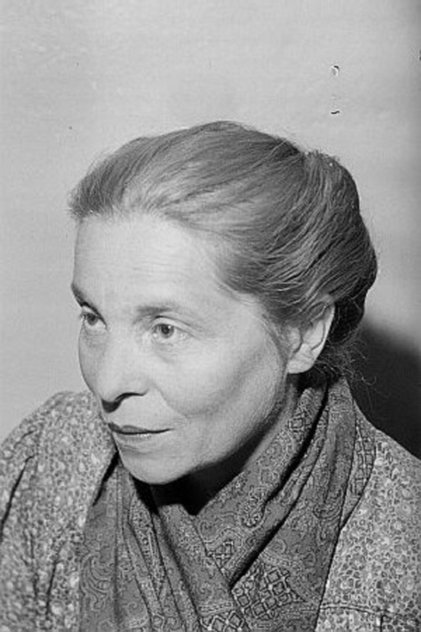
Lotte Loebinger
Acting
Biography
No biography available for Lotte Loebinger.
Born: October 10, 1905
Place of Birth: Kattowitz
Known For

The Russian Miracle
A two-part East German documentary tracing Russia’s transformation from the Tsarist Empire to the Soviet Union, from the 1917 October Revolution to the achievements of the space program. Directed by Andrew Thorndike and Annelie Thorndike, the film assembles extensive archival footage to chart political upheaval, ideological consolidation, and technological ambition in twentieth-century Russia. Produced by DEFA and first broadcast on East German television in 1963.

When Unku was Ede's Girlfriend
Ede falls in love with Unku, a girl from a travelling circus. Love cannot run smoothly however because Unku is a Gypsy. Various adventures take place before love is finally allowed to run its natural course.

Der Teufel vom Mühlenberg
This film is set in a medieval mill town in the Harz mountains. The greedy and brutal millman and his accomplices, the castle steward and the mayor, set fire to a forest mill that the farmers used for processing their grain. Without their mill, the farmers must now rely on the millman's services. When the farmhand Anna uncovers the millman’s crimes, he swiftly detains her and a young miller, Jörg. The forest spirits have a different plan, however, and they free the young couple with the charge to rebuild the ruined forest mill and turn things around for the villagers.

Marriage in the Shadows
Set during the rise of the Nazi regime, Elisabeth Maurer and Hans Wieland enjoy successful careers as actors in Berlin. Confident in her career, Elisabeth, who is Jewish, ignores the advice of a colleague to leave Germany in the face of increasing anti-Semitism. Believing that he can protect her if she becomes his wife, Hans convinces Elisabeth to marry him. In the following years, as Hans's career thrives, Elisabeth awaits the end of the Nazi terror which bars her from public life. When the situation worsens in 1938 with the Kristallnacht pogrom, Elisabeth decides to leave the country, but Hans, who still believes he can protect her, convinces her to stay with him.
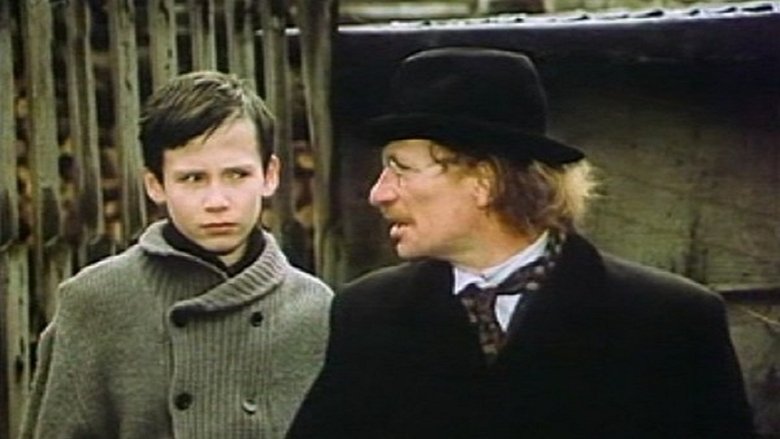
Jan on the Barge
1934, Germany. Jan is a 13 year old boy, who is raised without a mother. His father, a communist, is accused of a political murder, and predicted to be shot by the police when he was on the run. Jan lives with his aunt and finds a friend, Max, who wants to help him to find out what really with his father happened. During a conspirative gathering Max is shot by SA (Nazi paramilitary) and Jan succeed to escape in a barge. Erika, the daughter of the captain of the barge, and a boatman hide him. They try to help Jan to escape from police and find his father, who really survived.
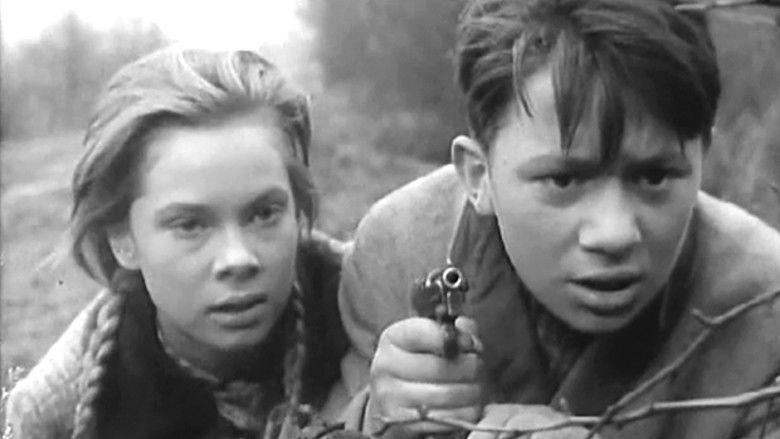
When Martin Was Fourteen
Martin′s and his girlfriend′s Kathrin′s childhood comes to an abrupt end in 1920, when their Mecklenburg village is drawn into the events surrounding the Kapp putsch. By accident, Martin discovers a charge of weapons that land owner von Bröder had put away for the reactionary forces, and gives them to the workers in the city. When the village starts to organize a strike against the putsch, soldiers arrive at the village to hold down the residents of the village.

Musterknaben
Two young building workers are more interested in girls than their work; complications ensue at home.

Heart of Stone
Lavish adaptation of Wilhelm Hauff′s fairy tale: Young charburner Peter Munk dreams of joining the upper class. He makes a deal with the sinister Holländer-Michel, who offers to trade Peter′s human heart for one made of stone. Once he has the "cold heart" in his body, Peter eventually strikes a fortune and enjoys great wealth, but at the same time, he becomes a bitter and emotionless man – and, having lost all traces of humanity, even murders his wife Lisbeth. Only then does Peter Munk finally realize what has become of him, and he decides to regain his real heart from Holländer-Michel.
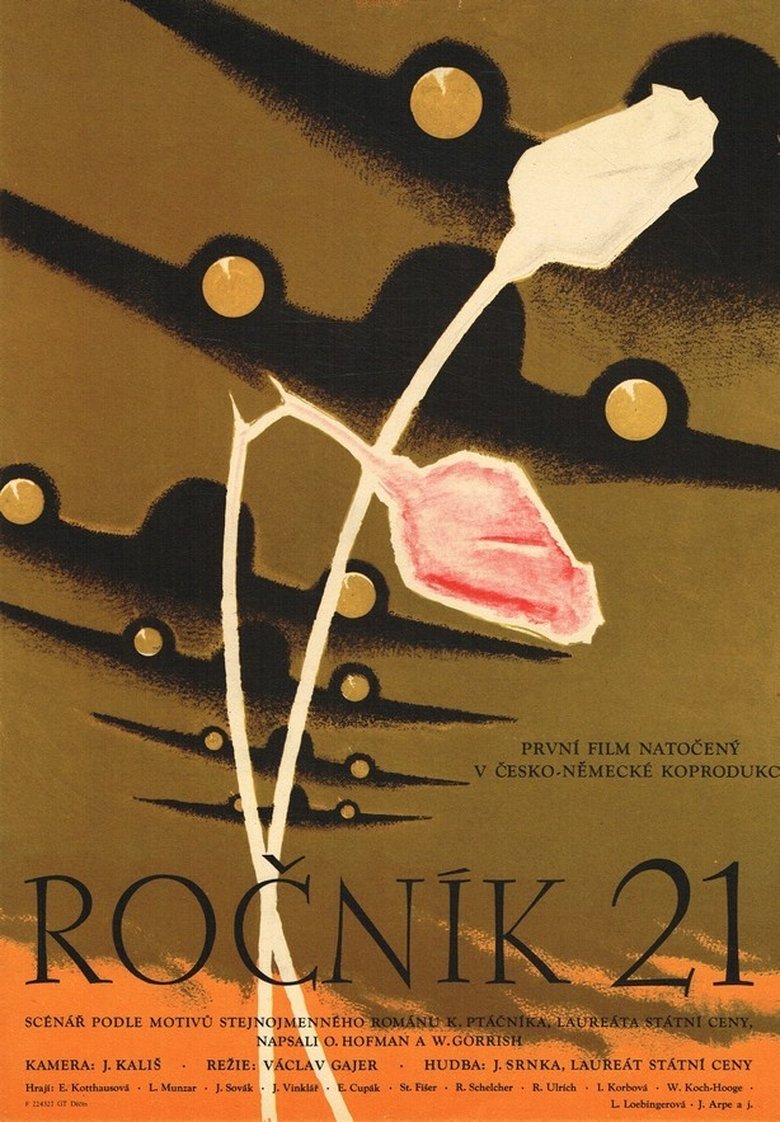
Jahrgang 21
At the beginning of the Second World War, Czech music student Honsik comes to Germany from Prague to join a "foreign worker company". After rescuing a boy from the rubble of a bombed-out house, he himself is seriously injured and taken to a hospital in Stralsund. There he is regarded as a second-class citizen and the Germans are preferred to him. Nurse Käthe stands up for him, cares for him and defies all prohibitions. A love affair is kindled between the two, but it is not under a good star. Honsik tries to flee to his homeland with his comrades and Käthe supports him. At the last moment, however, Honsik realizes that his love for Käthe is stronger than his homesickness and makes his way back. Once back home, he can only watch as Käthe is arrested by the Gestapo. With the help of a resistance fighter, the young man from Prague manages to escape after all.

The Prince Beyond the Seven Seas
The merchant's daughter Constanze, begs her father to ask a lion for a favor. Her father approaches the lion who agrees to his request with one condition: that he send the first person he meets upon his return home to the lion's den. It is Constanze. Against her father's will she goes to the lion and discovers that he is an enchanged prince and that only a woman's love can release him from the spell.
Filmography
as Grandmother
as Ururgroßmutter
as Alte Frau
as Linda's Mother
as Julia
as alte Frau
as Muttchen
as Tante Paula
as Frau Prestin
as Anna Helm
as Oma Mühlau
as Mutter Stammer
as (narrator)
as Frau Oswald
as Frau Schmidt
as old Sikura
as Serbinowa
as Waldmüllerin
as Muhme
as Emma Kramer
as Hertha Scholz
as Peters Mutter
as Berta Böhme
as Frau Jandrek
as Frau Steidel
as Fritz Lemke's Mother