
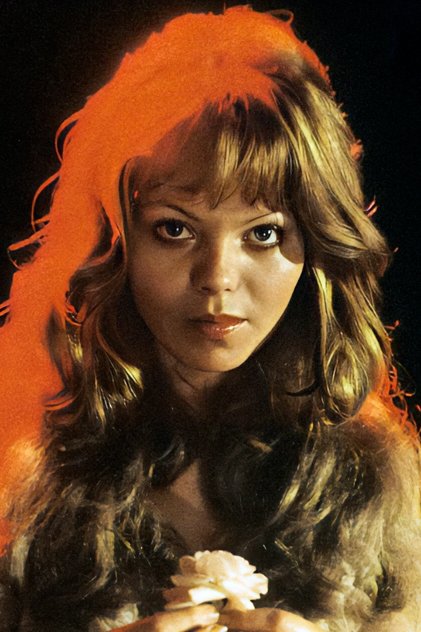
Mascha Rabben
Acting
Biography
Actress, model, writer, and translator. Born 1942.
Born: January 1, 1942
Place of Birth: Hamburg, Germany
Known For

World on a Wire
World on a Wire (German: Welt am Draht) is a two-part 1973 West German science fiction television serial broadcast on ARD. Shot on 16 mm film, the two-part miniseries is drected by Rainer Werner Fassbinder, who co-writes the screenplay with Fritz Müller-Scherz, based on Daniel F. Galouye's 1964 novel Simulacron-3. In the future, Simulacron, a computer project simulating reality, encounters strange occurrences after its leader's death. Dr Fred Stiller questions the sudden disappearance of a friend and wonders if Simulacron holds the answers.
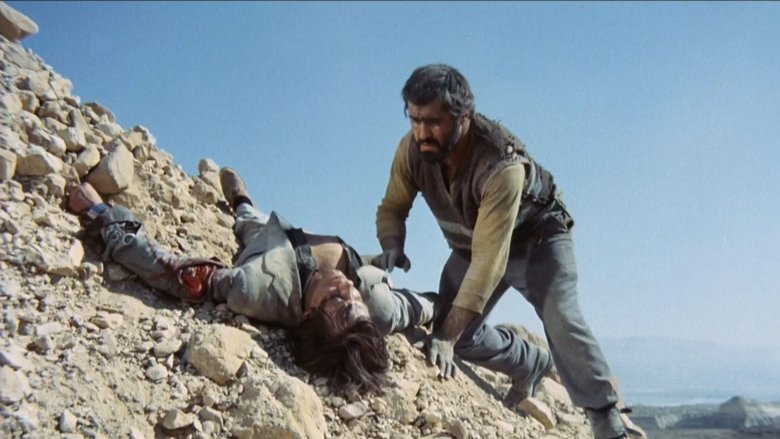
Deadlock
After pulling off a bank robbery two bandits meet in a deserted mining town to divide their loot but an old miner tries to steal it from them.

Der Bomberpilot
Schroeter’s film is a chronicle of Germany from the Nazi era until the economic boom of the 1950s and 1960s, centering on three women who search for a career as singers and dancers.
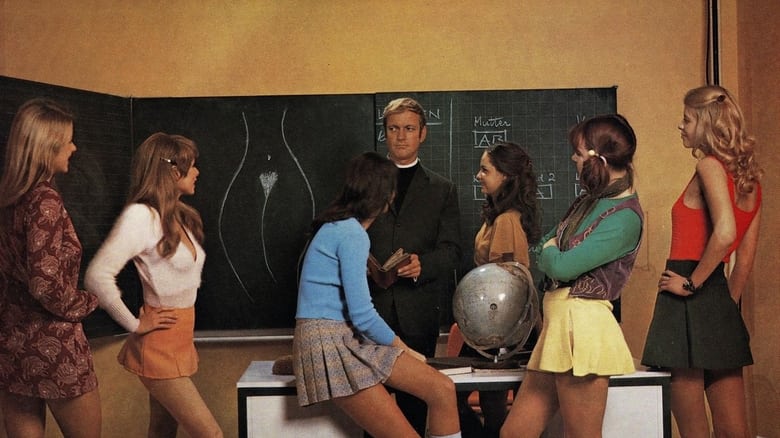
The School Girls
Mockumentary about German schoolgirls openly talking about their scandalous sexual experiences. Some of these are illustrated through inserted vignettes. Also, a street reporter asks actual common folk about their views on sex.
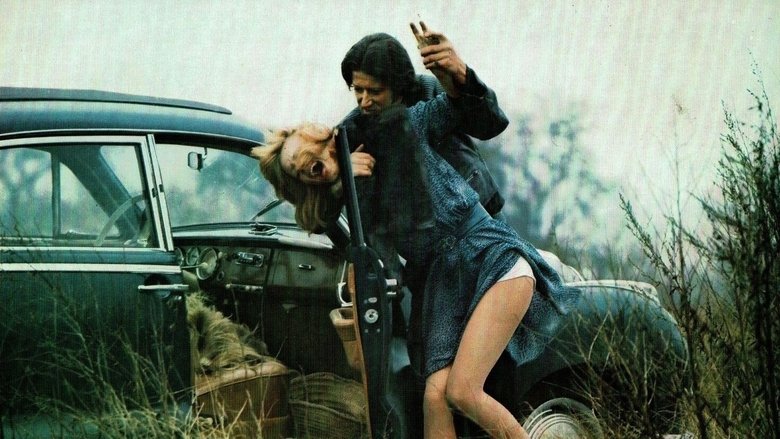
The Sensuous Three
While out on the town in Berlin, Raymond sees and falls for Harlis, a star of a troupe of lesbian cabaret strippers. Attracted to a man for the first time, Harlis leaves her long time girlfriend and dance partner. Overwhelmed by jealousy and anger, his brother (Peter) and his ex-fiancee (Ria) are determined to sabotage this budding romance.
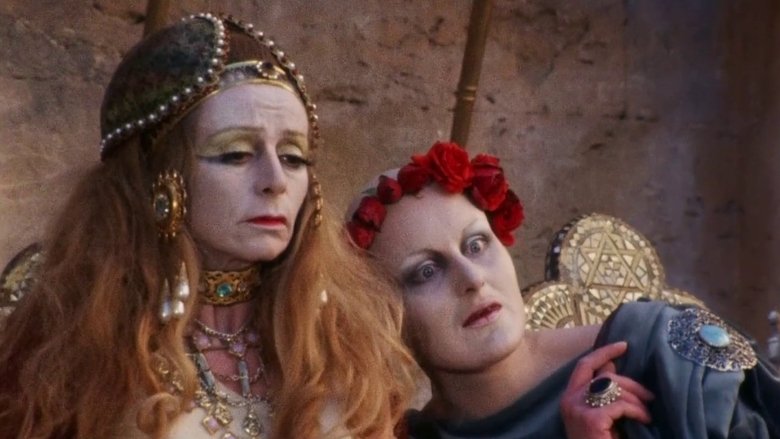
Salome
Schroeter's virtuosic staging of the Oscar Wilde tragedy is a complex montage of image and sound, filmed on the grand steps of Baalbeck, the ancient Roman temple in Lebanon, and interweaving Lebanese and German folk songs with the music of Verdi, Wagner, Strauss, Mozart, Bellini, and Donizetti. Elfi Mikesch, the cinematographer of Schroeter’s later films, designed the film’s sumptuous costumes. A contemporary critic for Le Monde wrote admiringly of Schroeter’s depiction of "the deadly struggle between dark Christian morality and luminous paganism.“
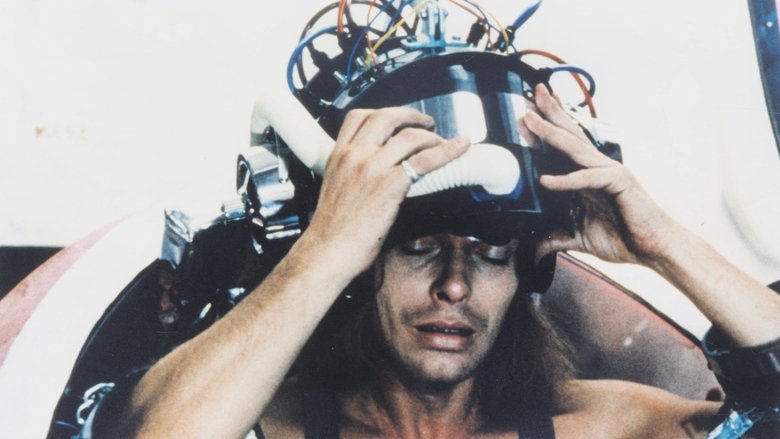
The Last Days of Gomorrah
Her only foray into science fiction—about the havoc wrought on society by a television that satisfies every human craving—The Last Days of Gomorrah was a favorite of Sanders-Brahms, who brought feminist politics to the New German Cinema movement of the 1970s. It is a forceful piece of capitalist realism, critiquing working-class alienation and commodity culture.
Filmography
as Mary
as Eva Vollmer
as Salome
as Mascha
as Claudia F.
as Jessy, the girl