
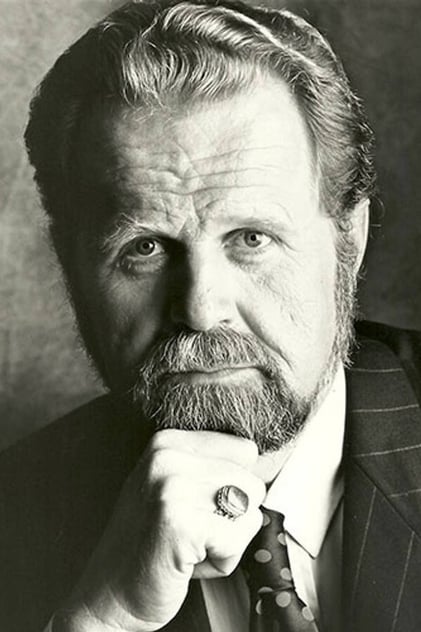
Paul Plishka
Acting
Biography
No biography available for Paul Plishka.
Born: August 28, 1941
Place of Birth: Old Forge, Pennsylvania, USA
Known For
La Bohème
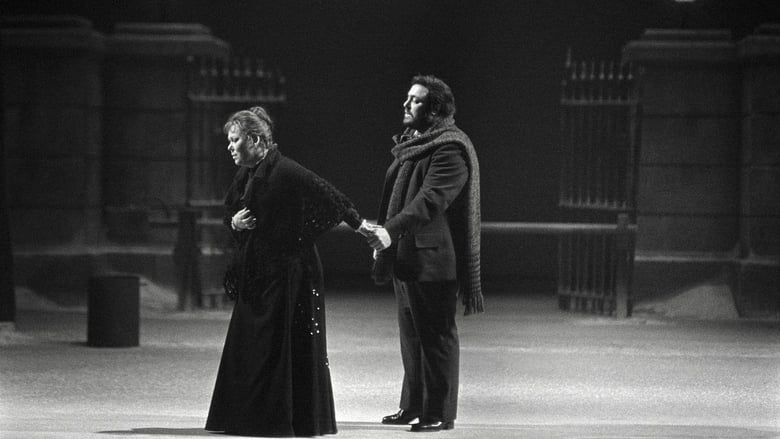
Puccini’s heartbreaking story of young love in the garrets of Belle Epoque Paris has attracted many famous singers through the years. But with James Levine at the helm and the starry duo of Luciano Pavarotti and Renata Scotto as Rodolfo and Mimi, every bit of emotion in the score pours across the footlights and seduces the audience. In this case, the audience was in the millions since this was the very first in the “Live from the Met” series of telecasts. The evocative production is by Fabrizio Melano, designed by Pier Luigi Pizzi.
The Metropolitan Opera: La Bohème
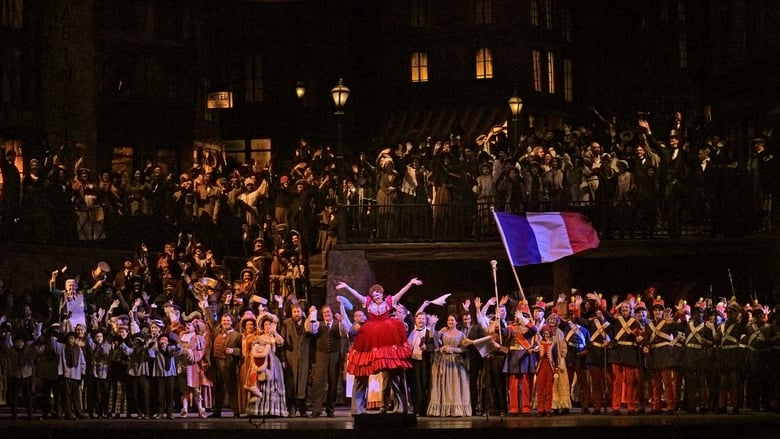
Puccini’s timeless love story, which includes some of its composer’s most beloved music, has moved generations of opera lovers since its 1896 world premiere. It has also proved incredibly popular with the Met’s global HD audiences and has been featured in three live high-definition transmissions since 2008. The most recent, presented during the 2017–18 season, includes a cast of celebrated young artists. Soprano Sonya Yoncheva is the fragile seamstress Mimì, who instantly falls in love with the passionate poet Rodolfo, sung by tenor Michael Fabiano. Soprano Susanna Phillips and baritone Lucas Meachem trade both spars and kisses as the on-again-off-again lovers Musetta and Marcello, with bass Matthew Rose and baritone Alexey Lavrov rounding out the rambunctious gang of bohemian friends. Maestro Marco Armiliato takes the podium to lead Franco Zeffirelli’s picturesque staging.

Andrea Chénier
Andrea Chenier is a poet during the French Revolution. He and Maddalena are in love. Gerard, former servant in Maddalena's house, denounces them to the Tribunal, but recants it too late. The lovers go to the guillotine together.

Boris Godounov
A possible impostor torments a newly crowned medieval czar who may have ordered the real successor's death.
Falstaff
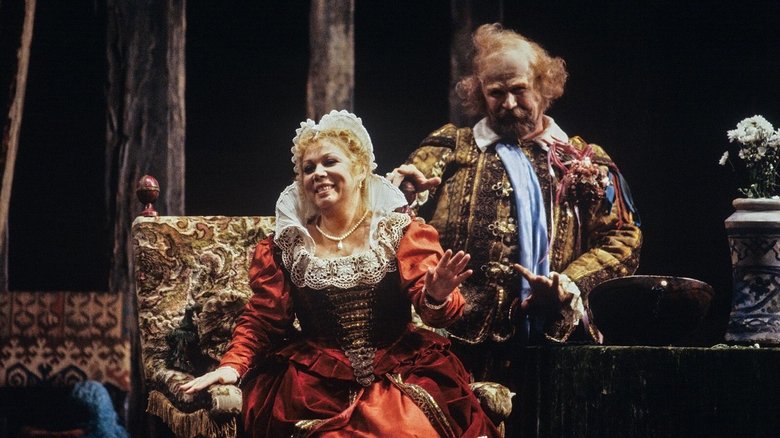
It is to composer and librettist Arrigo Boito and his constant pestering of the octogenarian Verdi that there remained within him one last great comedy fighting to get out that we owe this absolute miracle of an opera. Produced in 1893 as Verdi turned 80 there is much in this masterpiece that can be identified as a modernist neoclassical work. The use of short motifs instead of long arioso melodic lines, the spry and reduced orchestral textures and the lack of a single 'stand and deliver' dramatic declamatory aria all serve to make this more of a 20th century work than an example of 19th century late-Romanticism.
La Cenerentola
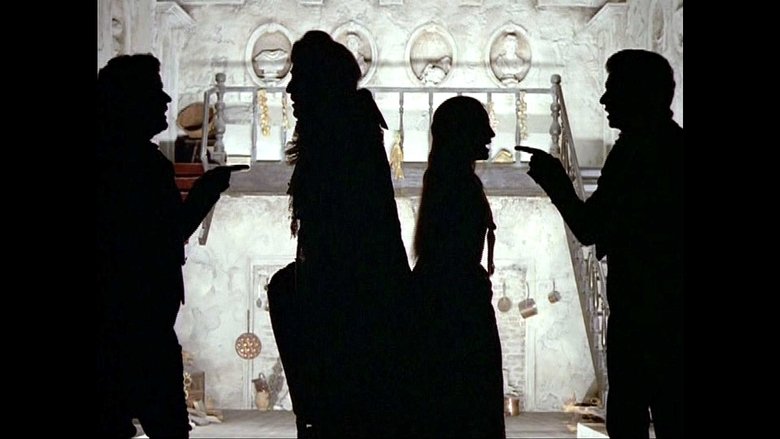
The Prince, Don Ramiro (who has changed places with his valet, Dandini), meets Cenerentola and they are instantly attracted to each other. When the Philosopher, Alidoro, later takes Cenerentola (dressed in magnificent clothing) to the palace, Dandini (still posing as the prince) tries to talk of love to her, but Cenerentola rejects him, saying that she is in love with his 'valet'. Ramiro, who has overheard this comment, is overjoyed, and immediately proposes to her, but Cenerentola says that he must first seek her out and then, if he still felt the same way, she would marry him. She gives him one of a matching pairs of bracelets, telling him to look for its companion on her right arm (she then leaves the palace). Ramiro ends the masquerade, and he and Dandini resume their true identities. The Prince then sets out on his quest - little realising that destiny, in the form of a violent thunderstorm, is about to take a hand in the affair.
Turandot
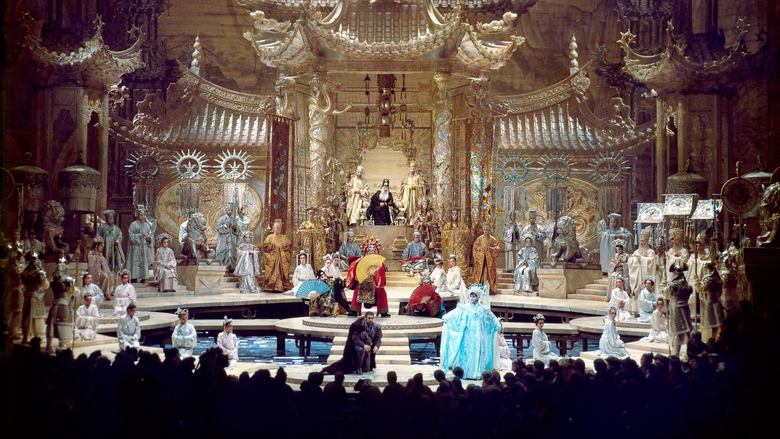
The Franco Zeffirelli production of Puccini's "Turandot", recorded live at the Metropolitan Opera in April, 1987. Éva Marton stars as Turandot, with Plácido Domingo as Calaf, Leona Mitchell as Liù, Paul Plishka as Timur, and Hugues Cuenod as L'Imperatore Altoum. James Levine conducts.
Billy Budd
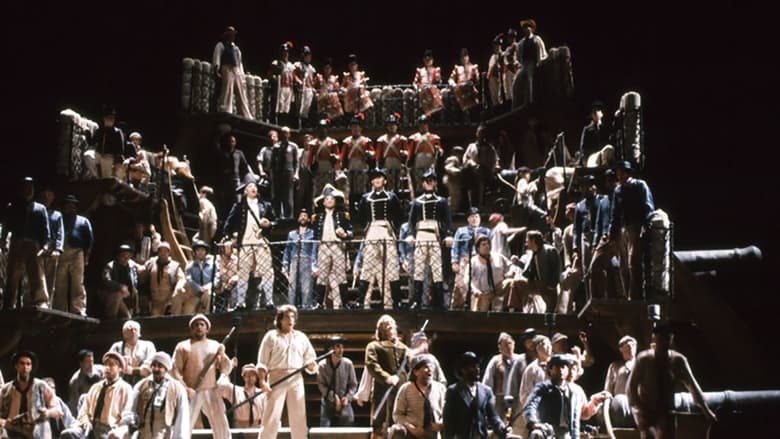
John Dexter’s brilliant production of Britten’s searing opera stars Dwayne Croft in the title role of the handsome young sailor whose kindness and innocence cause his downfall. The great James Morris is Claggart, master-at-arms on the 18th-century warship Indomitable, who falsely accuses Billy of inciting a mutiny. Philip Langridge sings Captain Vere, the honest commander who knows that Billy is innocent but finds himself unable to save him. Steuart Bedford, Britten’s close collaborator during the last years of the composer’s life, is on the podium.
Lucia di Lammermoor
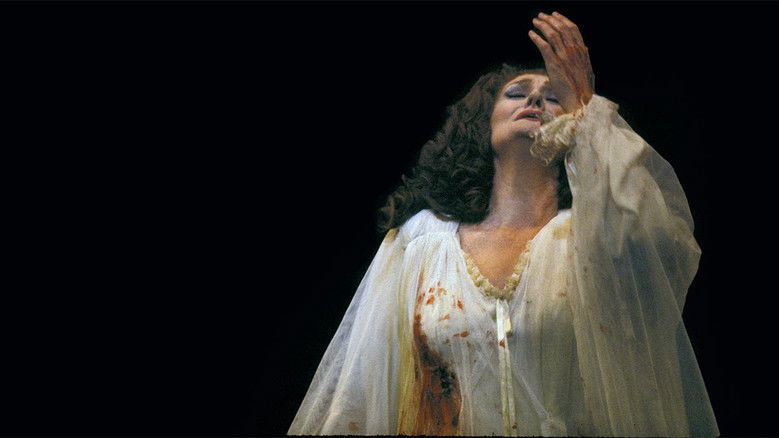
This telecast offers a rare opportunity to see the legendary Joan Sutherland in the role that first catapulted her to international stardom. She drove audiences wild by the way her opulent voice caressed the music’s long phrases and sprinted effortlessly through the fiendish runs, trills, embellishments and stratospheric high notes. One of the glories of the operatic world, her portrayal of Donizetti’s hapless heroine is a multifaceted and moving characterization. The incomparable tenor Alfredo Kraus is Edgardo, the man Lucia loves but cannot have. (Performance taped November 13, 1982. Broadcasted September 28, 1983.)

Berlioz: Les Troyens
Berlioz’s colossal masterpiece requires stupendous forces—dozens of soloists, enormous chorus, orchestra and ballet, a superb conductor who understands the uniqueness of the score—plus a production that does visual justice to the work. “A stupendous achievement” was one critic’s assessment of Peter Wexler’s inventive production. And with James Levine’s wizardry galvanizing the marvelous all-star cast, this is truly a gem. Plácido Domingo is the legendary hero Aeneas, Jessye Norman the obsessed prophetess Cassandra, and Tatiana Troyanos is Queen Dido, who commits suicide when Aeneas leaves her.
Filmography
as Benoît/Alcindoro
as Sacristan
as Doctor Grenvil
as Benoit/Alcindoro
as An innkeeper
as Talpa
as Dansker
as Mathieu
as Sir John Falstaff
as Self - Bass
as Pimène (voice)
as Timur
as Jacopo Fiesco
as Narbal
as Raimondo
as Alidoro
as King Philip
as Colline