
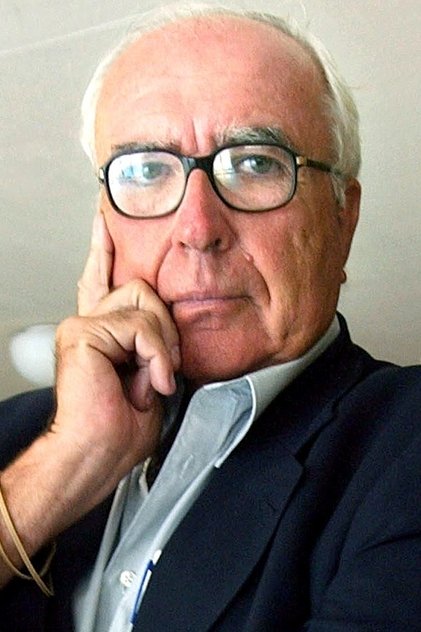
Román Gubern
Writing
Biography
Román Gubern was born in 1934 in Barcelona, Barcelona, Catalonia, Spain. He is a writer and actor, known for Espérame en el cielo (1988), Brillante porvenir (1965) and Ensalada Baudelaire (1978).
Born: January 1, 1934
Place of Birth: Barcelona, Spain
Known For

BiBici Story
While waiting to get started on the production of his feature Liberxina 90 (1970), Carlos Duran shot this short (with very expressive support by several Escuela de Barcelona professors): a grimly colourful satire on modern society as such, and on its fascist Spanish variety in particular. "The intrusion into the private life of a human being, of the distinct tendencies that exist in the society we live in, until they fall into chaos." Carlos Durán
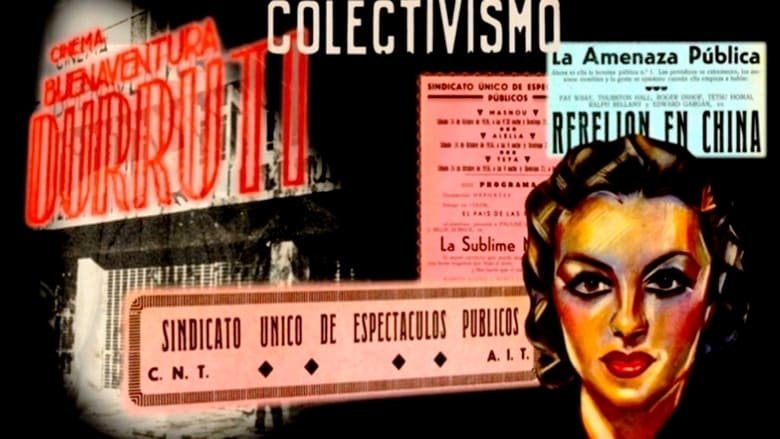
Celuloide colectivo: el cine en guerra
July, 1936. The terrible Spanish Civil War begins. When the streets are taken by the working class, the social revolution begins as well. The public shows are socialized, a model of production and exhibition of films, never seen before in the history of cinema, is created, where the workers are the owners and managers of the industry, through the unions.
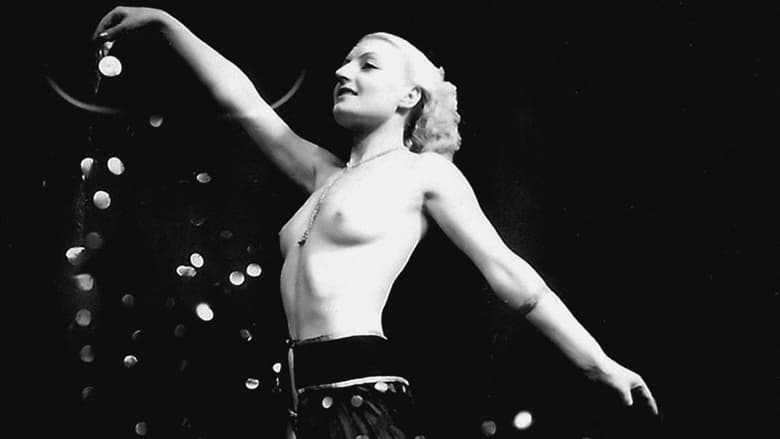
El cine libertario: cuando las películas hacen historia
Upon the outbreak of the Spanish Civil War in July 1936, the anarchist union CNT socialized the film industry in Spain, so in Madrid and Barcelona film workers took over the production assets and, between 1936 and 1938, numerous films on a wide variety of topics were released, composing a varied mosaic that gives rise to one of the most unusual and original moments of Spanish cinematography.
A War in Hollywood
The Spanish Civil War (1936-1939) caused a great impression on the lives of most of the American artists of that era, so many movies were made in Hollywood about it. The final defeat of the Spanish Republic left an open wound in the hearts of those who sympathized with its cause. The eventful life of screenwriter Alvah Bessie (1904-1985), one of the Hollywood Ten, serves to analyze this sadness, the tragedy of Spain and its consequences.

Liberxina 90
A drug has been discovered, Liberxina 90, which will erase "establishment" conditioning from the human mind. It has fallen into the hands of some diversely anarchistic revolutionaries who spend most of the film discussing how and whether to use it; should they wait for the forces of "history" to undermine society or speed things up using the drug? They are finally forced into action by the police who are, somewhat ineptly, hunting them down.
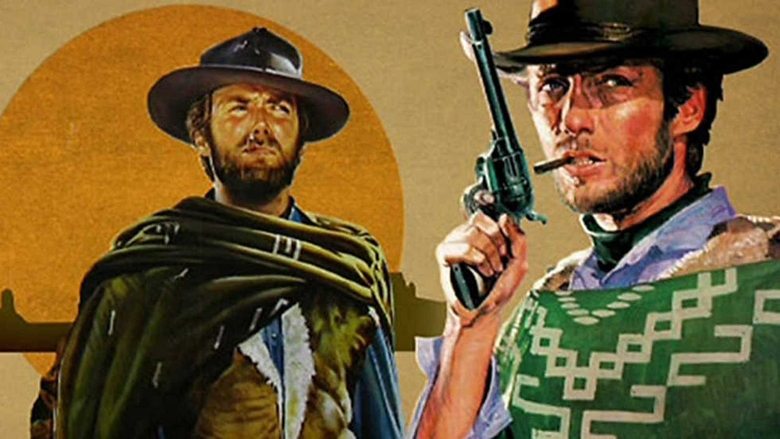
Spanish Western
A vindication of the role of the technicians and artists who made spaghetti western genre possible, and a walk through the landscapes that made it possible to recreate in Spain, mainly in the desert of Almería, hundreds of adventures set in the remote American Far West.
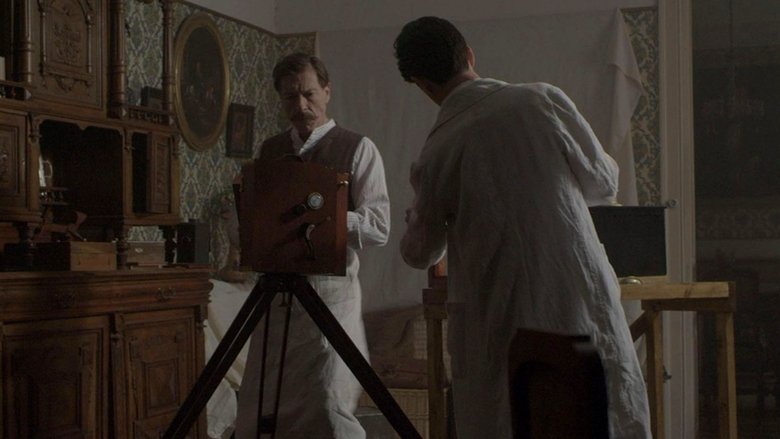
El hombre que quiso ser Segundo
The extraordinary life of cinema pioneer Segundo de Chomón.
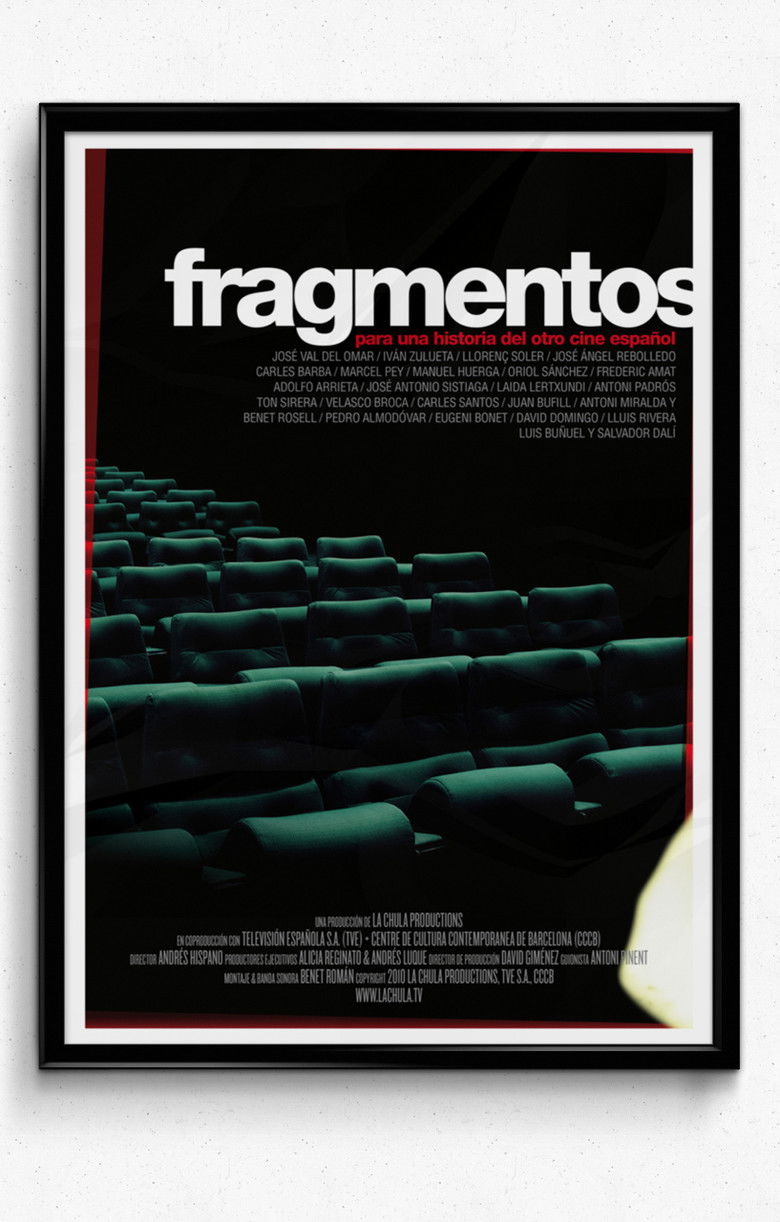
Fragmentos para una historia del otro cine español
Documentary about the history of experimental cinema in Spain. FRAGMENTS is a historical survey of “the other” Spanish Cinema — films that brazenly explored their artistic, poetic and conceptual potential. Spanish experimental cinema can be glimpsed in a series of important yet isolated events that FRAGMENTS compiles through various firsthand accounts, film excerpts and documents. For the first time in Spain, a documentary brings together the most relevant of a cinema that is slowly losing its invisibility.
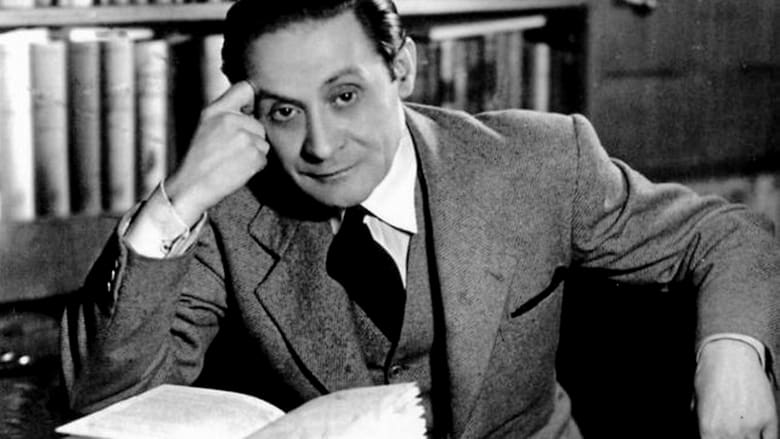
Inverosímil Jardiel Poncela
The Spanish author Enrique Jardiel Poncela (1901-1952) was one of the best comedy writers of all time, a novelist and newspaper columnist, misunderstood, even censored, both by the Second Republic government and Francoism, an outsider ahead of his time; also a filmmaker and screenwriter in Hollywood, architect of a revolutionary theatrical building and scenographer, cartoonist and illustrator. An implausible genius.
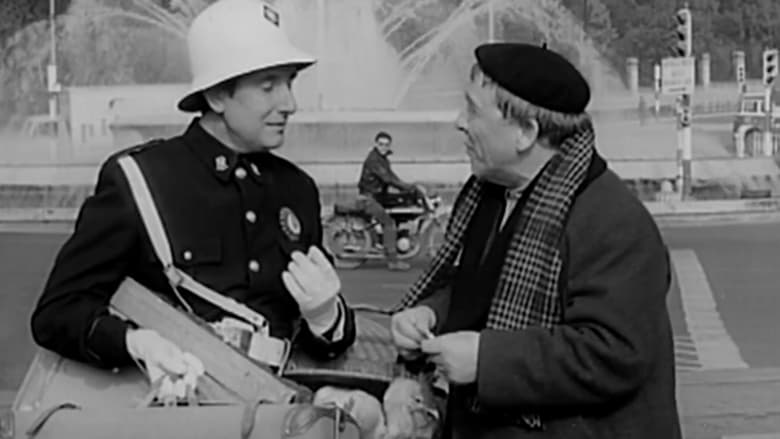
El precio de la risa
The life of Paco Martínez Soria (1902-1982), one of the most famous and beloved Spanish actors, both on stage and screen; a comedian, a theatrical producer, an idol for the masses. A celebration of the uncommon gift of making people laugh.
Filmography
as Self
as Himself
as Self - Film Historian
as Himself
as Self - Audiovisual Historian
as Self
as Himself
as Himself
as Self - Film Historian / Screenwriter
as Self
as Preso republicano (uncredited)
as Self
as Director del psiquiátrico
as Cura
as Cura