

Yoko Ran
Acting
Biography
No biography available for Yoko Ran.
Known For
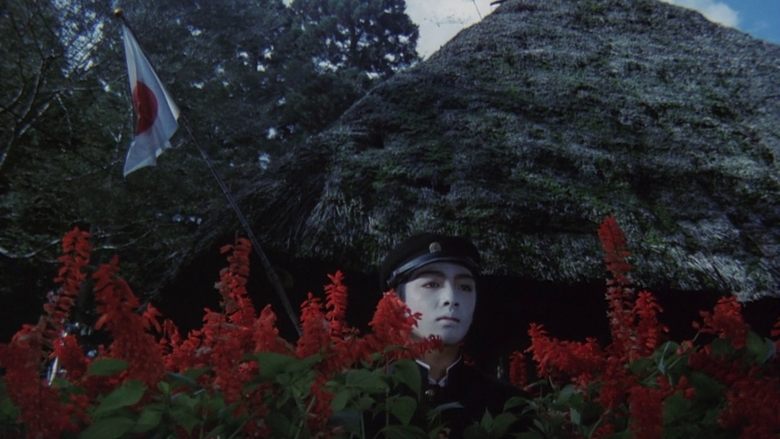
Pastoral: To Die in the Country
A director faces creative block while working on his latest film – a reimagination of his adolescence growing up in a mountain village in rural Japan.
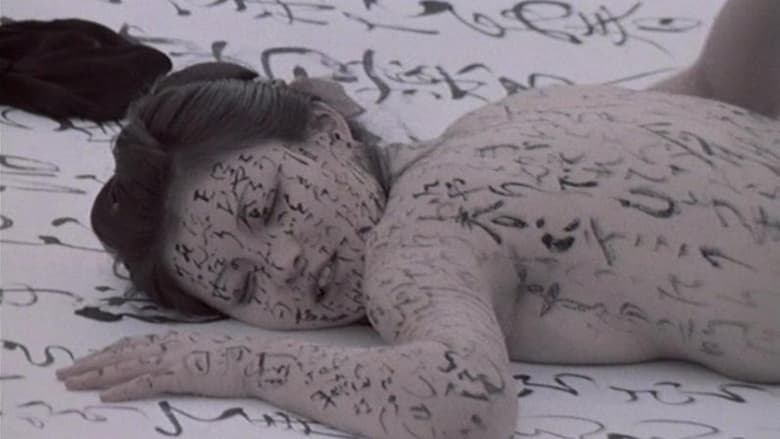
Grass Labyrinth
Akira is haunted by a "bouncing ball" song that he remembers his mother singing when he was a small child, and now on the verge of a sexually active adulthood, he wants to find the origins of the song. The young man ostensibly wanders into a time-warp in which aspects from his childhood and adulthood mix together. In this never-never land he comes across a beautiful woman/witch who is lost inside the labyrinth of her mansion, just as the young man is lost in the labyrinth of time — and on some levels, perhaps the labyrinth of his subconscious.

Boxer
In the midst of a match, a successful boxer - Hayato, has had enough of the sport. He lets himself get knocked, quits boxing, leaving his wife and start living alone with his mangy dog. One day a young mediocre boxer knocks at the door and wants to be Hayato's apprentice.
Les chants de Maldoror
A “reading film” of delirious image and text, Les chants de Maldoror takes its title and inspiration from Comte de Lautréamont’s 1869 proto-Surrealist poetic novel which, for instance, describes beauty as the chance encounter of a sewing machine and an umbrella on an operating table. In the novel’s six cantos, a young misanthrope indulges in depraved and destructive acts. Unexpected encounters abound, with turtles and birds joining Terayama’s regular cast of snails and dogs to wander over books and bare torsos. Feverish video processing posterizes, inverts and overlays images that are further colored by sound—pushing the limits of his literary adaptation. Terayama wrote that the only tombstone he wanted was his words, but, as Les chants de Maldoror demonstrates, words need not be confined to carved monuments or bound hardcopies.
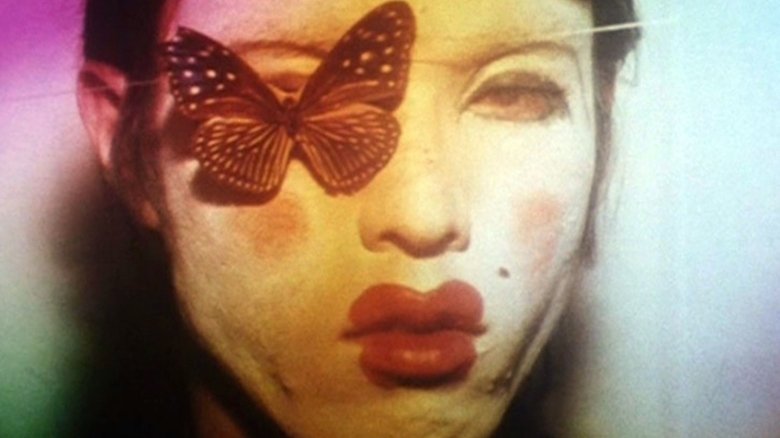
Butterfly
A dreamlike portrayal of a hangover after a decadent party.
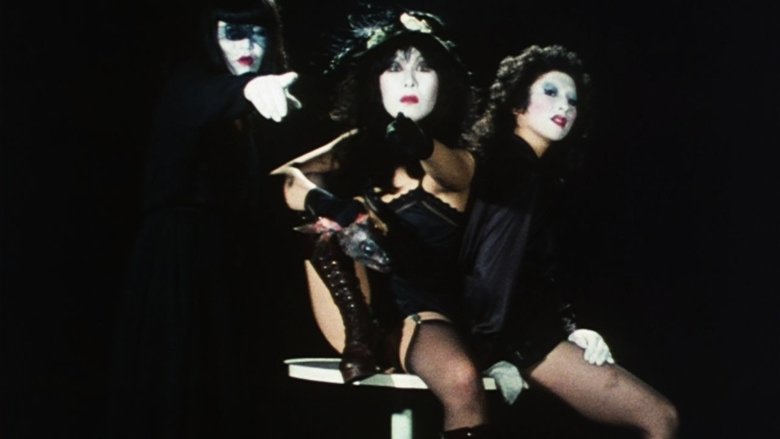
Laura
Three showgirls playfully mock the audience for attending a projection of an art film.

The Trial
An experimental short featuring people and nails.
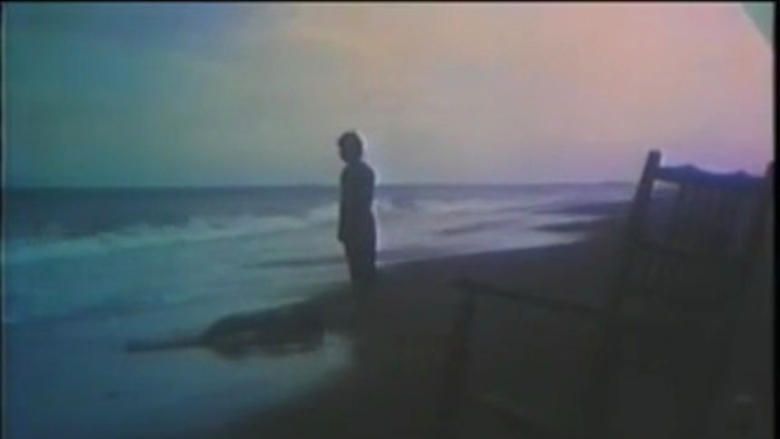
The Eraser
Visions of characters by the seaside from one's memory are erased by the filmmaker's hand.
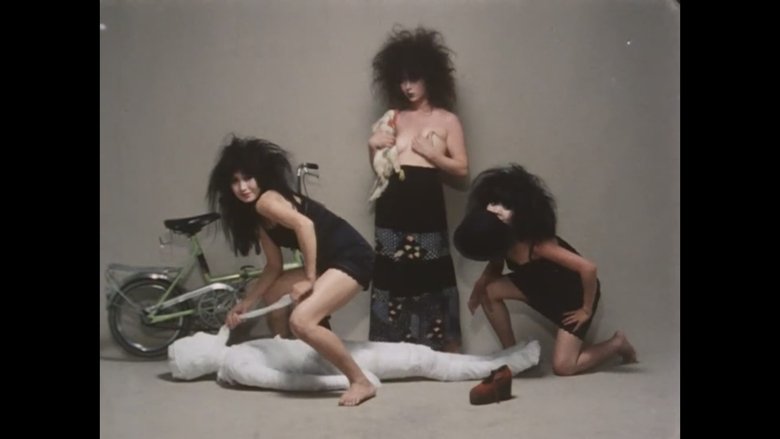
Smallpox Tale
The smallpox virus has created its own unique atmosphere in Terayama’s film where the skin of a bandaged adolescent and the surface of the filmic image are subjected to a bizarre ‘disturbance’ as snails cross the screen and nails are hammered into the skull of the ailing patient. Illness in this film is as much a psychic entity as a physical one and manifests itself in an array of theatrical tableaux from grotesque women rigorously brushing their teeth to a snooker game where the players in white face makeup behave like automata. A Tale of Smallpox uses a medical theme to chart the traumatic dream life of Terayama’s times, evincing deep-rooted concerns in the Japanese national psyche that hark back to the upheaval of Meiji modernisation and the devastation of World War Two.

Directions to Servants
A man claiming to be the heir of an estate in northern japan finds himself at the doors of his mansion, only to find it overrun by servants and maids playing pretend as master or mistress, while the real master is nowhere to be found. As he makes his way down the many rooms of the mansion and witnesses the staff's strange antics, he gradually loses his own role and sense of identity. In this subversive play performed by Tenjo Sajiki, the spectator is asked to question their own role as hierarchical structures are reversed and walls between character and actor, actor and audience gradually break down.
Filmography
as Ina
as The Hunchbacked Girl
as Showgirl