
Journeys Through French Cinema
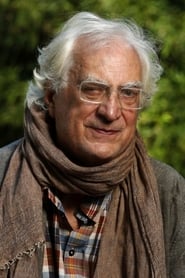
My Journey Through French Cinema (2017), Bertrand Tavernier’s César-nominated three-and-a-half-hour tour through French film history, was too short to introduce audiences to all that he wanted to share. In this new eight-part series (8x55min), the acclaimed director of such films as Coup de Torchon and ‘Round Midnight guides us through a roster of filmmakers both influential and forgotten, explores how his country’s cinema was shaped by the German occupation and changed again through the New Wave, spotlights little-known female filmmakers, and more. Subjects include: René Clément, Henri-Georges Clouzot, Julien Duvivier, Henri Decoin, Claude Autant-Lara, as well as composers who made movie music an art in and of itself, far from the Hollywood spotlight.
Trailers & Videos
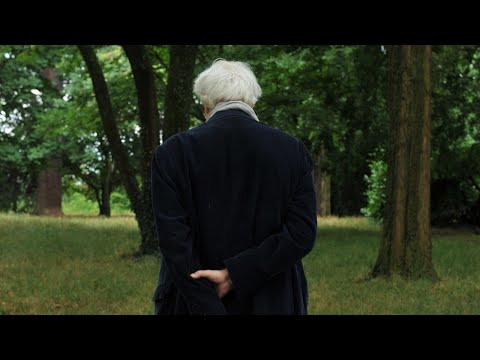
Journeys Through French Cinema (2020) | Eight-Part Series | Official US Trailer
Seasons

1. My Go-To Filmmakers, Part 1
In the first episode of this expansive series, Bertrand Tavernier discusses the directors who have both influenced him personally and impacted French Cinema at large. The journey begins with Jean Grémillon, whose film LE CIEL EST À VOUS (1944) Tavernier first saw at age 17 and was immediately smitten. Still under-appreciated outside of France, Tavernier extols the virtues of Grémillon’s emotional realism and stakes out a place for him in the canon as an unsung master. Next, he surveys the ouevre of Max Ophüls—from his American-made titles THE EXILE and THE RECKLESS MOMENT to beloved classics like LA RONDE and LOLA MONTES - before concluding with a discussion of Henri Decoin, whom Tavernier admires for his feminist-leaning narratives like LA VERITÉ SUR BÉBÉ DONGE and his noteworthy collaborations with composers.
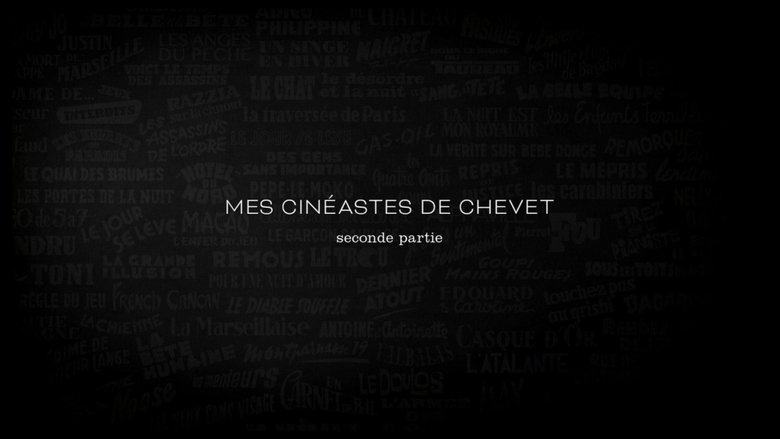
2. My Go-To Filmmakers, Part 2
In part two of his discussion of influential filmmakers, Tavernier explores the formal and thematic approaches of Sacha Guitry, Marcel Pagnol, Jacques Tati, and Robert Bresson. The first two directors were introduced to Tavernier through the writings of Francois Truffaut, who championed their style as modernist despite the naysaying of the majority of critics at the time. Tavernier notes the ways in which Guitry’s playful self-reflexivity in particular paved the way for the New Wave. Despite their differences in style and tone, Tavernier is a great admirer of both Bresson and Tati. Using clips from THE DIARY OF A COUNTRY PRIEST, A MAN ESCAPED, MR. HULOT’S HOLIDAY, PLAYTIME and more, he draws parallels between the ways the two filmmakers utilize space in the frame, and manage to balance realism and fable.

3. Les Chansons, Julien Duvivier
Tavernier dissects the importance of music in French Cinema with palpable enthusiasm, highlighting French actors who came from music hall backgrounds (Jean Gabin, Magali Noël, and Jean Gabin, among others), and the oft-overlooked contributions of directors to the process of songwriting itself. Surveying the work of René Clair, Sacha Guitry, Jean Boyer and more, Tavernier treats us to a feast of joyous clips from beloved classics like Agnès Varda’s CLEO FROM 5 TO 7, Louis Malle’s VIVA MARIA!, and Jacques Demy’s THE YOUNG GIRLS OF ROQUEFORT, before honing in to focus on prolific director Julien Duvivier, whom he admires for his austere formal rigor, technical precision, contributions to songwriting, and creative use of sound.

4. Under German Occupation
Discussing the artistic and political atmosphere during the German occupation, Tavernier explores the ways in which French cinema was enriched by foreign talent as many directors, cinematographers, and technicians forced to leave their native countries for political reasons settled in France. Using a selection of illuminating clips, Tavernier illustrates how the majority of films made during this period upheld a powerful spirit of resistance against the anti-Semitic Vichy regime and dealt with difficult topics head-on. Filmmakers discussed include Viktor Tourjanski, Robert Siodmak, Jean-Paul Le Chanois, Albert Valentin, and André Cayatte.

5. Occupation to New Wave
As a postscript to his survey of moviemaking in France under German occupation, Tavernier takes a deep dive into how that period of history impacted films by three essential directors—Claude Autant-Lara, René Clément, and Henri-Georges Clouzot—all the way through their post-WWII work. They had completely different métiers, but each can be seen as ahead of his time and as part of a New Wave even before the one formally labeled as such. Availing himself of archival interviews with the subjects and their colleagues, Tavernier marvels at Lara’s proto-feminist narratives (the Woman in White films, Le Mariage de Chiffon); Clément’s brio with performers and framing detail (Forbidden Games, Purple Noon); and Clouzot’s novelistic eye that is loving but never sentimental (The Raven, The Wages of Fear).

6. The Forgotten Ones
In seeking to upgrade his own outmoded perspective on several filmmakers, Tavernier credits critic/programmer Patrick Brion and other writers for early and often championing directors who—decades after their heyday—were finally restored the respect they deserve. Tavernier revisits the oeuvres of Maurice Tourneur, whose crime tales were both bemusedly observational and authentic; Anatole Litvak, who stunned with his dynamic camera choices; Raymond Bernard, who made the groundbreaking 1932 epic Wooden Crosses on real-life WWI battlefields; René Clair, warmly chronicling a now-vanished working-class Paris; and — encoring after Episode 3 — comedy and musical specialist Jean Boyer, whose additional career as lyricist in collaboration with popular composer Georges van Parys make for tuneful rediscoveries.

7. Underrated Directors
Continuing to spotlight names that might be unfamiliar even to ardent film buffs, Tavernier unveils glorious restored footage from one of France’s first-ever color films, 1936’s La Terre qui meurt. The latter’s director, Jean Vallée, is given his due, as are Pierre Chenal, Henri Calef (previously Chenal’s assistant)—and trailblazing women directors including Jacqueline Audry (Olivia), Nelly Kaplan (A Very Curious Girl), and Agnès Varda (Cléo from 5 to 7), whose emergence in the 1950s Tavernier hails as “a thunderclap.” Tavernier is joined by Cannes Film Festival director Thierry Frémaux for an annotated discussion of director Gilles Grangier’s many teamings with iconic actor Jean Gabin that is rich in production anecdotes and histories.

8. My Sixties
Closing out his “exercise in admiration and gratitude” from an even more personal perspective, Tavernier recounts firsthand experiences from his 10 rewarding years as press attaché to and with legendary producer and publicist Pierre Rissient. Through the turbulent 1960s, the duo promoted American filmmakers while also shoring up French ones. Tavernier shares with us epiphanies he had with directors including but not limited to Eric Rohmer (narrating 1962’s La Boulangère de Monceau); the intensely loyal Jacques Deray; the gone-too-soon Philippe Fourastié; Pierre Granier-Deferre, who provided invaluable insight into how to direct actors; and Alain Resnais, whom Tavernier had idolized since seeing Hiroshima mon amour three times at age 18 and was proud to later count as a friend. Concluding the series in style, Tavernier surprises us by excerpting one final film that he cherishes...
Cast
More Like This
The Rockford Files
Cranky but likable L.A. PI Jim Rockford pulls no punches (but takes plenty of them). An ex-con sent to the slammer for a crime he didn't commit, Rockford takes on cases others don't want, aided by his tough old man, his lawyer girlfriend and some shady associates from his past.
Stranger Things
When a young boy vanishes, a small town uncovers a mystery involving secret experiments, terrifying supernatural forces, and one strange little girl.
Breaking Bad
Walter White, a New Mexico chemistry teacher, is diagnosed with Stage III cancer and given a prognosis of only two years left to live. He becomes filled with a sense of fearlessness and an unrelenting desire to secure his family's financial future at any cost as he enters the dangerous world of drugs and crime.
Brooklyn Nine-Nine
A single-camera ensemble comedy following the lives of an eclectic group of detectives in a New York precinct, including one slacker who is forced to shape up when he gets a new boss.
Obi-Wan Kenobi
During the reign of the Galactic Empire, former Jedi Master, Obi-Wan Kenobi, embarks on a crucial mission to confront allies turned enemies and face the wrath of the Empire.
WandaVision
Wanda Maximoff and Vision—two super-powered beings living idealized suburban lives—begin to suspect that everything is not as it seems.
Squid Game
Hundreds of cash-strapped players accept a strange invitation to compete in children's games. Inside, a tempting prize awaits — with deadly high stakes.
Death Note
Light Yagami is an ace student with great prospects—and he’s bored out of his mind. But all that changes when he finds the Death Note, a notebook dropped by a rogue Shinigami death god. Any human whose name is written in the notebook dies, and Light has vowed to use the power of the Death Note to rid the world of evil. But will Light succeed in his noble goal, or will the Death Note turn him into the very thing he fights against?
It
In 1960, seven outcast kids known as "The Losers' Club" fight against an ancient shape-shifting alien who poses as a child-killing clown, while also dealing with bullies and abusive parents. Thirty years later, they reunite to stop the creature once and for all when it returns to their hometown.

Wednesday
Smart, sarcastic and a little dead inside, Wednesday Addams investigates twisted mysteries while making new friends — and foes — at Nevermore Academy.

Two and a Half Men
A hedonistic jingle writer's free-wheeling life comes to an abrupt halt when his brother and 10-year-old nephew move into his beach-front house.

Doctor Who
The Doctor is a Time Lord: a 900 year old alien with 2 hearts, part of a gifted civilization who mastered time travel. The Doctor saves planets for a living—more of a hobby actually, and the Doctor's very, very good at it.

Halo
Depicting an epic 26th-century conflict between humanity and an alien threat known as the Covenant, the series weaves deeply drawn personal stories with action, adventure and a richly imagined vision of the future.
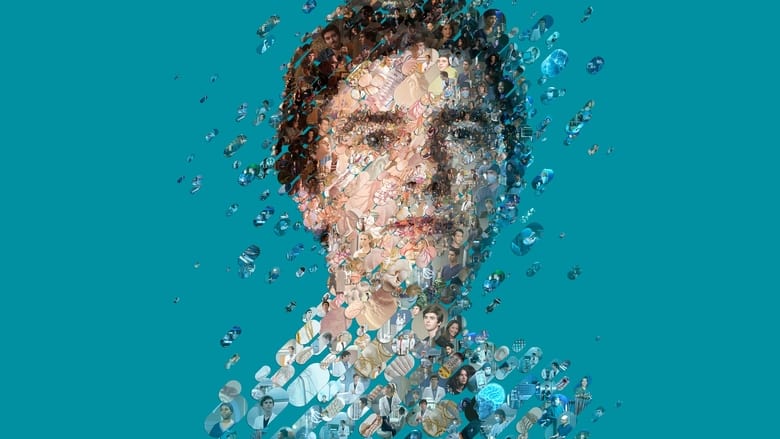
The Good Doctor
Shaun Murphy, a young surgeon with autism and savant syndrome, relocates from a quiet country life to join a prestigious hospital's surgical unit. Unable to personally connect with those around him, Shaun uses his extraordinary medical gifts to save lives and challenge the skepticism of his colleagues.

Castlevania
A vampire hunter fights to save a besieged city from an army of otherworldly beasts controlled by Dracula himself.

Limitless
Brian Finch's life takes an extraordinary turn when he uses NZT-48, a neuroenhancing drug whose mystery and chaos lead him to working for the FBI and a senator who is not what he seems.
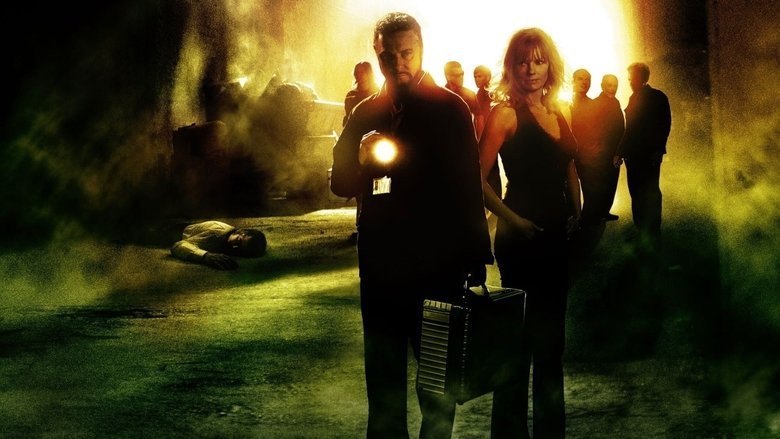
CSI: Crime Scene Investigation
A Las Vegas team of forensic investigators are trained to solve criminal cases by scouring the crime scene, collecting irrefutable evidence and finding the missing pieces that solve the mystery.
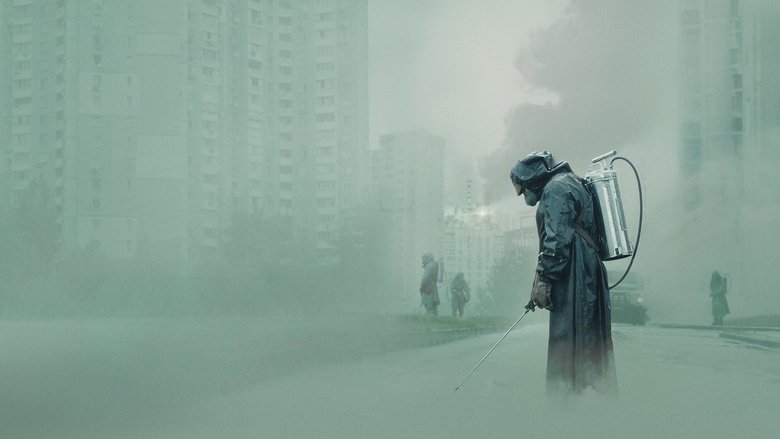
Chernobyl
The true story of one of the worst man-made catastrophes in history: the catastrophic nuclear accident at Chernobyl. A tale of the brave men and women who sacrificed to save Europe from unimaginable disaster.

Young Sheldon
The early life of child genius Sheldon Cooper, later seen in The Big Bang Theory.
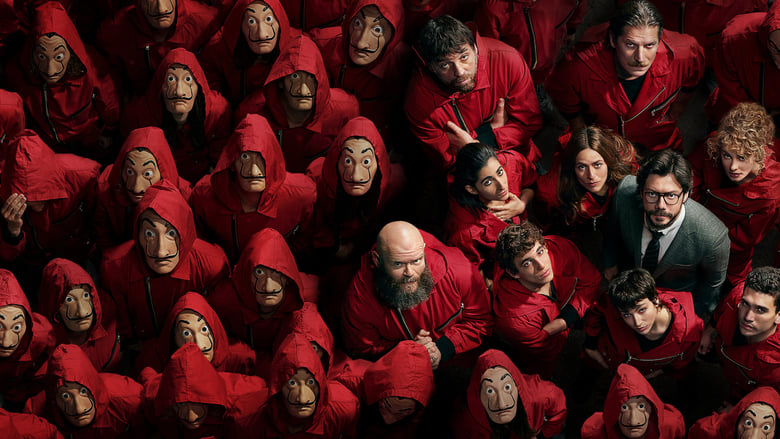
Money Heist
To carry out the biggest heist in history, a mysterious man called The Professor recruits a band of eight robbers who have a single characteristic: none of them has anything to lose. Five months of seclusion - memorizing every step, every detail, every probability - culminate in eleven days locked up in the National Coinage and Stamp Factory of Spain, surrounded by police forces and with dozens of hostages in their power, to find out whether their suicide wager will lead to everything or nothing.
Reviews
No reviews available yet.