Learning Spanish: How to Understand and Speak a New Language
Experience the fastest and most direct way to get up and running with a beautiful and highly useful language. Learning Spanish: How to Understand and Speak a New Language offers you an exciting and practical way to quickly build the ability to communicate in Spanish.
Production

Production
Seasons

1. Introduction to the Spanish Language
Begin by looking at both the “whats” of Spanish (elements such as grammar and vocabulary), and the “hows”—how to study, practice, and learn the language most effectively. Start with identifying cognates (Spanish words that are similar to their English equivalents), hearing the five Spanish vowel sounds, and practicing basic greetings, responses, and goodbyes.
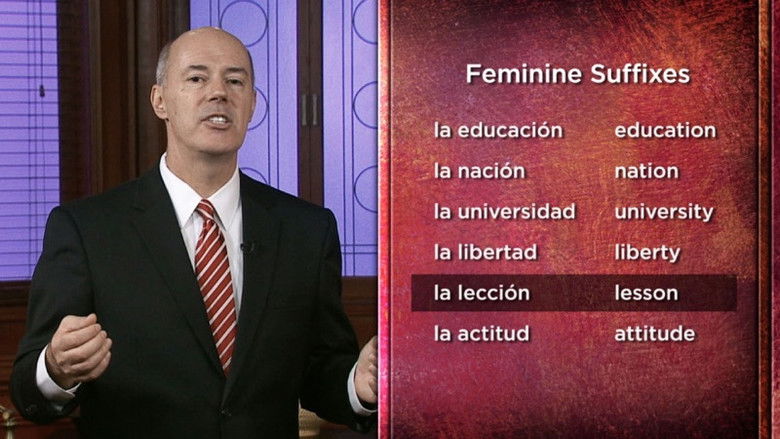
2. Definite Articles and Nouns
Learn the gender of Spanish nouns by practicing each new noun with its masculine or feminine definite article. Grasp how the suffixes of nouns can help identify their gender. Study how to make nouns plural, practice pronouncing Spanish consonants, and learn the letters of the Spanish alphabet.
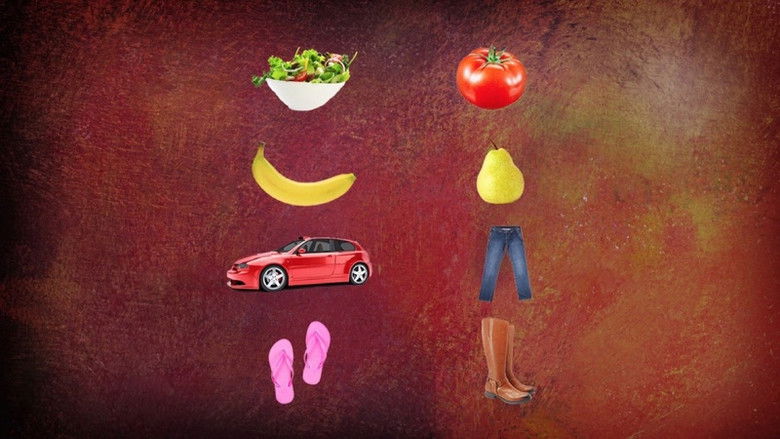
3. Subject Pronouns and the Verb Ser
Investigate the five singular subject pronouns and the seven plural subject pronouns in Spanish, and how they are used in Spanish-speaking cultures. Then conjugate the verb ser (to be) in the present tense, create simple sentences, and explore how Spanish adjectives agree with the nouns they modify in number and gender.
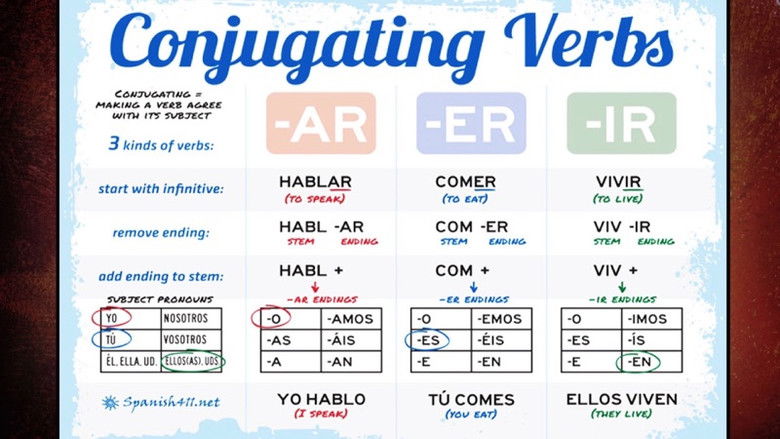
4. Regular -ar Verbs in the Present
Here, learn about an important category of Spanish verbs—those whose infinitives end in -ar. Conjugate regular -ar verbs in the present tense by identifying the verb’s stem and adding the appropriate endings. Continue with Spanish adjectives and their placement, cognate adjectives, and the pronunciation of important consonants.
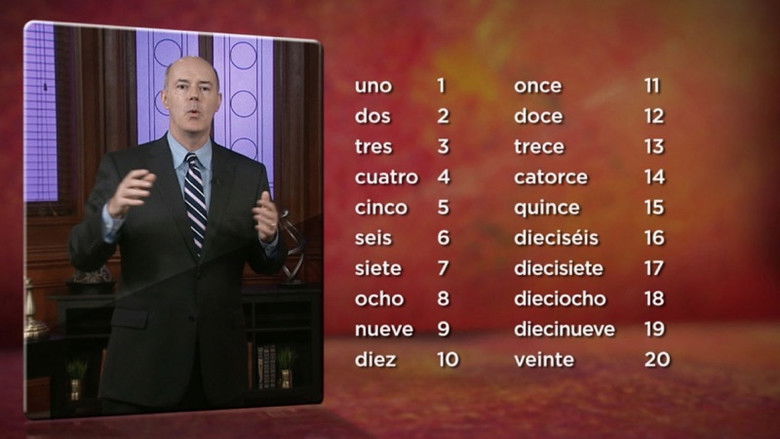
5. Indefinite Articles and Numbers to 100
Acquire the Spanish indefinite articles (“a”, “an”, and “some” in English), and observe how indefinite articles are used in Spanish. Learn to count to 100, and practice simple math problems. Finally, complete your work with Spanish consonants, making important distinctions in the pronunciations of b, v, g, d, and x....

6. The Verb Estar and Numbers over 100
Investigate the verb estar, the second Spanish verb for “to be”. Learn about the uses of estar, as contrasted with ser. Conjugate estar in the present tense, and use it with adjectives describing emotions, conditions, and locations. Learn to count to 1000, and conclude with a historical note about Spanish pronunciation....
7. Regular -er and -ir Verbs in the Present
Conjugate two new categories of Spanish verbs-those that end in -er and -ir. For both, learn and practice the appropriate endings for the present tense. Continue with possessive adjectives, and study how these are used in Spanish. Then discover three ways of forming questions, and learn vocabulary related to the family....
8. The Verb Ir in the Present
Begin with an important irregular verb: ir, meaning “to go”. Conjugate ir in the present tense, and learn about its key uses in Spanish. Next, study and practice common Spanish interrogatives-words used in asking questions. Finish by looking at effective ways to remember new words and build vocabulary....
9. Expressing Time in Spanish
First, practice telling the time of day in Spanish, expressing the hour and minutes, and learn important vocabulary relating to time. Continue with the days of the week and vocabulary regarding days and dates. Finally, learn the months of the year, and form questions relating to time, dates, and the seasons....
10. Expressions Using the Verb Tener
This lesson begins with another important irregular verb: tener (to have). Grasp how to conjugate tener, and learn expressions using it regarding physical conditions, emotional conditions, and age. Add more important vocabulary related to the family. Finish by considering some important strategies to help you succeed as a language learner....
11. Verbs like Hacer and Interrogative Words
Study the verb hacer (to make or to do), and learn some of the many familiar expressions that use it. Continue with the similar verbs poner, salir, and traer, and take a deeper look at Spanish interrogatives. Learn how to talk about punctuation in Spanish, and discover how it is used....
Reviews
No reviews available yet.