One Strange Rock

7.7
201847m

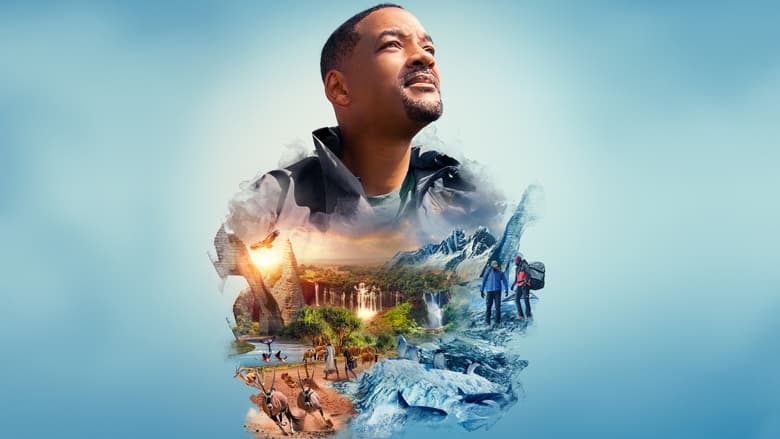
A mind-bending, thrilling journey exploring the fragility and wonder of planet Earth, one of the most peculiar, unique places in the entire universe, brought to life by the only people to have left it behind – the world’s most well known and leading astronauts.

Production

Logo for Protozoa Pictures
Logo for Overbrook Entertainment
Logo for Nutopia

Trailers & Videos

Thumbnail for video: "Love Letter to Earth"

"Love Letter to Earth"

Thumbnail for video: Official Trailer

Official Trailer

Thumbnail for video: "Glacier" (Ep.1)

"Glacier" (Ep.1)

Thumbnail for video: "The Importance of Diatoms" (Ep.1)

"The Importance of Diatoms" (Ep.1)
Thumbnail for video: "Flying River" (Ep. 1)

"Flying River" (Ep. 1)

Thumbnail for video: "Day of the Dead" (Ep.1)

"Day of the Dead" (Ep.1)

Thumbnail for video: Darren Aronofsky and Ari Handel Interview (The Hollywood Reporter)
Darren Aronofsky and Ari Handel Interview (The Hollywood Reporter)

Thumbnail for video: "Metamorphosis" (Ep.10)

"Metamorphosis" (Ep.10)

Thumbnail for video: "Macaques Use Tools to Shuck Oysters" (Ep.7)
"Macaques Use Tools to Shuck Oysters" (Ep.7)

Thumbnail for video: "Explore 'Battleship Island': Japan's Decaying Ghost Town" (Ep.7)

"Explore 'Battleship Island': Japan's Decaying Ghost Town" (Ep.7)

Seasons

10 Episodes • Premiered 2018

Still image for One Strange Rock season 1 episode 1: Gasp

1. Gasp

8.7

Our perfectly calibrated, breathing planet. For those privileged few who have seen Earth from space, the very first thing they notice is the thin blue line of atmosphere that clings to our planet and sustains life. The story of how the Earth creates and regulates that oxygen is mind-blowing. From snowflakes in the arctic to plankton, desert sandstorms, and rivers in the sky; an incredible chain of connections reveal just how incredible our home is. Everything connects so life and planet breathe together.

Still image for One Strange Rock season 1 episode 2: Storm

2. Storm

8.0

A planet sculpted from cosmic violence. Earth is a very lucky planet. It has ended up the right size and in the right place. This only happened because of violent cosmic collisions. The crazy thing is, if things had been even slightly different, with more or less collisions, we wouldn't be here. We discover the moments that could have destroyed us, but instead made our planet what it is.

Still image for One Strange Rock season 1 episode 3: Shield

3. Shield

8.0

Earth protects itself from the sun. The David and Goliath story of Earth's relationship with its greatest threat, our seemingly benign Sun. The Sun is the big violent boss of the Solar System, throwing out devastating particles and energy. Without several shields, one generated by our unique planetary core, another by our atmosphere, and a third by our interconnected weather systems… life on Earth would never have survived.

Still image for One Strange Rock season 1 episode 4: Genesis

4. Genesis

7.3

Earth gives birth to life. The building blocks of life are common across the universe, but life is rare. What's so special about Earth that it emerged here? Only here on Earth have we found the elixir of life; water in its three forms. But for life to emerge this isn't enough… huge tides created by the proximity of our perfect Moon, plate tectonics, volcanoes and lightning mean the Earth is a dynamic planet. It's a huge planetary chemical experiment, a bubbling cauldron that transforms dead minerals into deoxyribonucleic acid (DNA); the code for all life.

Still image for One Strange Rock season 1 episode 5: Survival

5. Survival

8.3

Earth, the great killer. Without the cycle of death and sacrifice, from cellular to planetary, life would not be here. From the deaths of stars, to planetary scale mass extinctions and the sacrifice of individuals for a greater genetic good, this is the story of how life evolved hand in hand with death. Death drives evolution. It's hardwired: from our cells to our landscapes, our colorful living planet is only possible because of it. Death leads to opportunity and biodiversity which ironically ensures life on the planet is never wiped out. It's not enough for our planet to be habitable… it also has to be lethal.

Still image for One Strange Rock season 1 episode 6: Escape

6. Escape

7.2

We are all planets. Is it possible for intelligent life to escape destruction, either from the planet or ourselves? Or are we destined for extinction like 99% of all species before us? Our best chance of survival may be to escape earth and build another colony somewhere else. But there are real barriers: space radiation, microgravity and the bacteria inside us will conspire against us. And our DNA is coded for the conditions here on earth, so if we ever manage to colonize another planet those who are born there will evolve into another species.

Still image for One Strange Rock season 1 episode 7: Terraform

7. Terraform

8.0

Earth's great paradox. For our planet to become inhabitable for life, you already need life. Ever since life emerged, microbes, plants and animals have all sculpted the planet's surface and air in the strangest of ways; fish poop creates islands; dead animals create mountains; lichen drive continents. But life also has the power to destroy our world. We are changing the climate, but we are not the first to do so. Long before us, microbes froze the planet and almost wiped out all life. The difference between us and them is we are conscious of our actions.

Still image for One Strange Rock season 1 episode 8: Alien

8. Alien

7.7

The freak accident behind complex life. All life on earth started as single cell bacteria and stayed like that for 2 billion years. Successfully spreading across the planet. So even if we do find alien life, what are the chances of that life being complex – like us? Vanishingly rare… on our strange rock, it's all down to a freak event, which accidentally happened when one cell ate another to create a kind of cellular power pack: mitochondria. This almost miraculous event transforms earth into a complex interconnected food web based on a competition for food. And at the top of the pyramid sits us humans.

Still image for One Strange Rock season 1 episode 9: Awakening

9. Awakening

7.5

Your brain is an anomaly. We tend to think that once the first life emerged it was inevitable that it would eventually evolve into us. But there is nothing inevitable about consciousness. For over 2 billion years no life on earth possessed a brain. And even today, 90% of life doesn’t have a brain. How life and our strange rock came together to create consciousness is a story of almost impossible and unnecessary coincidences….

Still image for One Strange Rock season 1 episode 10: Home

10. Home

7.7

There's no place like home. We wrap up the series with the story of NASA's most experienced female astronaut, Peggy Whitson, as she returns home to earth. We might possibly be the only intelligent life in the universe. Life is rare, complex life rarer, and intelligent life may be an evolutionary bad idea or dead end that is rarer still… and that means that it's possible that we humans may be the only thing in this huge and amazing universe that can appreciate its strangeness with awe and wonder.

Cast

Photo of Will Smith

Will Smith

Self - Host

More Like This

Reviews

B

Stephen Campbell

7/10

**_Does what it aims to do_**

> _Earth provides enough to satisfy every man's needs, but not every man's greed._

- Mahatma Gandhi


Executive produced by Darren Aronofsky, and made by Will Smith's production company (Smith is also the presenter), _One Strange Rock_ is essentially about the experiences of eight astronauts, and how their time in space led them to see Earth with new eyes. That, in turn, is used as a jumping off point to examine several different branches of Earth Science, with each episode focusing on a specific astronaut and dealing with a specific topic; the planet's respiratory system, the Theia Impact theory, how the planet protects us from the sun, the origin of life, the Permian-Triassic Extinction, the possibility of colonising another planet, how life has both transformed the Earth and been transformed by it, the evolution from single celled microbes to complex organisms, the development of the human brain, and the concept of Earth as home.

Along the way, the show throws up a litany of hard to believe facts. To give just a sampling; the Amazon produces twenty times more oxygen than all of humanity could use, but none of it leaves the Amazon Basin, as it is used by the animals living there; the magnetic field generated by the planet's core stretches for 400,000 miles into space in every direction; every strand of DNA in the world contains billions of carbon atoms to bind it together; the human body has 37 trillion cells (more than the stars in the galaxy); tropical islands are composed of up to 70% parrot fish excrement; photosynthesis generates 100 terrawatts of energy per year, six times more than humanity could use; the human brain is the most complex object in the known universe; 95% of all animals that have ever existed are extinct. Easily my favourite take from the show, however, is that it's 250,000 miles to the moon, 700 million miles to Saturn, 9 trillion miles to the edge of the solar system, 24 trillion miles to the nearest star (with our current technology, it would take 17,000 years to get there), and 25,000 light years (150,000 trillion miles) to the edge of the galaxy. That's a whole lotta miles!

Very enjoyable stuff. My one complaint would be that most of the episodes feel a little padded, with each one containing two or three diversionary stories only tangentially related to the core theme. But it's still well worth watching; terrific visuals, great sound, experts who know what they're talking about, and mind blowing information, if the goal was to make the viewer look at Earth in a new manner, they certainly succeeded with me.

You've reached the end.