
Simon Schama's Power of Art
Documentary series in which historian Simon Schama recounts the story of eight moments of high drama in the making of eight artistic masterpieces.
Seasons

1. Caravaggio
Michelangelo Merisi left his birth town of Caravaggio in the north of Italy to study as an apprentice in nearby Milan. In 1593 he moved to Rome, impatient to use his talents on the biggest stage possible. Caravaggio's approach to painting was unconventional. He avoided the standard method of making copies of old sculptures and instead took the more direct approach of painting directly onto canvas without drawing first. He also used people from the street as his models. His dramatic painting was enhanced with intense and theatrical lighting. Caravaggio's fate was sealed when in 1606 he killed a man in a duel. He fled to Naples where he attempted to paint his way out of trouble, he became a Knight, but was then imprisoned in Malta and then finally he moved to Sicily. He was pardoned for murder in 1610, but he died of a fever attempting to return to Rome.

2. Bernini
Born in Naples, Bernini was an exceptional talent from an early age and went on to dominate the art world of 17th century Rome. His work epitomised the Baroque style and his sculpture, church interiors and exteriors and town planning could be seen everywhere. He was also a painter, playwright, costume and theatre designer. Bernini worked under successive Popes; Pope Gregory XV made him a knight and Pope Urban VIII took him as his best friend. He was revered in his time until a jealous rage caused him to have the face of his mistress slashed after discovering her romance with his brother. His reputation fell further after his bell towers for the Cathedral of St Peter's started cracking in 1641. He redeemed himself and kick started his career again with arguably his most famous work, The Ecstasy of St Theresa, in 1652.

3. Rembrandt
Born to a family of millers in Leiden, Rembrandt left university at 14 to pursue a career as an artist. The decision turned out to be a good one since after serving his apprenticeship in Amsterdam he was singled out by Constantijn Huygens, the most influential patron in Holland. In 1634 he married Saskia van Uylenburgh. In 1649, following Saskia's death from tuberculosis, Hendrickje Stoffels entered Rembrandt's household and six years later they had a son. Rembrandt's success in his early years was as a portrait painter to the rich denizens of Amsterdam at a time when the city was being transformed from a small nondescript port into the economic capital of the world. His historical and religious paintings also gave him wide acclaim. Despite being known as a portrait painter Rembrandt used his talent to push the boundaries of painting. This direction made him unpopular in the later years of his career as he shifted from being the talk of the town to becoming adrift in the Amsterdam art scene and criticised by his peers.

4. Jacques-Louis David
Born to a wealthy Parisian family, Jacques-Louis David was aged seven when his father was shot dead in a pistol duel. Brought up by his uncles, his desire was to paint and he was eventually sent to his mother's cousin, Francois Boucher, the most successful painter in France at the time. Painting became an important means of communication for David since his face was slashed during a sword fight and his speech became impeded by a benign tumour that developed from the wound, leading him to stammer. He was interested in painting in a new classical style that departed from the frivolity of the Rococo period and reflected the moral and austere climate before the French Revolution. David became closely aligned with the republican government and his work was increasingly used as propaganda with the Death of Marat proving his most controversial work.
5. Turner
One of Britain's most celebrated artists, Turner showed exceptional artistic talent from an early age and entered the Royal Academy aged fourteen. His English landscapes made his name but there was a darker side to his paintings that was difficult for the critics to swallow, both in the increasingly informal use of paint and the subject matter that was critical of the romanticised vision of Britain in the late nineteenth century. Turner bequeathed 300 of his paintings and 20,000 watercolours and drawings to the nation. He led a secretive private life. He never married, but had a mistress and fathered two children. He died in a temporary lodging in Chelsea, under the assumed name of Booth.

6. Van Gogh
Born in Groot-Zundert, The Netherlands, Van Gogh spent his early life as an art dealer, teacher and preacher in England, Holland and Belgium. His period as an artist began in 1881 when he chose to study art in Brussels, starting with watercolours and moving quickly on to oils. The French countryside was a major influence on his life and his early work was dominated by sombre, earthy colours depicting peasant workers, the most famous of which is The Potato Eaters, 1885. It was during Van Gogh's studies in Paris (1886-8) that he developed the individual style of brushwork and use of colour that made his name. In 1888 he moved to Arles where the Provençal landscape provided his best-known subject matter. However, it also marked the start of his mental crisis following an argument with his contemporary Paul Gauguin. Van Gogh was committed to a mental asylum in 1889 where he continued to paint, but he committed suicide in 1890.

7. Picasso
Born in Malaga, Spain, Picasso's many styles and prolific work rate have marked him out as one of the most recognised artists of the twentieth century. Not limited to one medium he created sculptures, etchings and prints. His artistic career only began to boom once he moved to Paris in the early 1900s. His Blue Period, reflecting the colour and his mood at the time was followed by his Rose Period, work inspired by primitive art and then Cubism, which shocked the critics, but ultimately made his name. Guernica (1937) was created during Picasso's Surrealist period and captures the horror of the bombing of the Basque town of Guernica during the Spanish Civil War. By the end of World War II, Picasso had become an internationally known artist and celebrity.
8. Rothko
Born in Dvinsk, Russia (now Daugavpils, Latvia) Rothko moved with his family to Portland, Oregon in 1913. His painting education was brief - he moved to New York to study under the artist Max Weber and then struck out on his own. Rothko is known for his abstract expressionism paintings, but he moved through more traditional styles in his early career, including Surrealist paintings in the 1940s. In 1947 he embarked on the first of his large abstract 'colour-field' paintings, formalising their structure further in the 1950s. Rothko had huge success with largescale solo shows, but committed suicide in 1970.
Cast
More Like This

The Penguins of Madagascar
The adventures of four penguins—Skipper, Kowalski, Private, and Rico, who perform various commando-like missions to protect their home in the Central Park Zoo. The penguins often have to deal with problems caused, or made worse, by their zoo neighbors, King Julien XIII (a ring-tailed lemur), Maurice (an aye-aye), and Mort (a mouse lemur).

The K2
A patriotic bodyguard who was abandoned by his country and colleagues, a hidden daughter of leading Presidential candidate who regards love as a tool for revenge, and the First Lady contender who hides her ambition and charisma behind a kind and friendly personality.

Jordskott
Detective Inspector Eva Thörnblad returns to Silver Height seven years after her daughter Josefine disappeared by a lake in the woods. The body was never found and the girl was believed to have drowned. Now a boy has vanished without a trace and Thörnblad wants to find out if there is a link to her daughter's disappearance. At the same time , she will take care of the legacy of her father, the great entrepreneur Johan Thörnblad, who built an empire of timber and timber processing on the large forest owned by his ancestors. As the plot deepens more children are kidnapped and what initially seems like a police drama takes a more sinister and stranger twist with each episode.
I am Bartu
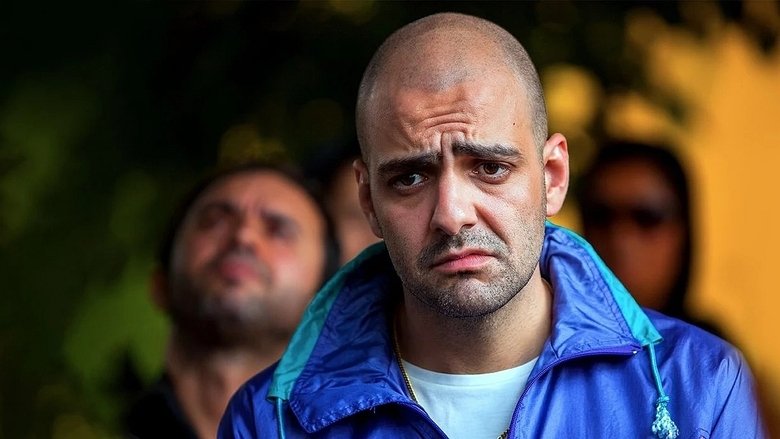
Bartu I; it tells the story of a ‘little celebrity’, becoming even less famous. Bartu, who once made his mark on numerous episodes and art-house movies, was relieved to play in the series which could be seen as a serious gateway and a short life gate for many players.
Lovecraft Country
The anthology horror series follows 25-year-old Atticus Freeman, who joins up with his friend Letitia and his Uncle George to embark on a road trip across 1950s Jim Crow America to find his missing father. They must survive and overcome both the racist terrors of white America and the malevolent spirits that could be ripped from a Lovecraft paperback.

DreamWorks Dragons
From the creators of "How to Train Your Dragon" comes a new series that takes Hiccup and Toothless to the edge of adventure.
Stranger Things
When a young boy vanishes, a small town uncovers a mystery involving secret experiments, terrifying supernatural forces, and one strange little girl.
Breaking Bad
Walter White, a New Mexico chemistry teacher, is diagnosed with Stage III cancer and given a prognosis of only two years left to live. He becomes filled with a sense of fearlessness and an unrelenting desire to secure his family's financial future at any cost as he enters the dangerous world of drugs and crime.
Brooklyn Nine-Nine
A single-camera ensemble comedy following the lives of an eclectic group of detectives in a New York precinct, including one slacker who is forced to shape up when he gets a new boss.
Death Note
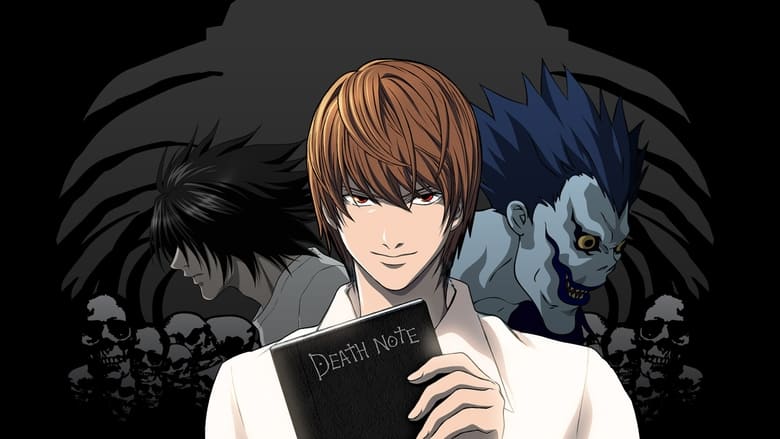
Light Yagami is an ace student with great prospects—and he’s bored out of his mind. But all that changes when he finds the Death Note, a notebook dropped by a rogue Shinigami death god. Any human whose name is written in the notebook dies, and Light has vowed to use the power of the Death Note to rid the world of evil. But will Light succeed in his noble goal, or will the Death Note turn him into the very thing he fights against?
Squid Game
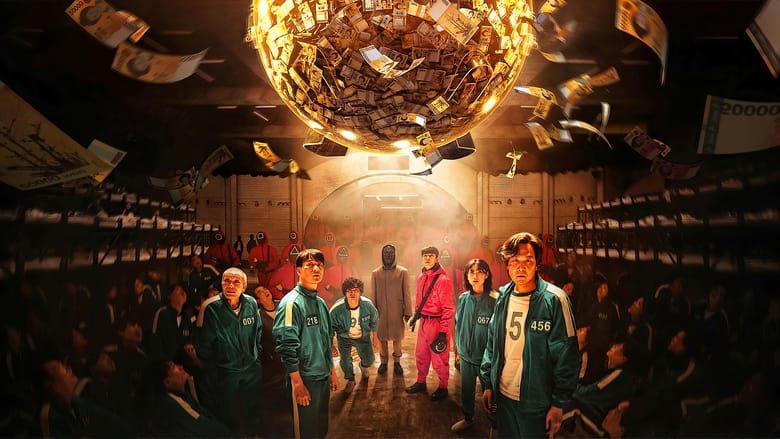
Hundreds of cash-strapped players accept a strange invitation to compete in children's games. Inside, a tempting prize awaits — with deadly high stakes.
WandaVision
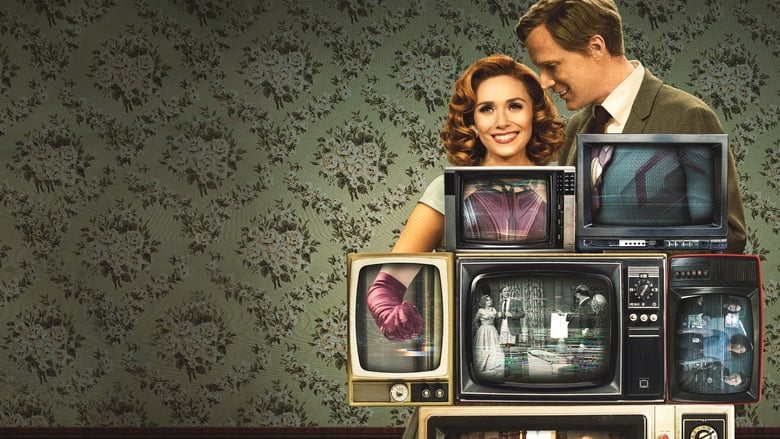
Wanda Maximoff and Vision—two super-powered beings living idealized suburban lives—begin to suspect that everything is not as it seems.
Doctor Who
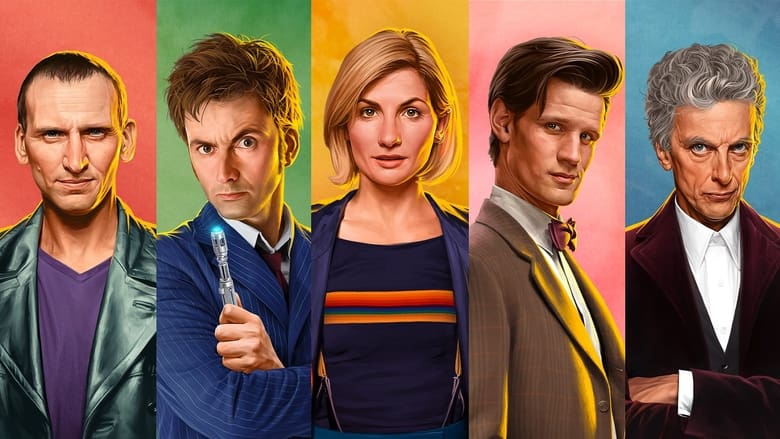
The Doctor is a Time Lord: a 900 year old alien with 2 hearts, part of a gifted civilization who mastered time travel. The Doctor saves planets for a living—more of a hobby actually, and the Doctor's very, very good at it.
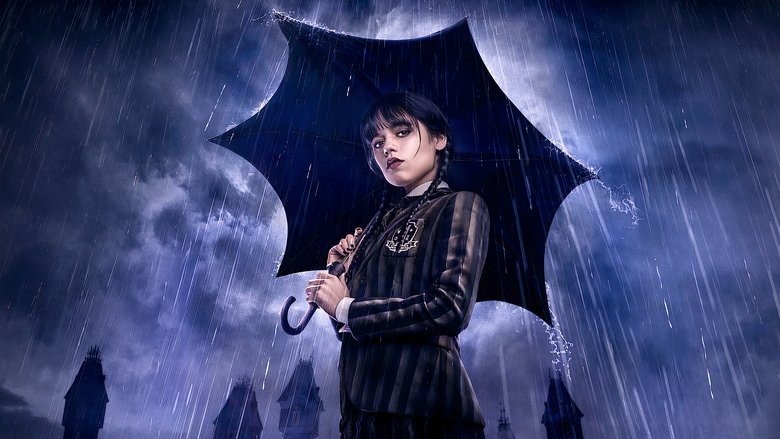
Wednesday
Smart, sarcastic and a little dead inside, Wednesday Addams investigates twisted mysteries while making new friends — and foes — at Nevermore Academy.
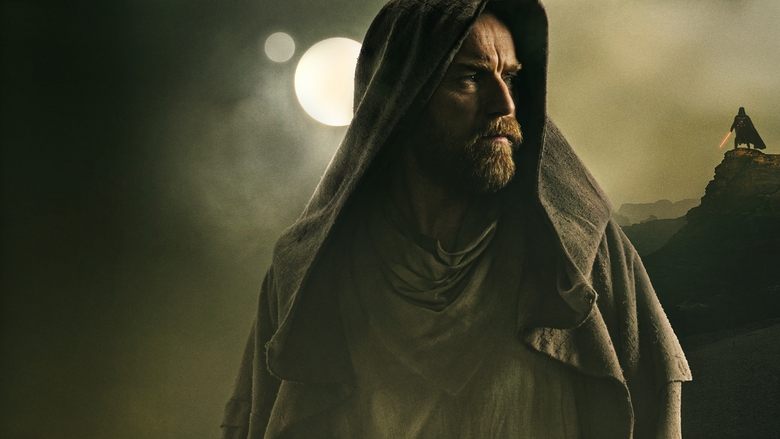
Obi-Wan Kenobi
During the reign of the Galactic Empire, former Jedi Master, Obi-Wan Kenobi, embarks on a crucial mission to confront allies turned enemies and face the wrath of the Empire.

It
In 1960, seven outcast kids known as "The Losers' Club" fight against an ancient shape-shifting alien who poses as a child-killing clown, while also dealing with bullies and abusive parents. Thirty years later, they reunite to stop the creature once and for all when it returns to their hometown.

Two and a Half Men
A hedonistic jingle writer's free-wheeling life comes to an abrupt halt when his brother and 10-year-old nephew move into his beach-front house.

The Good Doctor
Shaun Murphy, a young surgeon with autism and savant syndrome, relocates from a quiet country life to join a prestigious hospital's surgical unit. Unable to personally connect with those around him, Shaun uses his extraordinary medical gifts to save lives and challenge the skepticism of his colleagues.
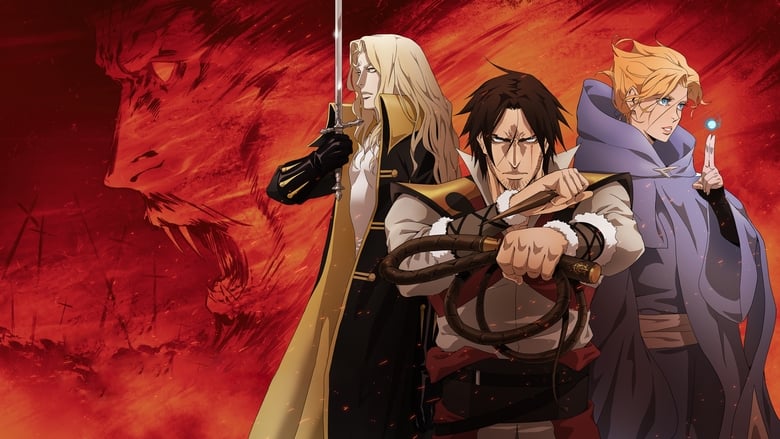
Castlevania
A vampire hunter fights to save a besieged city from an army of otherworldly beasts controlled by Dracula himself.
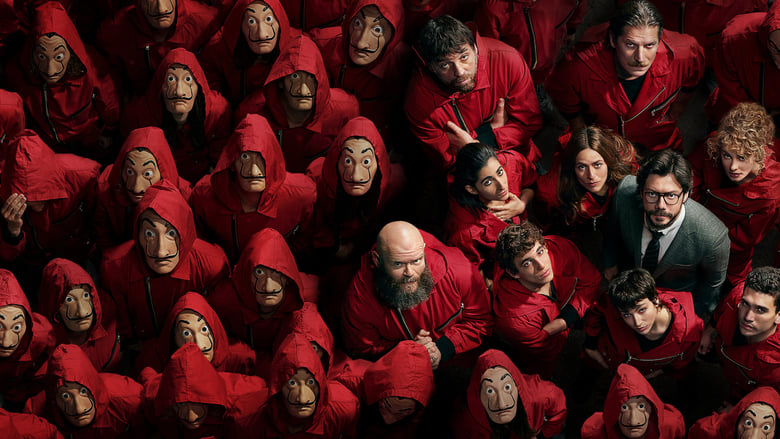
Money Heist
To carry out the biggest heist in history, a mysterious man called The Professor recruits a band of eight robbers who have a single characteristic: none of them has anything to lose. Five months of seclusion - memorizing every step, every detail, every probability - culminate in eleven days locked up in the National Coinage and Stamp Factory of Spain, surrounded by police forces and with dozens of hostages in their power, to find out whether their suicide wager will lead to everything or nothing.
Reviews
No reviews available yet.