
The Century: America's Time
The Century: America's Time is a 15-part series of documentaries produced by the American Broadcasting Company on the 20th century and the rise of the United States as a superpower. The documentary originally aired on The History Channel in 1999. Another earlier series, simply called "The Century" also produced by ABC, appeared on the ABC network in 1999, and also later appeared on the History Channel. It consists of six two-hour shows with each chronicling two different events based around a common theme.
Production

Production
Seasons

1. The Beginning: Seeds of Change
How did the 20th century change the ways Americans live? This program examines the early 1900s – when William McKinley was President, a loaf of bread cost only a few cents, horsepower really meant horsepower, flying to the moon was the stuff of dreams, and the average life span was only 45 years – while looking ahead to the decades of changes yet to come.
2. 1914-1919: Shell Shock
The psychological damage inflicted by the stupefying bombardments of World War I was called shell shock, a term that aptly described the feeling of the post-war world. This program illustrates America’s reluctant emergence as a world power and analyzes the impact of the wholesale sense of loss – of life, of husbands and fathers, and of sacred ideals such as honor, patriotism, and glory – that sprang from "the war to end all wars."
3. 1920-1929: Boom to Bust
In the aftermath of World War I, many modern-minded Americans, particularly women, were eager to do away with outdated traditions and claim new rights and freedoms. This program investigates why the issue of women’s rights, ranging from suffrage to smoking, became so controversial – and what that said about America’s sense of self.
4. 1929-1936: Stormy Weather
America – a nation that claimed ever-increasing wealth as a birthright – was rudely awakened by the Great Depression, which caused 25 percent unemployment, the closing of 9,000 banks, and the loss of $2.5 billion in deposits. This program captures a people’s struggle as they faced the collapse of prosperity and diminished hope of being able to experience the American Dream.
5. 1936-1941: Over the Edge
Safely watching Europe from across the Atlantic Ocean, many Americans observed the messianic popularity of Hitler and Mussolini and the subsequent outbreak of World War II with concern and dismay. This program explores the crucial question: could the United States resist involvement, or would American forces be sent to fight in another European war?
6. 1941-1945: Civilians at War (2 parts)
World War II was the first war in history that killed more civilians than soldiers, as leaders on both sides accepted noncombatant casualties as inevitable – and, to some, even desirable. This program studies the courage and the strength necessary to face and survive starvation, bombing, torpedoing, massacre, and extermination in camps specifically designed for that purpose.
7. 1941-1945: Homefront
The shock of Pearl Harbor awoke America from its dream of isolationism. As troops went overseas and industry ramped up to supply the urgent need for war materials, a new wave of Southern blacks migrated north and west to fill the workforce – along with millions of women, who exchanged housework for war work. This program discusses the effects of World War II on the home front, spotlighting the war’s impact as a catalyst for economic, demographic, and social change.
8. 1946-1952: Best Years
Demobilization after World War II meant difficult changes as the U.S., geared up for war, resumed a peacetime existence. This program describes America’s new status as a superpower, as the nation shouldered the responsibility for rebuilding Europe and Japan – and for containing Soviet ambitions. The challenge faced by veterans and spouses to become reacquainted after years of separation and hardship is highlighted.
9. 1953-1960: Happy Days
The post-war baby boom, suburban living, Marilyn Monroe, and Elvis epitomizes the contentment of the Eisenhower years. But these were also years marked by rabid McCarthyism, violent civil rights demonstrations, and a frightening escalation in the Cold War. This program probes the tension between these crosscurrents in American history.
10. 1960-1964: Poisoned Dreams
Beset by both international and domestic pressures, America during the Camelot years was swiftly approaching a political-cultural meltdown. This program documents U.S. – Soviet conflicts of interest in Cuba and Vietnam and the growing polarization at home between civil rights activists and segregationist hard-liners, which resulted in the Birmingham riots and the freedom march on Washington.
11. 1965-1970: Unpinned
Riots and protests intensified in the U.S. as the war in Vietnam dragged on, with anti-war and civil rights activists seeking violent ways to agitate for peace and equality. This program presents the unrelenting rage that divided the nation during those perilous years, as the Watts race riots, the assassination of Martin Luther King Jr. and Robert F. Kennedy, and the Kent State killings made Headline news.
12. 1971-1975: Approaching the Apocalypse
The trauma of the war in Vietnam and the Watergate scandal left Americans exhausted, embittered, and disillusioned with politics and politicians. This program appraises the effects of those blights on the political landscape and their impact on the trust between the government and the governed, so vital to the well-being of a representative democracy such as the United States.
13. 1976-1980: Starting Over
The women’s and civil rights movements, begun decades earlier and as controversial as ever, continue to evolve during the nation’s Bicentennial period. This program focuses on the changing momentum of feminism, hampered by its failure to secure broad ratification of the Equal Rights Amendment, and the heated confrontations that arose over affirmative action and busing.
14. 1981-1989: A New World
The Reagan era witnessed the unexpected end of the Cold War and a welcome return to a booming domestic economy – but did events unfold too quickly to control? This program takes a look at the details and the aftershocks both of the dissolution of the Soviet Union and the yuppie capitalism that threatened to push the limits of the American economy too far.
15. 1990-1999: Then and Now
Fifty years into the future, how will computer and communications technology reshape the way Americans work and play? What will be the benefits and consequences of biotechnology? Will the third-world nations dominate headline news? This program examines key moments of the ‘90s, reflects on changes during the last five decades, and, with the assistance of leading futurists, looks ahead to some of the possible events and innovations just over the horizon.
Cast
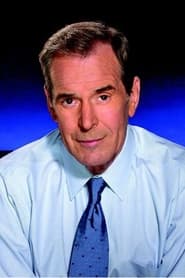
Peter Jennings
Self - Presenter
More Like This

Kipper
Kipper is a charming collection of tales that follows the adventures of a curious and friendly dog as he explores the world, makes new friends, and learns valuable life lessons through imaginative fun and play.
Nanaroscope !

Eek! The Cat
Koombaya, it's Eek the cat and all his friends. Annabelle, Eek's 800-pound girlfriend, Sharky the vicious but lovable sharkdog, and Elmo the elk. Plus you can watch the Terrible Thunderlizards try to make Bill and Scooter, the cavemen, extinct. Plus there's Klutter who's, well, we're not exactly sure what Klutter is, but watch and find out for yourself.

Family No. 1
The misadventures of two families who are forced to live in the same house as tenants after being conned by their estate agent.

Golden Boy
This is the story of a young, talented football player with a problematic temperament, who already in his youth, because of his talent, becomes the target of several interest groups.

Hak Lai, My Lady
After stealing the key to her mother’s safe box, Lalin heads out to find her biological father, but gets attacked along the way. Here she meets Pi, the owner of Huen Hak Phaeng Farm, whom she had an issue with prior. Chaos ensues when the key to her mother's safe goes missing and she needs to stay at Huean Hak Phaeng Farm to find that key.

Beauty Newbie
Liu has been bullied for her looks her whole life. To fit in at university and escape the judgment, she undergoes plastic surgery. After her transformation, she befriends Faye, a stunning natural beauty. However, Liu’s life takes a turn when Guy, a handsome acquaintance from middle school, warns her to stay away from Faye. This angers Liu, especially compared to Saint, her kind and supportive neighbor. When Liu’s secret is revealed, her friends turn on her, leaving her to question if she will ever truly be accepted for who she is.

真爱背后

Brigade des mineurs 2002

60 JUSTICE PROJECT
Eiji Arima is a veteran detective who is about to retire. Shoichi Sera is a young lawyer and Misuzu Haruna is a prosecutor. These three people belong to the Gohan Taisakushitsu ("Misjudgment Countermeasure Office’". Their job is to re-examine death-row convictions and check to see if anyone was falsely convicted.

Life from Space
In this two-part series, we take a look at the monumental discoveries underway, specifically surrounding black holes and meteorites. Black holes have been revealed as one of the foundations for the basic conditions of life. Through black holes, life is possible in an infinite number of places in space. We also follow how meteorites brought the basic substances of life to our planet, allowing for its creation. The films describe the latest findings concerning cosmic events in relation to the origin of life, providing a grandiose perspective of what makes life possible.

Strictly Sexual The Series
Joe and Stanny are two likable losers who are unlucky in love, but lucky with sex. Summer and Georgia are two girls who make a deal to swear off dating to focus on their careers and keep things strictly sexual. One girl starts dating another girl to avoid falling in love, while Georgia starts having sex with Stanny, knowing she could never fall for him. To everyones surprise, real feelings arise, causing the drama and heartache everyone was trying to avoid. The show addresses the entanglements of love and sex. This is a spinoff of the hit indie film of the same name, directed by Independent Spirit Award winner Joel Viertel, and written and starring Stevie Long.

Dogface
Dogface is a British sketch comedy television series which debuted on E4 in September 2007. The show consists of sketches sometimes interspersed with animations featuring dogs sitting at tables talking as "lads" talk, with much reference to booze, birds and other lad culture stereotypes. The series is produced by Objective Productions.
World War Two: 1942 and Hitler's Soft Underbelly

Ego

Frozen Land
Taxi driver Larisa Aidarova from a small seaside town is preparing for the wedding with her beloved Maksim, with whom she has been working and living together for more than a year. But all plans collapse when Maksim is detained on suspicion of murder.
Reviews
No reviews available yet.