
The Civil War
A documentary on the American Civil War narrated by Ken Burns, covering the secession of the Confederacy to the assassination of Abraham Lincoln.
Production



Production
Seasons
Photographs, period paintings, lithographs and headlines of the Civil War are combined with moving newsreel footage of Civil War veterans, interviews with distinguished historians and first-person accounts in this award-winning documentary by filmmaker Ken Burns. The miniseries vividly embraces the entire sweep of the war: the complex causes and lasting effects of America's greatest and most moving calamity, the battles and the homefronts, the generals and the private soldiers, the anguish of death in battle and the grief of families at home.
1. The Cause: 1861
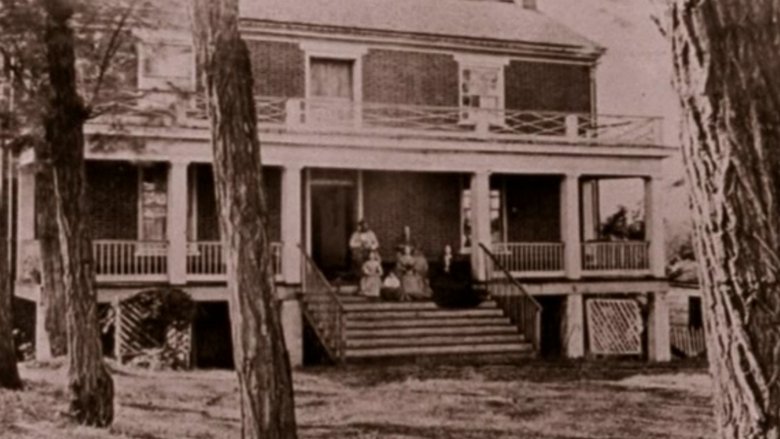
Beginning with a searing indictment of slavery, this first episode dramatically evokes the causes of the war, from the Cotton Kingdom of the South to the northern abolitionists who opposed it. Here are the burning questions of Union and States' rights, John Brown at Harper's Ferry, the election of Abraham Lincoln in 1860, the firing on Fort Sumter and the jubilant rush to arms on both sides. Along the way the series' major figures are introduced: Abraham Lincoln, Frederick Douglass, Robert E. Lee, Ulysses S. Grant and a host of lesser-known but equally vivid characters. The episode comes to a climax with the disastrous Union defeat at Manassas, Virginia, where both sides now learn it is to be a very long war.

2. A Very Bloody Affair: 1862
1862 saw the birth of modern warfare and the transformation of Lincoln's war to preserve the Union into a war to emancipate the slaves. Episode Two begins with the political infighting that threatened to swamp Lincoln's administration and then follows Union General George McClellan's ill-fated campaign on the Virginia Peninsula, where his huge army meets a smaller but infinitely more resourceful Confederate force. During this episode we witness the battle of ironclad ships, partake of camp life, and watch slavery begin to crumble. We meet Ulysses S. Grant, whose exploits come to a bloody climax at the Battle of Shiloh in Tennessee. The episode ends with rumors of Europe's readiness to recognize the Confederacy.

3. Forever Free: 1862
This episode charts the dramatic events that led to Lincoln's decision to set the slaves free. Convinced by July 1862 that emancipation was now morally and militarily crucial to the future of the Union, Lincoln must wait for a victory to issue his proclamation. But as the year wears on there are no Union victories to be had, thanks to the brilliance of Stonewall Jackson and Robert E. Lee. The episode comes to a climax in September 1862 with Lee's invasion of Maryland. On the banks of Antietam Creek, the bloodiest day of the war takes place, followed shortly by the brightest: the emancipation of the slaves.

4. Simply Murder: 1863
The nightmarish Union disaster at Fredericksburg comes to two climaxes that spring: at Chancellorsville in May, where Lee wins his most brilliant victory but loses Stonewall Jackson; and at Vicksburg, where Grant's attempts to take the city by siege are stopped. During the episode we learn of fierce Northern opposition to Lincoln's Emancipation Proclamation, the miseries of regimental life and the increasing desperation of the Confederate homefront. As the episode ends, Lee decides to invade the North again to draw Grant's forces away from Vicksburg.
5. The Universe of Battle: 1863
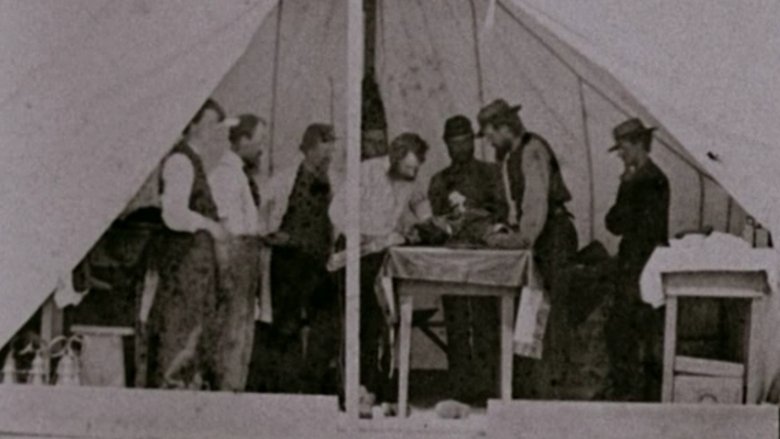
This episode opens with a dramatic account of the turning point of war: the Battle of Gettysburg, the greatest ever fought in the Western Hemisphere. For three days 150,000 men will fight to the death in the Pennsylvania countryside, culminating in Pickett's legendary charge. This extended episode then goes on to chronicle the fall of Vicksburg, the New York draft riots, the first use of black troops, and the western battles at Chickamauga, Georgia and Chattanooga, Tennessee. The episode closes with the dedication of a new Union cemetery at Gettysburg in November, where Abraham Lincoln struggles to put into words what is happening to his people.

6. Valley of the Shadow of Death: 1864
Episode six begins with a biographical comparison of Ulysses S. Grant and Robert E. Lee and then chronicles the extraordinary series of battles that pitted the two generals against each other from the wilderness to Petersburg in Virginia. In 30 days, the two armies lose more men than both sides have lost in three years of war. With Grant and Lee finally deadlocked at Petersburg, we visit the ghastly hospitals north and south and follow General Sherman's Atlanta campaign through the mountains of north Georgia. As the horrendous casualty lists increase, Lincoln's chances for re-election begin to dim, and with them the possibility of Union victory.
7. Most Hallowed Ground: 1864
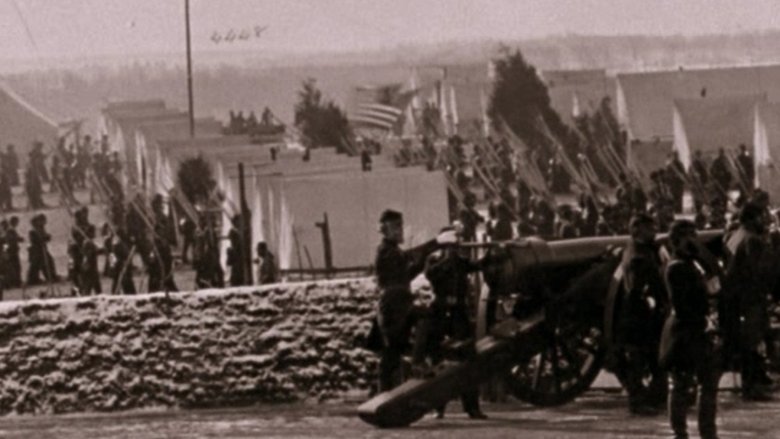
The episode begins with the presidential election of 1864 that sets Abraham Lincoln against his old commanding general, George McClellan. The stakes are nothing less than the survival of the Union itself: with Grant and Sherman stalled at Petersburg and Atlanta, opinion in the North has turned strongly against the war. But 11th-hour victories at Mobile Bay, Atlanta, and the Shenandoah Valley tilt the election to Lincoln and the Confederacy's last hope for independence dies. In an ironic twist, poignantly typical of the Civil War, Lee's Arlington mansion is turned into a Union military hospital and the estate becomes Arlington National Cemetery, the Union's most hallowed ground.

8. War Is All Hell: 1865
The episode begins with William Tecumseh Sherman's brilliant march to the sea, which brings the war to the heart of Georgia and the Carolinas and spells the end of the Confederacy. In March, following Lincoln's second inauguration, first Petersburg and then Richmond finally fall to Grant's army. Lee's tattered Army of Northern Virginia flees westward towards a tiny crossroads town called Appomattox Court House. There the dramatic and deeply moving surrender of Lee to Grant takes place. The episode ends in Washington where John Wilkes Booth begins to dream of vengeance for the South.

9. The Better Angels of Our Nature: 1865
This extraordinary final episode of The Civil War begins in the bittersweet aftermath of Lee's surrender and then goes on to narrate the horrendous events of five days later when, on April 14, Lincoln is assassinated. After chronicling Lincoln's poignant funeral, the series recounts the final days of the war, the capture of John Wilkes Booth and the fates of the Civil War's major protagonists. The episode then considers the consequences and meaning of a war that transformed the country from a collection of states to the nation we are today.
Cast

David McCullough
Narrator

Sam Waterston
Abraham Lincoln
Julie Harris
Mary Chestnut

Jason Robards
Ulysses S. Grant
Morgan Freeman
Frederick Douglass
Paul Roebling
Joshua Chamberlain
Garrison Keillor
Walt Whitman
Arthur Miller
William Tecumseh Sherman
Christopher Murney
Elisha Hunt Rhodes

Horton Foote
Jefferson Davis
George Plimpton
George Templeton Strong
Philip Bosco
Horace Greeley
Studs Terkel
Benjamin Butler / Various

Hoyt Axton
Various

John Hartford
Various
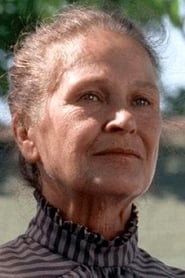
Colleen Dewhurst
Various
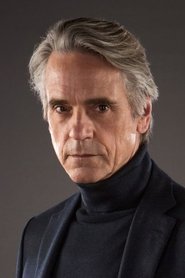
Jeremy Irons
Various

Gene Jones
Various
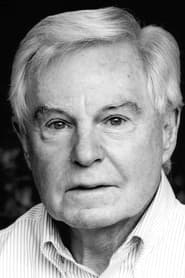
Derek Jacobi
Various
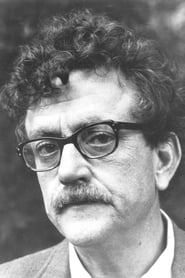
Kurt Vonnegut
Various
More Like This
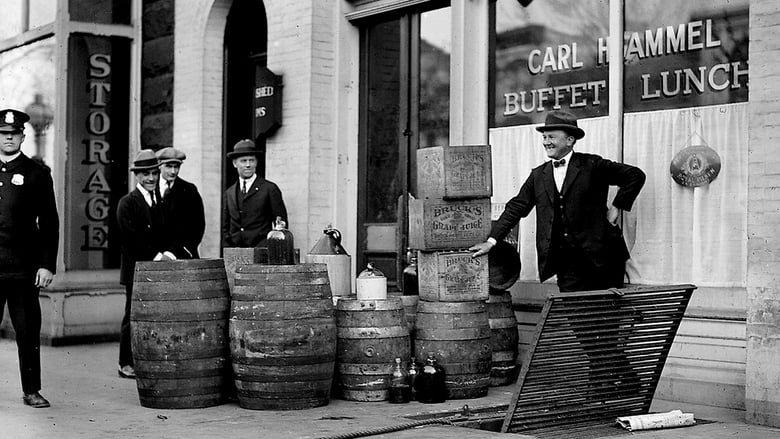
Prohibition
The history of the rise, rule and fall of the Eighteenth Amendment to the United States Constitution and the entire era it encompassed (1920-33). After nearly a century of activism, Prohibition was intended to improve the lives of all citizens by protecting individuals, families and society at large from the devastating effects of alcohol abuse; but paradoxically it made millions of people rethink their definition of morality.
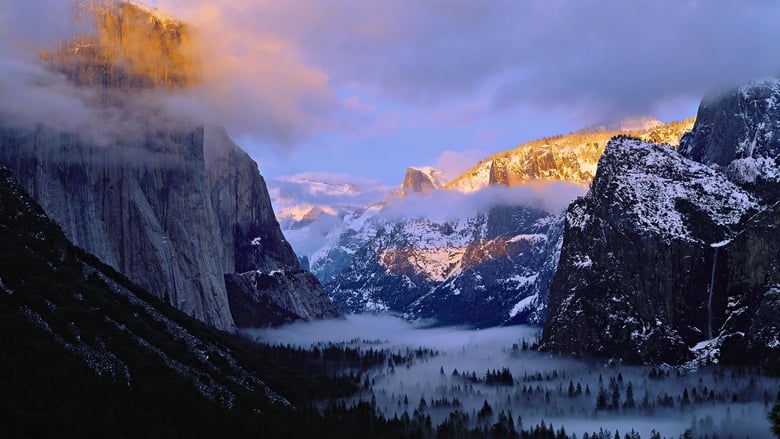
The National Parks: America's Best Idea
Filmed over the course of more than six years at some of nature's most spectacular locales – from Acadia to Yosemite, Yellowstone to the Grand Canyon, the Everglades of Florida to the Gates of the Arctic in Alaska - “The National Parks: America's Best Idea” is nonetheless a story of people: people from every conceivable background – rich and poor; famous and unknown; soldiers and scientists; natives and newcomers; idealists, artists and entrepreneurs; people who were willing to devote themselves to saving some precious portion of the land they loved, and in doing so reminded their fellow citizens of the full meaning of democracy.
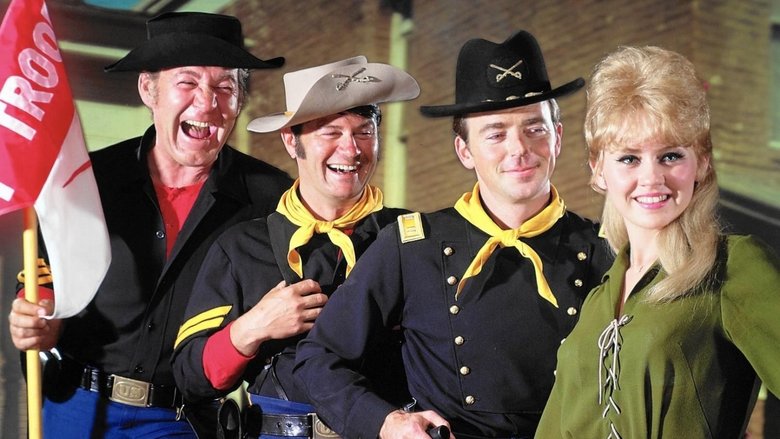
F Troop
F Troop is a satirical American television sitcom that originally aired for two seasons on ABC-TV. It debuted in the United States on September 14, 1965 and concluded its run on April 6, 1967 with a total of 65 episodes. The first season of 34 episodes was filmed in black-and-white, but the show switched to color for its second season.
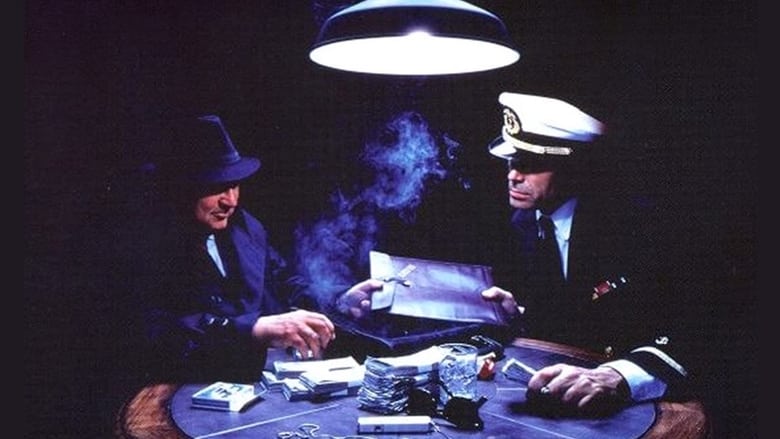
Family of Spies
In the late 1960s, a US Navy petty officer, with access to major state secrets and large debts, begins selling information to the Soviets.
Apocalypse: War of Worlds (1945-1991)
The story of this fantastic period of history between 1945 and 1991, which was defined by the confrontation of two worlds and two systems. The capitalist West, dominated by the ever-powerful United States, is pitted against the Communist East, the Soviet Empire.

Kardeş Çocukları
The paths of the two mothers whose dreams and lives are different from each other intersect and cause unexpected events after years.

Daktari
Daktari is an American children's drama series that aired on CBS between 1966 and 1969. The series, an Ivan Tors Films Production in association with MGM Television, stars Marshall Thompson as Dr. Marsh Tracy, a veterinarian at the fictional Wameru Study Centre for Animal Behaviour in East Africa.
Baseball
The history of the sport of baseball in America, told through archival photos, film footage, and the words of those who contributed to the game in each era. Writers, historians, players, baseball personnel, and fans review key events and the significance of the game in America's history.
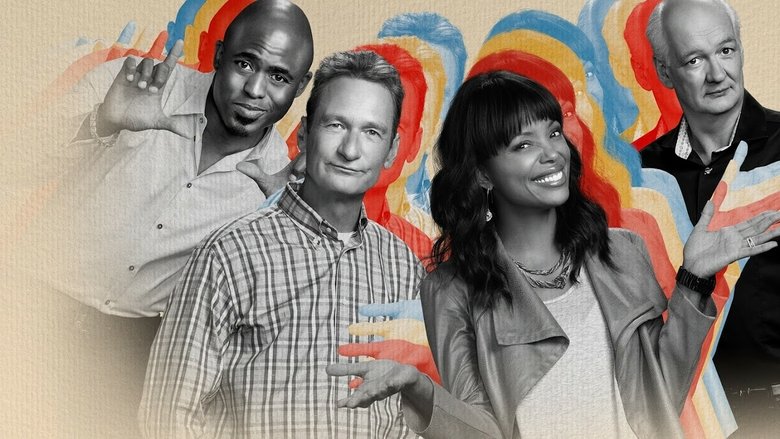
Whose Line Is It Anyway?
Comedian Aisha Tyler hosts this improv comedy show where the actors on the show - Wayne Brady, Colin Mochrie, Ryan Stiles along with a special guest each episode -must put their comedic skills to the test through a series of spontaneous improv games, prompted only by random ideas supplied by the studio audience.

Carlos
The story of the Venezuelan Ilich Ramirez Sanchez known as "Carlos", who was, for almost twenty years, one of the most wanted terrorists in the world.
The Dick Van Dyke Show
The Dick Van Dyke Show centers around the work and home life of television comedy writer Rob Petrie. The plots generally revolve around problems at work, where Rob got into various comedic jams with fellow writers Buddy Sorrell, Sally Rogers and producer Mel Cooley.

Odd Squad
Odd Squad saves the day whenever something unusual happens.
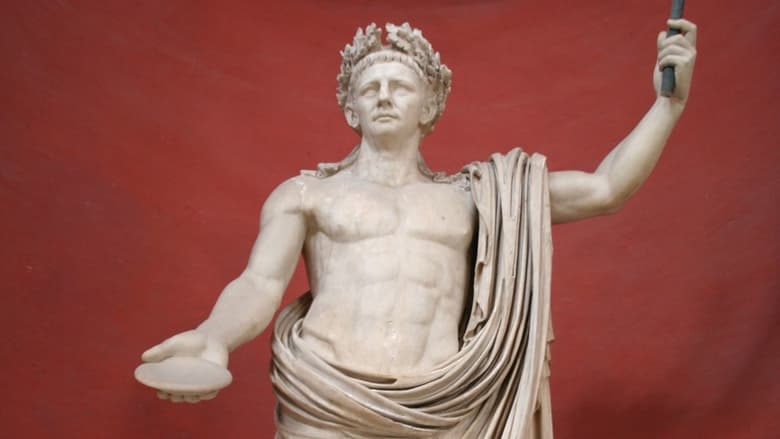
I, Claudius
Acclaimed blackly comic historical drama series. Set amidst a web of power, corruption and lies, it chronicles the reigns of the Roman emperors - Augustus, Tiberius, Caligula and finally Claudius.
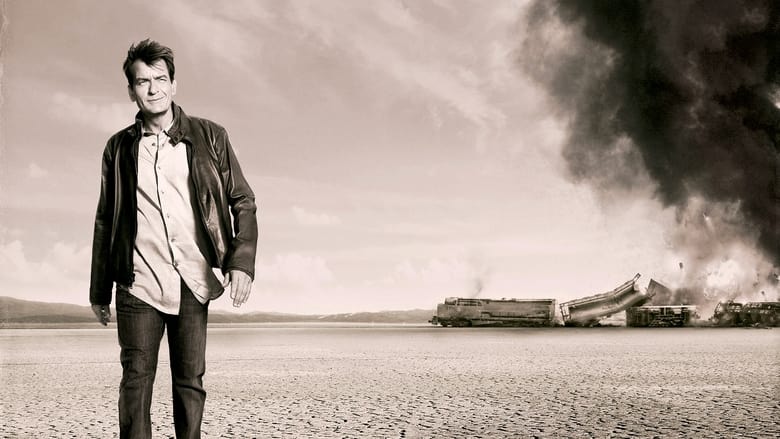
Anger Management
Charlie is a non-traditional therapist specializing in anger management. He has a successful private practice and he performs pro bono counseling for an inmate group at a state prison. Prior to his career as a therapist, he was a major league baseball player whose career was put on the shelf for good by his own struggle with anger issues.
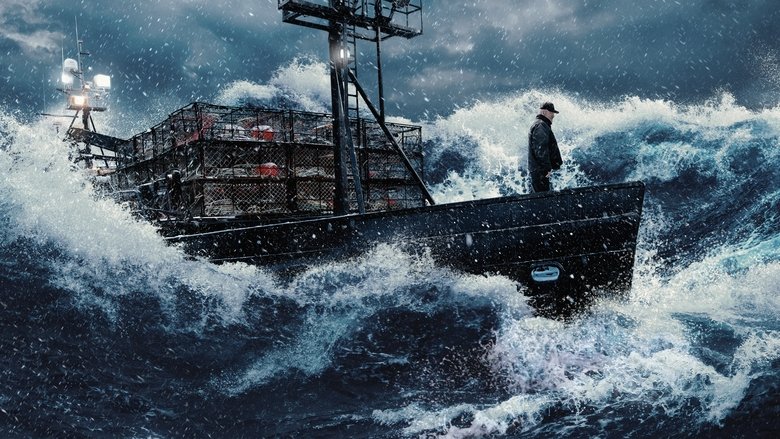
Deadliest Catch
Forty-foot waves, 700 pound crab pots, freezing temperatures and your mortality staring you in the face…it's all in a day's work for these modern day prospectors. During each episode we will watch crews race to meet their quota and make it home safely.

The Century of the Self
The legacy of famed psychoanalyst Sigmund Freud informs the lives of people throughout the world even to this day, though it's a phenomenon to which most are unaware. The film is an exhaustive examination of his theories on human desire, and how they're applied to platforms such as advertising, consumerism and politics.
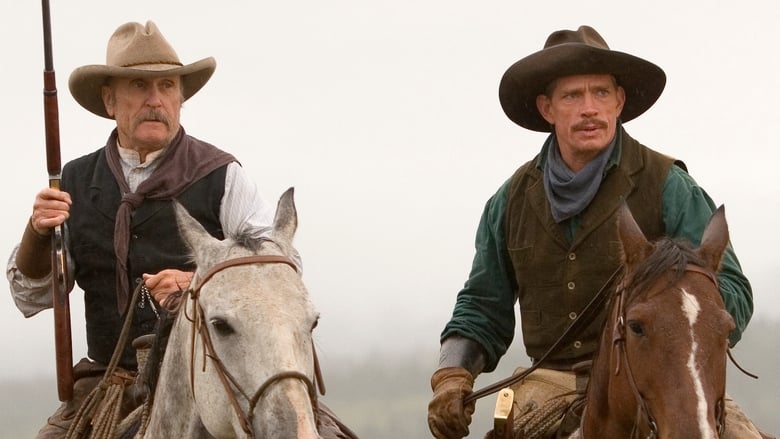
Broken Trail
The story is about an aging cowboy and his nephew who transport 500 horses from Oregon to Wyoming to sell them to the British Army. Along the way, their simple horse drive is complicated when they rescue five Chinese girls from a slave trader, saving them from a life of prostitution and indentured servitude. Compelled to do the right thing, they take the girls with them as they continue their perilous trek across the frontier, followed by a vicious gang of killers sent by the whorehouse madam who originally paid for the girls. Broken Trail weaves together two historical events: the British buying horses in the American West in the late 19th century and Chinese women being transported from the West Coast to the interior to serve as prostitutes.
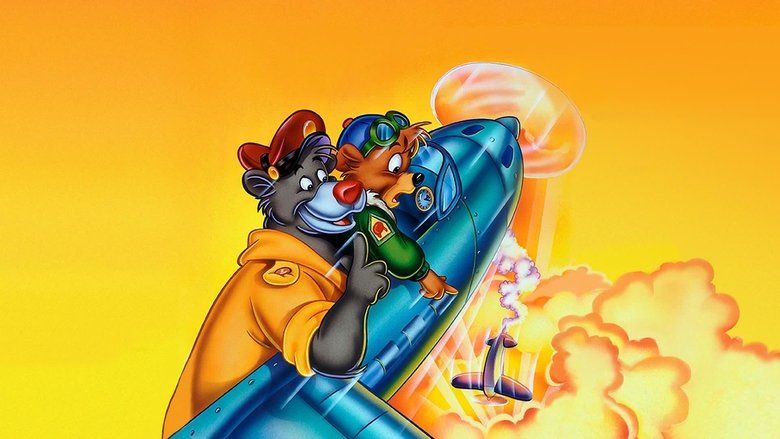
TaleSpin
Baloo the Bear stars in an adventurous comedy of love and conflict with his friend Kit Cloudkicker. Rebecca Cunningham and her daughter Molly purchase Baloo's failing company and Baloo must fly transport runs to clear his debt while dodging Don Karnage and his sky pirates.
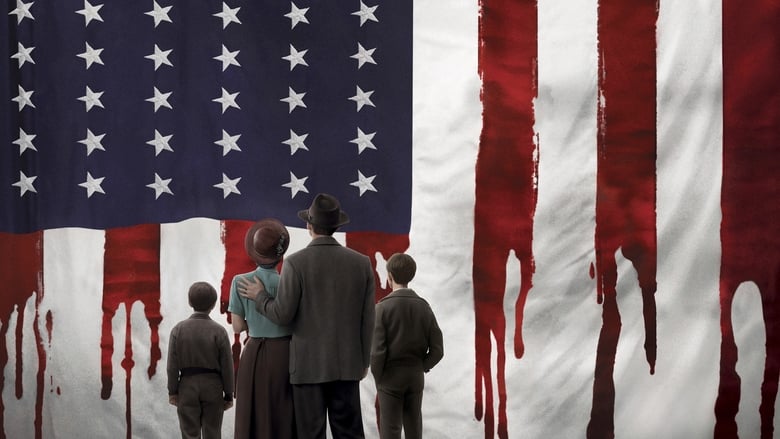
The Plot Against America
An alternate American history told through the eyes of a working-class Jewish family in New Jersey, as they watch the political rise of Charles Lindbergh, an aviator-hero and xenophobic populist, who becomes president and turns the nation toward fascism.
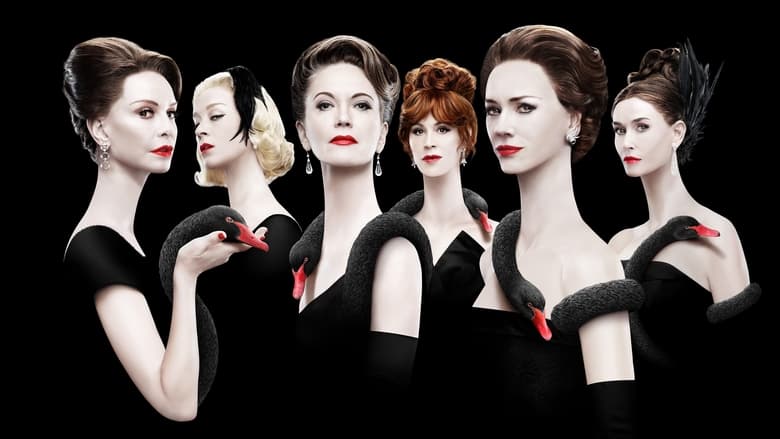
FEUD
Anthology series of famous feuds with the first season based on the legendary rivalry between Bette Davis and Joan Crawford which began early on their careers, climaxed on the set of "Whatever Happened to Baby Jane?" and evolved into an Oscar vendetta.
Reviews
No reviews available yet.