
Women Make Film: A New Road Movie Through Cinema
As told through clips from 183 female directors, this epic history of the cinema focuses on women’s integral role in the development of film art. Using almost a thousand film extracts from thirteen decades and five continents, Mark Cousins asks how films are made, shot and edited; how stories are shaped and how movies depict life, love, politics, humour and death, all through the compelling lens of some of the world’s greatest filmmakers – all of them women.
Production

Production
Trailers & Videos
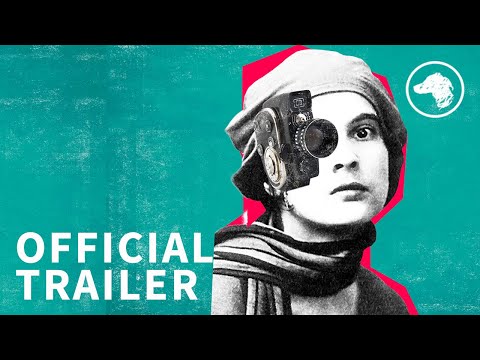
Women Make Film - Official Trailer
Seasons
Five years in the making, this epic journey through film history is made up of forty “chapters” narrated by Tilda Swinton, Jane Fonda, Adjoa Andoh, Sharmila Tagore, Kerry Fox, Thandie Newton, and Debra Winger. WOMEN MAKE FILM follows in the footsteps of Mark Cousins’s THE STORY OF FILM: AN ODYSSEY to give us a guided tour of the art and craft of the movies. Using almost a thousand film extracts from thirteen decades and five continents, Cousins explores how films are made, shot, and edited; how stories are shaped; and how movies depict life, love, politics, humor, and death through the compelling lens of some of the world’s greatest directors—all of them women.
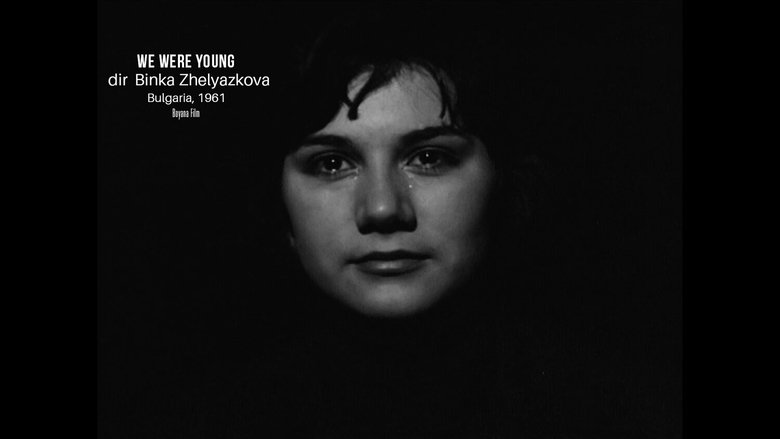
1. Openings, Tone
“Openings”. With examples from 1943 to 2013, from China to Iran, Australia to Finland, we look at how to open a film: from mysterious, direct, floating, foreboding beginnings to plunging straight in. All are instructive in how to create an immediate world. “Tone”. What’s the tone of a film—not its story or theme, but what its world feels like? This chapter looks at the myriad ways in which directors set the tones of their films: delight, anger, poetry, double tones, moral seriousness, caring, edginess, and violence.

2. Believability, Introducing Character, Meet Cute
“Believability”. It’s easy to spot, but not so easy to understand. Believability is about simple human stories, the truth about life, real emotions, and responding to the world. How do directors create a reality without it feeling fake? True stories can help. But what’s the trick? “Introducing Character”. Going to a house, overhearing people, witnessing bizarre action—there are many ways to meet people and be introduced to characters in films. “Meet Cute”. The classic Hollywood trope of a “meet cute” invites a variety of interpretations, from intimate glimpses to worlds colliding spectacularly.

3. Conversation, Framing, Tracking
“Conversation”. A basic human interaction—how to make it cinematic? “Framing”. Frames describe and paint the scenes. They shape the cinematic world. “Tracking”. Tracking shots are too many an essence of filmmaking magic. They can ask questions and speak when hardly anyone else in the film is talking. Kinetic in nature, tracking can help dynamically show and express a desperate escape.

4. Staging, Journey, Discovery
“Staging”. Scene staging is an element of film form pointing clearly to cinema’s origin: theater. “Journey”. Movement is key to a motion picture, and journeys in film can be horizontal as well as vertical (into the self). Travel can be like glue and bind characters from two different worlds. “Discovery”. Discovery and revelation shape some of cinema’s most iconic moments. But beyond the best-known scenes, there lies the humanity, craft, and insight of discovery.

5. Adult/Child, Economy, Editing
“Adult/Child”. Most famous movie genres—war pictures, westerns, etc.—are about adults, but in this chapter, Jane Fonda narrates the story of eighteen films about children, from Germany, Belgium, Mongolia, Sweden, Russia, Canada, Senegal, Argentina, and Scotland. “Economy”. We’ve all seen overblown films, but what are the visual and story lessons we can learn from Claire Denis, Maria Louisa Bemberg, Kinuyo Tanaka, Agnès Varda, Valeska Grisebach, and Desiree Akhavan about keeping things simple? “Editing”. How have filmmakers like Ava Du Vernay, Kathryn Bigelow, Sarah Maldoror, Leni Riefenstahl, and Drahoméra Vihanová and their editors pushed the techniques of editing to their limits?
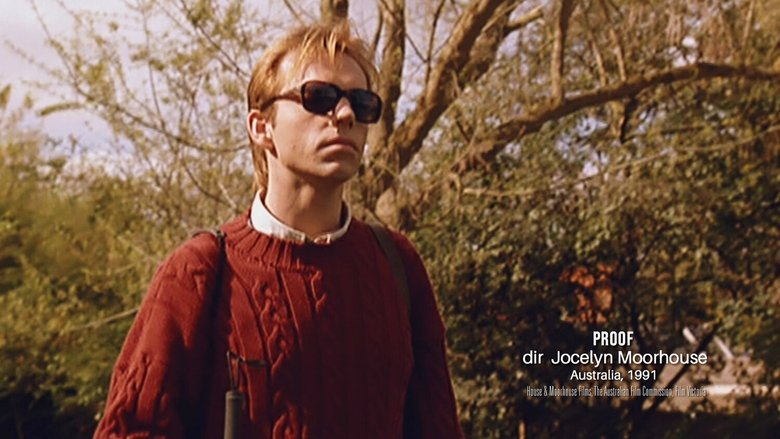
6. POV, Close-up, Dream
“POV”. Is cinema the art of point of view? Jocelyn Moorhouse, Ida Lupino, Edith Carlmar, Sofia Coppola, Liliana Cavani, Kelly Reichardt, Larisa Shepitko, Jennifer Kent, and other great directors demonstrate the art of POV. “Close-up”. Films from Belgium, Hungary, Australia, Finland, China, the United States, France, Germany and Ukraine, shot over ten decades, show how close-ups create intensity. “Dream”. One of the great movie stars, India’s Sharmila Tagore, narrates this bold chapter that looks at dreams in films, including WAYNE’S WORLD, Jane Campion, Sally Potter, and silent movies.

7. Bodies, Sex
“Bodies”. Bodies in cinema can be enticing, athletic, or brutalized. Jane Fonda narrates this chapter about how some of the great directors—including Agnès Varda, Andrea Arnold, Marva Nabili, Pirjo Honkasalo, Márta Mészáros, and Wanda Jakubowska—have filmed bodies. “Sex”. From bodies to sex—one of the most controversial aspects of film. In this chapter Diane Kurys, Lucile Hadžihalilović, Jamie Babbit, Safi Faye, Athina Rachel Tsangari, Alison de Vere, Carine Adler, Donna Deitch, Miranda July, Lucía Puenzo, Maren Ade, Chantal Akerman, and others show a variety of ways of showing sex on screen.

8. Home, Religion, Work
“Home”. Refuge, shelter, or prison? Sharmila Tagore narrates the story of home on-screen in the great films of Edith Carlmar, Lynne Ramsay, Mai Zetterling, Liu Jiayin, Forough Farrokhzad, Antonia Bird, and others. “Religion”. Narrator Sharmila Tagore takes us on a global tour of great films about religion. We start in the U.S. in the 1910s, go to Sri Lanka in the ’70s, and dip into the work of Lucrecia Martel, Jessica Hausner, and Marjane Satrapi. “Work”. Work seems too unglamorous for cinema, but as narrator Jane Fonda tells us, in films like AMERICAN HONEY, the silent Russian masterpiece WOMEN OF RYAZAN, Venezuela’s ARAYA, Patty Jenkins’s MONSTER, and Mary Harron’s AMERICAN PSYCHO, some of the most engrossing scenes show work.

9. Politics, Gear Change, Comedy
“Politics”. Another aspect of everyday life. From silent cinema to the twenty-first century, movies from the visually astonishing THE ENCHANTED DESNA to DIVORCE IRANIAN STYLE to STRANGE DAYS have gained their energy and attack from their politics. “Gear Change”. We like to be taken by surprise in films. This short chapter, narrated by Sharmila Tagore, looks at such surprises. “Comedy”. Is comedy universal? Who have been the great comedy filmmakers around the world? Narrator Sharmila Tagore talks us through scenes from BIG with Tom Hanks, Ida Lupino’s THE TROUBLE WITH ANGELS, the great movies of Elaine May, the classic Norwegian comedy FOOLS IN THE MOUNTAINS, and more.

10. Melodrama, Sci-Fi, Horror & Hell
“Melodrama”. A genre as popular as comedy, but what are some of the great scenes in melodrama? Sharmila Tagore narrates a story that takes us from the silent American film SHOES to Kira Muratova’s brilliant CHEKHOV’S MOTIFS to Binka Zhelyazkova’s visually remarkable WE WERE YOUNG. “Sci-Fi”. Our look at sci-fi takes us to unusual places, other realms: Kathryn Bigelow, the Wachowski siblings, Patty Jenkins’s WONDER WOMAN, Lori Petty’s TANK GIRL, and the TV version of Margaret Atwood’s “The Handmaid’s Tale.” “Horror & Hell”. Literal, figurative, political—in Deepa Mehta’s EARTH, Samira Makhmalbaf’s BLACKBOARDS, Jennifer Kent’s horror masterpiece THE BABADOOK, Joanna Hogg’s squirm-inducing ARCHIPELAGO, the Tunisian film THE SILENCES OF THE PALACE, and more.

11. Tension, Stasis, Leave Out
“Tension”. Thrillers, and so much more. We look at gripping scenes in films as diverse as Joel DeMott’s documentary DEMON LOVER DIARY, Kathryn Bigelow’s BLUE STEEL, Carol Morley’s DREAMS OF A LIFE, Mimi Leder’s THE PEACEMAKER, and Marleen Gorris’s remarkable A QUESTION OF SILENCE. “Stasis”. Cinema is an action art, isn’t it? Or is it? Directors Angela Schanelec, Nanouk Leopold, Kira Muratova, Chantal Akerman, Sharon Lockhart, and Sabiha Sumar, among others, show us the pleasures and beauties of the held moment. “Leave Out”. Movies show us the world, but what happens when they don’t show something? In this chapter, some of the great filmmakers from around the world withhold a moment or a scene, and their films are better for it.

12. Reveal, Memory, Time
“Reveal”. How does Lynne Ramsay do a reveal, in MORVEN CALLAR? How does the great actor-director Kinuyo Tanaka? Or Sarah Polley? Or Alice Rohrwacher? “Memory”. As cinema is a kind of time machine, it’s no surprise that it’s great at representing memory. In this chapter we look at rare movie gems about memory directed by filmmakers including Petra Costa, Maria Plyta, Dorota Kędzierzawska, Věra Chytilová, Mai Zetterling, and Mati Diop. “Time”. Every filmmaker has to think about time. As this chapter shows, Alice Guy-Blaché, Chantal Akerman, Ildikó Enyedi, Hanna Polak, Marie Menken, and Sally Potter have done so brilliantly.

13. Life Inside, The Meaning of Life, Love
“Life Inside”. Novels are great at describing thoughts, but how do films do so? In this chapter, we see how great directors from France, Ukraine, the UK, the U.S., New Zealand, and Algeria have illuminated inner life. “The Meaning of Life”. In the last chapters of our story, we look at the biggest things in life. Here we see how great filmmakers across the world, and from many decades, try to get to the essence of life. “Love”. Movies soar with love, but can be too sentimental because of it. In this chapter, we see great Chinese, Sri Lankan, American, Hungarian, Iranian, French, British, Korean, Turkish, and Hong Kong films which avoid the pitfalls.

14. Death, Endings, Song and Dance
“Death”. The biggest subject in life, the most universal subject—no wonder that Japan’s Kinuyo Tanaka, Canada’s Caroline Leaf, Spain’s Ana Mariscal, Holland’s Paula Van der Oest, and other great filmmakers in this chapter embrace it. “Endings”. We begin to end our epic road movie with films from Sonja Heiss, Larisa Shepitko, Ida Lupino, Lizzie Borden, Claire Denis, and Maya Deren. “Song and Dance”. End with a song, they say, so our story does. Huang Shuqin, Vera Stroyeva, Margaret Tait, Alice Guy-Blaché, Edith Carlmar, Céline Sciamma, Gilda de Abreu, Joan Micklin Silver, Shirley Clarke, Dorothy Arzner, and Beyonce make music with their films. We conclude our story, our road movie, and end in an unexpected place...
Cast

Tilda Swinton
Narrator (voice)
Adjoa Andoh
Narrator (voice)
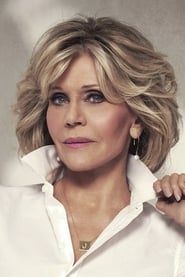
Jane Fonda
Narrator (voice)

Sharmila Tagore
Narrator (voice)
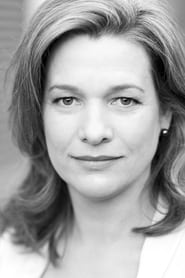
Kerry Fox
Narrator (voice)
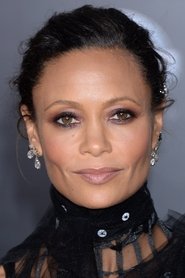
Thandiwe Newton
Narrator (voice)
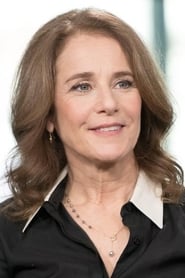
Debra Winger
Narrator (voice)
More Like This
Midnight Mass
The arrival of a charismatic young priest brings glorious miracles, ominous mysteries and renewed religious fervor to a dying town desperate to believe.
Seinfeld
A stand-up comedian and his three offbeat friends weather the pitfalls and payoffs of life in New York City in the '90s. It's a show about nothing.
Stranger Things
When a young boy vanishes, a small town uncovers a mystery involving secret experiments, terrifying supernatural forces, and one strange little girl.
Breaking Bad
Walter White, a New Mexico chemistry teacher, is diagnosed with Stage III cancer and given a prognosis of only two years left to live. He becomes filled with a sense of fearlessness and an unrelenting desire to secure his family's financial future at any cost as he enters the dangerous world of drugs and crime.
Brooklyn Nine-Nine
A single-camera ensemble comedy following the lives of an eclectic group of detectives in a New York precinct, including one slacker who is forced to shape up when he gets a new boss.

Death Note
Light Yagami is an ace student with great prospects—and he’s bored out of his mind. But all that changes when he finds the Death Note, a notebook dropped by a rogue Shinigami death god. Any human whose name is written in the notebook dies, and Light has vowed to use the power of the Death Note to rid the world of evil. But will Light succeed in his noble goal, or will the Death Note turn him into the very thing he fights against?

Wednesday
Smart, sarcastic and a little dead inside, Wednesday Addams investigates twisted mysteries while making new friends — and foes — at Nevermore Academy.
Doctor Who
The Doctor is a Time Lord: a 900 year old alien with 2 hearts, part of a gifted civilization who mastered time travel. The Doctor saves planets for a living—more of a hobby actually, and the Doctor's very, very good at it.

It
In 1960, seven outcast kids known as "The Losers' Club" fight against an ancient shape-shifting alien who poses as a child-killing clown, while also dealing with bullies and abusive parents. Thirty years later, they reunite to stop the creature once and for all when it returns to their hometown.
Obi-Wan Kenobi
During the reign of the Galactic Empire, former Jedi Master, Obi-Wan Kenobi, embarks on a crucial mission to confront allies turned enemies and face the wrath of the Empire.
CSI: Crime Scene Investigation
A Las Vegas team of forensic investigators are trained to solve criminal cases by scouring the crime scene, collecting irrefutable evidence and finding the missing pieces that solve the mystery.
Squid Game
Hundreds of cash-strapped players accept a strange invitation to compete in children's games. Inside, a tempting prize awaits — with deadly high stakes.

Halo
Depicting an epic 26th-century conflict between humanity and an alien threat known as the Covenant, the series weaves deeply drawn personal stories with action, adventure and a richly imagined vision of the future.
WandaVision
Wanda Maximoff and Vision—two super-powered beings living idealized suburban lives—begin to suspect that everything is not as it seems.
Friends
Six young people from New York City, on their own and struggling to survive in the real world, find the companionship, comfort and support they get from each other to be the perfect antidote to the pressures of life.
The Good Doctor
Shaun Murphy, a young surgeon with autism and savant syndrome, relocates from a quiet country life to join a prestigious hospital's surgical unit. Unable to personally connect with those around him, Shaun uses his extraordinary medical gifts to save lives and challenge the skepticism of his colleagues.

Two and a Half Men
A hedonistic jingle writer's free-wheeling life comes to an abrupt halt when his brother and 10-year-old nephew move into his beach-front house.

The Lord of the Rings: The Rings of Power
Beginning in a time of relative peace, we follow an ensemble cast of characters as they confront the re-emergence of evil to Middle-earth. From the darkest depths of the Misty Mountains, to the majestic forests of Lindon, to the breathtaking island kingdom of Númenor, to the furthest reaches of the map, these kingdoms and characters will carve out legacies that live on long after they are gone.
Young Sheldon
The early life of child genius Sheldon Cooper, later seen in The Big Bang Theory.
Shōgun
In Japan in the year 1600, at the dawn of a century-defining civil war, Lord Yoshii Toranaga is fighting for his life as his enemies on the Council of Regents unite against him, when a mysterious European ship is found marooned in a nearby fishing village.
Reviews
No reviews available yet.