
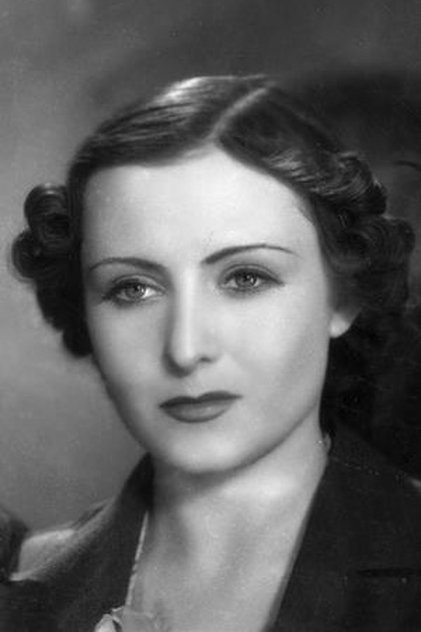
Marta Májová
Acting
Biography
No biography available for Marta Májová.
Born: June 13, 1881
Known For

School Is the Foundation of Life
Seventh form pupils at a grammar school in Přívlaky are preparing for a secondary school sports competition. Class creep Krhounek gives the class teacher Lejsal a copy of the seventh form’s magazine Roar. Most of the teachers insist on severe punishing the culprit. The author does not own up and consequently the whole class is punished by being banned from taking part in the schools competition. The most gifted pupil, Benetka, rather sharply criticises the school in a homework essay on a subject of his choice. The strict Czech language teacher is convinced Benetka is the author of the school magazine. Benetka denies the charge but his expulsion from school is proposed anyway on account the views he expounded in his essay. Eventually, Boukal, the author of the school magazine comes forward and admits to writing it. The pupils are allowed to take part in the contest and thanks to Benetka they win. In the meantime however the teachers vote to expell him.
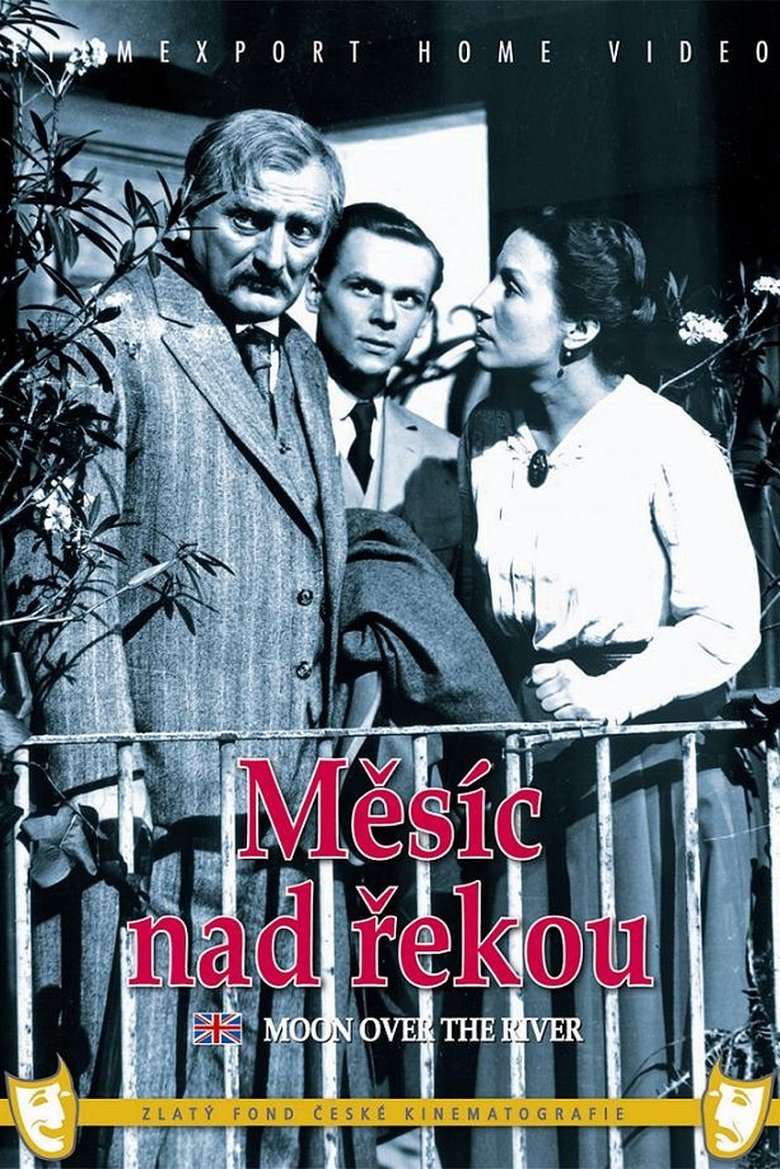
Moon Over the River
A look back at old classmates at a high school reunion, discovering how life has fruitlessly slipped through their fingers. And they don't even have a chance to break free from the small-town grip.

Magical River
Leopold Kohák married a rich widow a long time ago and now has nothing to do compared to his energetic wife. He's growing old and troubled by the fact that he betrayed his first love Emča and his beloved river Sázava where he spent his childhood and youth. A visit from an old friend Lebeda brings it all back to him. After a nervous breakdown Leopold secretly visits his home instead of going to the spa. A wandering tramp suggest Leopold should bathe in the magical waters of the Sázava, and slowly his youth returns to him.
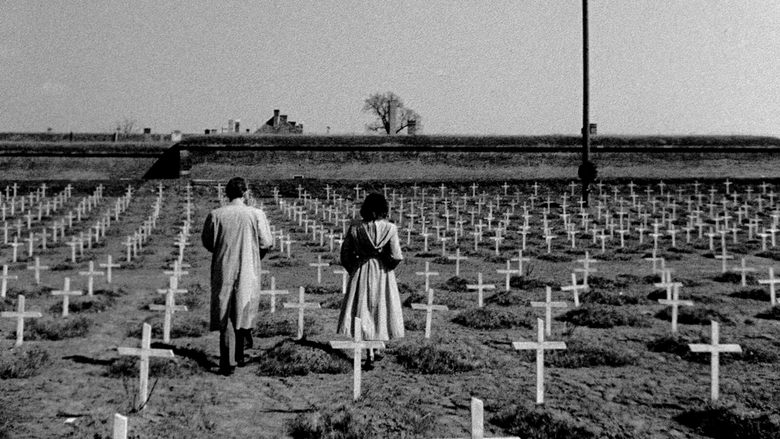
Distant Journey
Prague, during World War II. Hana Kaufmann, a Jewish ophthalmologist, marries Dr. Antonín Bureš, a Christian man. When her family is sent to the Theresienstadt concentration camp, their romance turns into a struggle for survival.
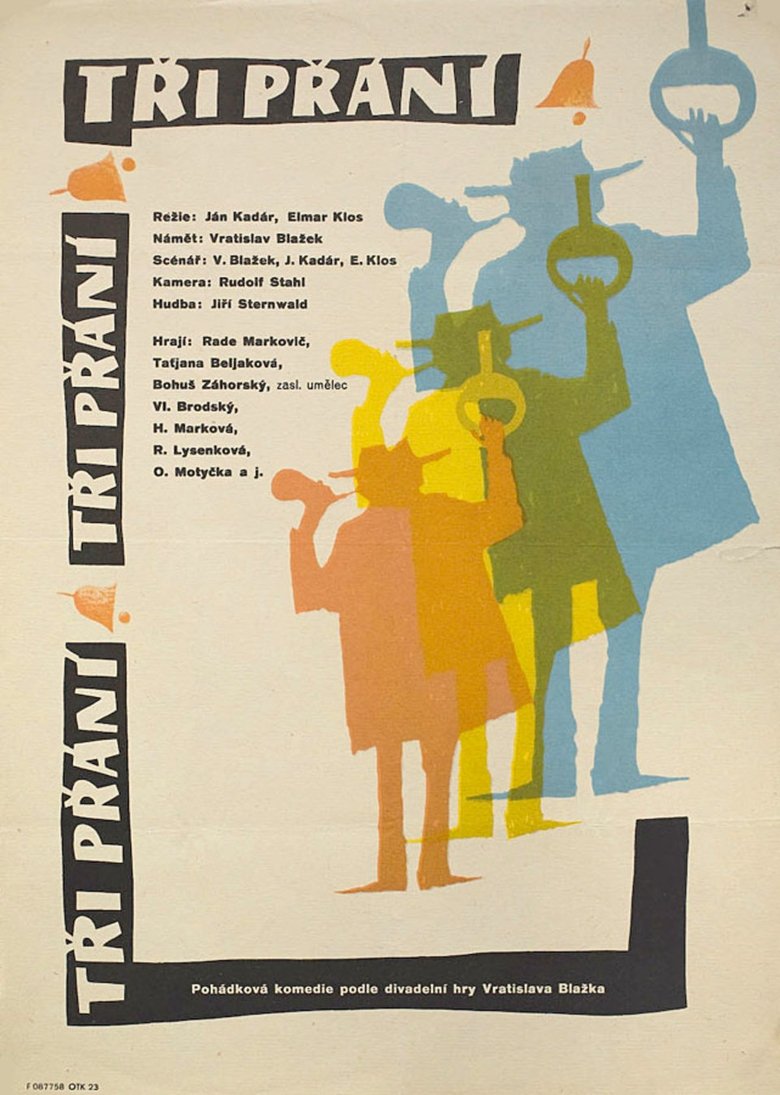
Three Wishes
The sad hero of the story, Petr, an ordinary lawyer in a construction company, is crowded into a small apartment in Žižkov with his wife and grandparents, desperately struggling with the lack of money. One day he offers an old man a seat on a crowded trolley bus and is generously rewarded for his good deed, for the unknown old man is a fabulous grandfather. He gives Peter a magic bell and the opportunity to make three wishes, but the first two slip through his fingers. For the third, the astonished man must take time to think...
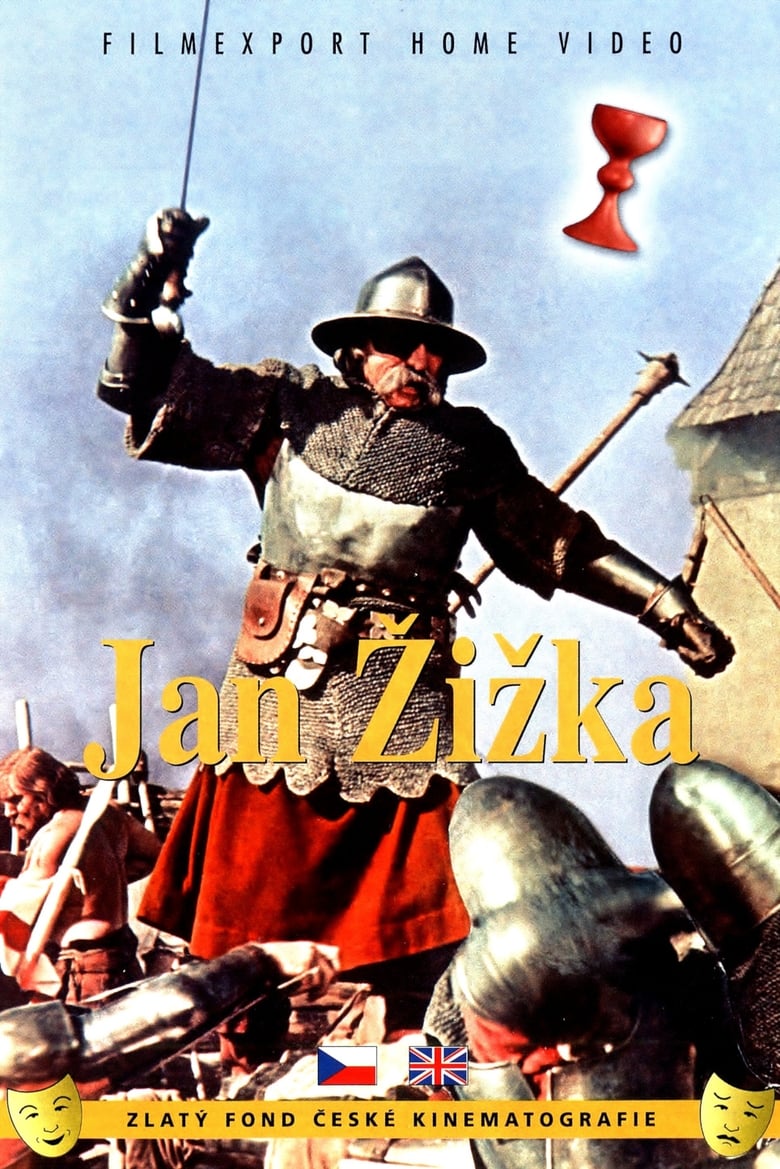
Jan Žižka
The second part of the revolutionary Hussite trilogy takes place in the years 1419-1420.
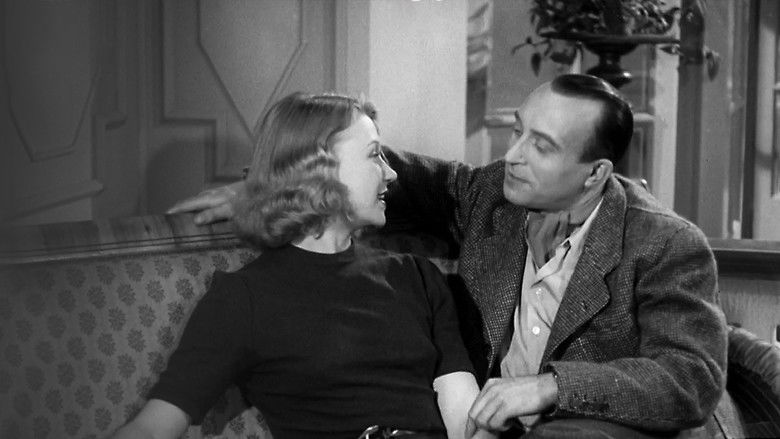
Eva Fools Around
Eva's aunt is jealous of her neighbor's excellent roses and wants to know the secret. To help auntie out Eva applies for secretarial work at the neighbor's house in order to find out the formula. Things get complicated when it turns out that Eva's brother is in love with the daughter of the house and also wants to get in there under false pretenses.

The Portrait
People are afraid of the usurer Chazaj and are convinced that he is the bearer of evil. One day Chazaj pays a visit to the poor artist Simon Jordán and asks him to paint his portrait. Simon agrees but as he progresses with the work his mind conjures up terrible thoughts and in the end he commits suicide. The portrait looks lifelike and Chazaj is content with the results. After Chazaj's death the picture changes hands and brings misfortune to all who own it. The last victim is the young painter Roman who buys Chazaj's portrait in a bazaar. He finds a treasure in the frame and begins to live well off it. The comfortable life suits him so well that he rejects his original artistic aims and becomes a painter of fashionable kitsch.

Strakonický dudák
The story of the piper Švanda, who went abroad for money and fame, but whose love for his homeland ultimately wins.
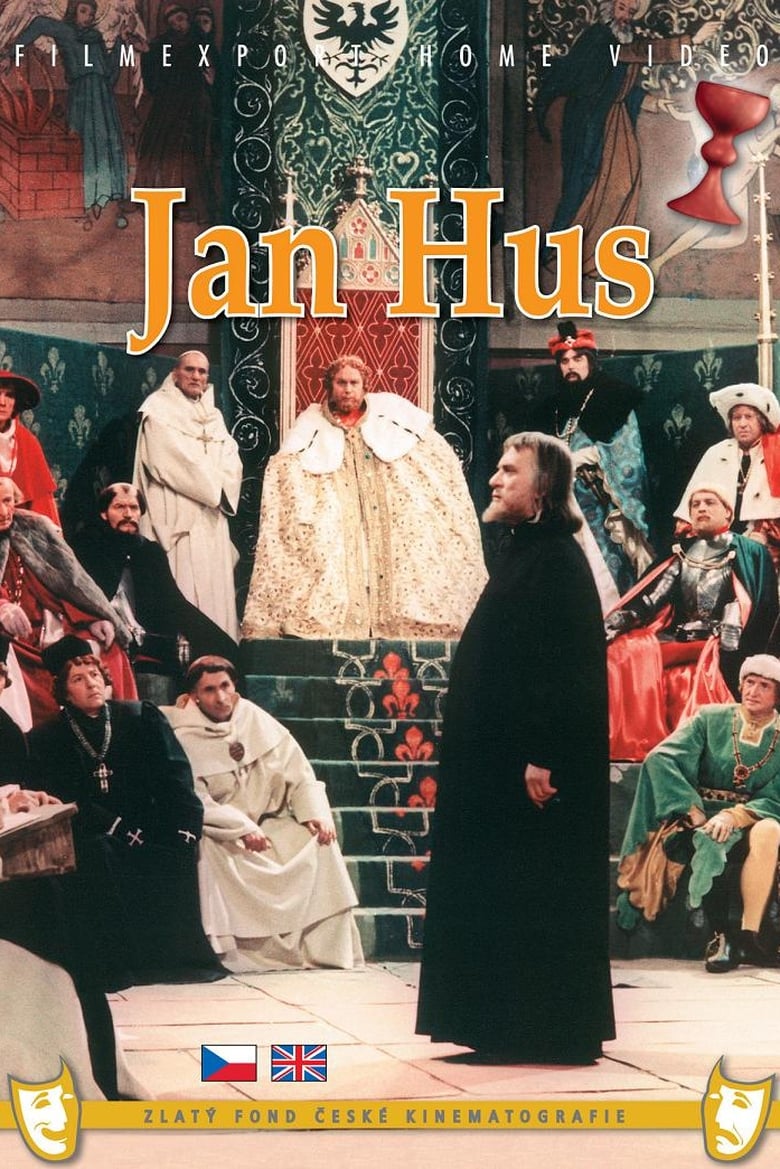
Jan Hus
The first part of the "Hussite Revolutionary Trilogy", completed with Jan Žižka (1955) and Proti všem (Against All Odds, 1957). The film captures the period from May 1412 to the summer of 1415, a turbulent time in the Czech Kingdom, during which there were protests in Prague against the sale of "omnipotent indulgences" whose sale throughout the kingdom was announced by Pope John XXIII. The ideological leader of this movement is the preacher Master Jan Hus, whose words, calling for the elimination of church abuses, are listened to in the Bethlehem Chapel by thousands of ordinary Praguers, Czech lords and Queen Sophie, wife of the Czech King Wenceslas IV.
Filmography
as Old Woman
as woman on the street
as woman in the crowd at the National Theater
as burgher
as Ascherová (uncredited)
as Emilie Záhorská
as Anna, manželka ředitele gymnázia
as Jarmila Kotrbová-Židlická
as Miroslava Kristenová
as správkyně sirotčince
as Majitelka květinářství
as Marysa's Aunt